
A RoHS test report can be several dozen pages long, red-stamped, signed — but still cannot be used when asked by customers or market surveillance agencies. The reason is almost always the same: the report is missing some minor item such as method reference, lot code, or statement of the scope of application of the results.
It is important to distinguish at the outset: The test report is a data record, not a conformity decision. Its value lies in the fact that it tells the reader exactly what has been tried, how, On which model?, and To what extent are the results meaningful?. Missing any eye in that chain, the report loses value.
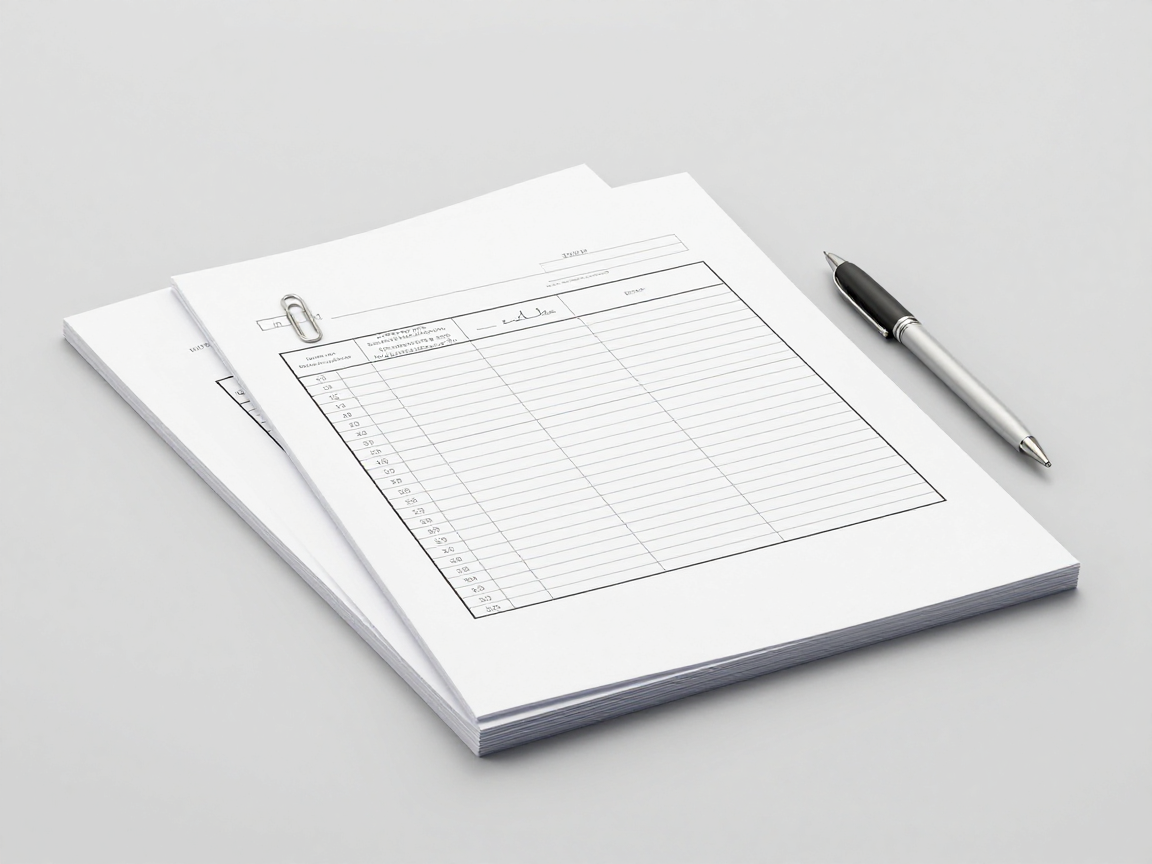
Listed articles Nine items must not be missing in a valid RoHS test report, with a quick check when receiving the report from the test room.
1. Where does the test report stand in the file?
In the RoHS compliance file, the test report is technical proof — located next to the supplier’s material declaration, risk assessment and declaration of conformity. It does not replace a declaration of conformity, nor does it constitute a “certificate” for the entire product line. These three types of documents are different in nature; If you are not clear, you should read the article Is there “RoHS certification”?.
Requirements for report content are not set by RoHS itself, but come from two sources: group of requirements for reporting results in ISO/IEC 17025 (testing laboratory capacity standards) and technical documentation requirements according to EN IEC 63000. A report that complies with ISO/IEC 17025 will automatically satisfy the majority of documentation requirements.

2. Nine items must not be missing
| # | Section | Minimal content |
|---|---|---|
| 1 | Report identification | Unique reporting number/code; Page numbers are in the form “x over y” to avoid lost pages |
| 2 | Test room identification | Name and address of the testing room and location of the test; Accreditation status (if any) |
| 3 | Customer/requesting party | Name and address of the ordering party; contact person if needed |
| 4 | Sample identification and description | Laboratory sample code, description, customer batch code/number, condition upon receipt, sample photo |
| 5 | Date | Date of receipt of sample and date (or date range) of test performed |
| 6 | Test method | Standard name, part number, version/year; applied techniques; Specify if it is a non-standard internal method |
| 7 | Detailed measurement results | Results for each homogeneous material and each substance; unit; limit of detection/quantitation; compared to the reference limit |
| 8 | Conclusion and scope of application | Pass/fail conclusion (with decision rules if any); measurement uncertainty when relevant |
| 9 | Approval and accompanying declaration | Name, title, and signature of the approver; declare the results to apply only to the sample tested; Report copying conditions |
These nine items are not a decoration list. Each section answers a question that readers of the report will ask. Here’s why each item is important in practice.
3. Items 1–3: know which report you are holding and whose
- Unique report number Allows searching, comparing originals and detecting fake or altered reports. “x over y” page numbers prevent situations where someone submits missing results pages.
- Test room identification helps verify the test room is real, capable, and at what location the test is performed. If the report cites accreditation, the accreditation status must be clearly stated — do not imply that the entire report is accredited when only a portion is within the scope of accreditation.
- Customer name Establish the chain of responsibility: for whom the report is prepared, on the basis of which requirements.
4. Sections 4–5: which model and when to test
This is the part that is most often poorly presented, and is also the part that determines whether the report is “representative” or not.
| Information | Why is it necessary? |
|---|---|
| Test room sample code | Allows you to trace back saved samples when you need to retry |
| Customer code/lot number | Tie the results to the specific lot — without them, the results are meaningless for the lot being sold |
| Sample description and condition upon receipt | Confirm sample integrity and correct product; Eliminate future controversy |
| Date of receipt and date of testing | Put results into the correct timeline, compare with material change history |
One point that gets little attention: if reported no Regardless of who collects the sample, it should be understood that the testing laboratory is not usually responsible for the representativeness of the sample. The responsibility for choosing a sample belongs to the business sending the sample. This is directly related to the article about number of samples needed for one test set.
5. Sections 6–7: What to test and how to get numbers
The test method must be recorded sufficiently for the reader to reproduce the spirit of the test, including at least:
- Standard name and part number — for example which part of IEC 62321. It is not enough to write “IEC 62321”, because this standard includes many parts for different substances.
- Version/year of issue — because the standard is updated in parts.
- Specific techniques — for example, solvent extraction followed by GC-MS, or XRF screening.
- In case of using internal method — must clearly state that it does not comply with the standard, with evidence that the method has been validated.
The results section (section 7) is the core, and needs to be presented according to each homogeneous material not just a gross number. For each substance, a good report shows: the measured value, the unit (usually mass %), limit of detection and limit of quantification, and reference limit (0.1% or 0.01% for cadmium).
6. Sections 8–9: conclusions, approvals and declarations
The last two items are where a “valid” report is distinguished from a data printout:
- Conclusion pass/fail should only appear when requested and must be included decision rule — that is, how the test laboratory handles results when results are close to the limit compared to the measurement uncertainty. Without stating the decision rule, a “pass” can be controversial.
- Measurement uncertainty especially important for near-limit results; Many reports omit this item.
- Approver Must write name, title and signature; A report without a responsible person is a report without anyone guaranteeing it.
- Scope statement — “results apply only to the sample tested” and replication conditions — protect both the laboratory and the reporting user from false generalizations.
7. Quick read: six checkpoints when receiving reports
- Are all 9 items above included? If any item is missing, there is a lack of basis in that item.
- Does the method clearly state the part and year? If not, I don’t know what to try.
- Is the sample representative of the lot/model being sold? Compare batch codes and material descriptions.
- Have you tried all 10 substances yet? Missing sections for PBB/PBDE, Cr(VI) or phthalates means that group was not tested.
- Are there blank samples and recall tests? Needed for near-limit results.
- Is the report cut off or missing page numbers? Compare “x over y”.
8. Common presentation errors
| Error | Consequences |
|---|---|
| Write “IEC 62321” in general, no part mentioned | I don’t know which substance was tested |
| One result number for the whole product | Cannot compare according to homogeneous materials |
| No batch number/manufacturing date recorded | Do not tie results to specific batches |
| No detection/quantification limits stated | The result “not detected” cannot be evaluated. |
| Write “pass” without stating the decision rule | Controversy when the results are close to the limit |
| Implies that the entire report is recognized when only a portion is within scope | Misunderstanding the legal value of the report |
9. Frequently asked questions
The report only records “pass/fail” results, no measurements — is that okay?
Should not be accepted for record purposes. The report needs measurements with units and comparison limits, for readers to evaluate for themselves. A word “pass” separate from the data is not enough to argue when questioned.
Is it necessary to record measurement uncertainty?
With results far away from the limit, the uncertainty has little effect on the conclusion. With results near the limit, this is required information for a well-founded conclusion. A good report will clearly state when uncertainties are considered.
Are reports from foreign testing laboratories valid in Vietnam?
Usually accepted if the laboratory is accredited (e.g. to ISO/IEC 17025 in an accreditation scheme with a mutual recognition agreement). The thing to check is scope of recognition whether the correct substances and methods used were included.
Is a report with overlapping stamps and red signatures trustworthy enough?
Form cannot replace content. A report with a nice stamp but missing batch numbers, lacking standard part numbers or only testing half of the substances still cannot be used for regulatory compliance documents.
Can a test report replace a declaration of conformity?
No. The test report is the technical evidence for the tested sample; The declaration of conformity is the manufacturer’s legal commitment for the product to be marketed. The two documents have different roles and are in the same file.
10. Conclusion
A valid RoHS test report must answer four questions: try something (section 4), What to try? (section 6), How to get numbers? (section 7), and Who is responsible and to what extent? (sections 8–9). The nine items in the article are specific expressions of those four sentences.
When receiving a report from a testing laboratory, the fastest way to check is to compare the restricted substances list with the referenced standard sections. If a section for PBB/PBDE, Cr(VI) or four phthalates is missing, request it be added before the report is on file.
References
- ISO/IEC 17025 — general requirements for the competence of testing and calibration laboratories (including reporting requirements)
- EN IEC 63000 — technical document for evaluation of electrical and electronic products against quality restriction requirements
- IEC 62321 (parts) — methods for determination of restricted substances
- Directive 2011/65/EU — manufacturer’s obligations and technical documentation
Related articles
- Cross-section MLCC capacitors: cracks due to board flexing and delamination defects
- Measuring dimensions on cross-sectional images: how to set the ruler to minimize the error?
- From rough samples to cross-section images: casting, grinding, polishing and etching
- Choose the cutting position and send the cross-section sample: one wrong step and you will lose the entire data set
- Set of standards governing cross-section: IPC-A-600, IPC-6012, IPC-TM-650 2.1.1, J-STD-001 and IPC-A-610
- What is Cross Section? Why do we have to cut samples to evaluate solder joints and circuit boards?
- Material declaration according to IEC 62474 and IPC-1752A: what must the supply chain send and receive?
- Which step is wrong? Analysis of 5 situations where goods are recalled because of RoHS
- Cadmium in plating and brass alloys: a little talked about RoHS hot spot
- Lead in solder joints: lead removal roadmap and pitfalls when switching to SAC305
- Foreign suppliers refuse to declare: how do businesses self-manage RoHS risks?
- How long must RoHS records be kept? Legal timelines businesses need to remember
- When is XRF only needed, when is wet testing required? Batch RoHS control strategy
- Only sample RoHS report, no batch report—is it valid?
- Is the RoHS report from 2 years ago still available? When to try again?
- How long does a RoHS test kit take and what does it cost?
- RoHS test procedure from A to Z: from sample receipt, extraction, screening to reporting
- What is IEC 62321? What parts does the RoHS test method set include and what substances is it used for?
- RoHS technical records according to EN IEC 63000: what must businesses save and submit?
- What capabilities does a RoHS test room need? ISO/IEC 17025, VILAS and scope of accreditation
- Declaration of conformity (DoC) and CE marking for RoHS: who signs, for which products, what if it’s wrong?
Discuss further
Disclaimer
This article is an interpretive content compiled by us; not legal advice. The items required in the report are presented in the spirit of ISO/IEC 17025; Enterprises need to compare the verbatim standards and applicable regulations.
See more: Copyright Policy & Disclaimer by ticforall.com.