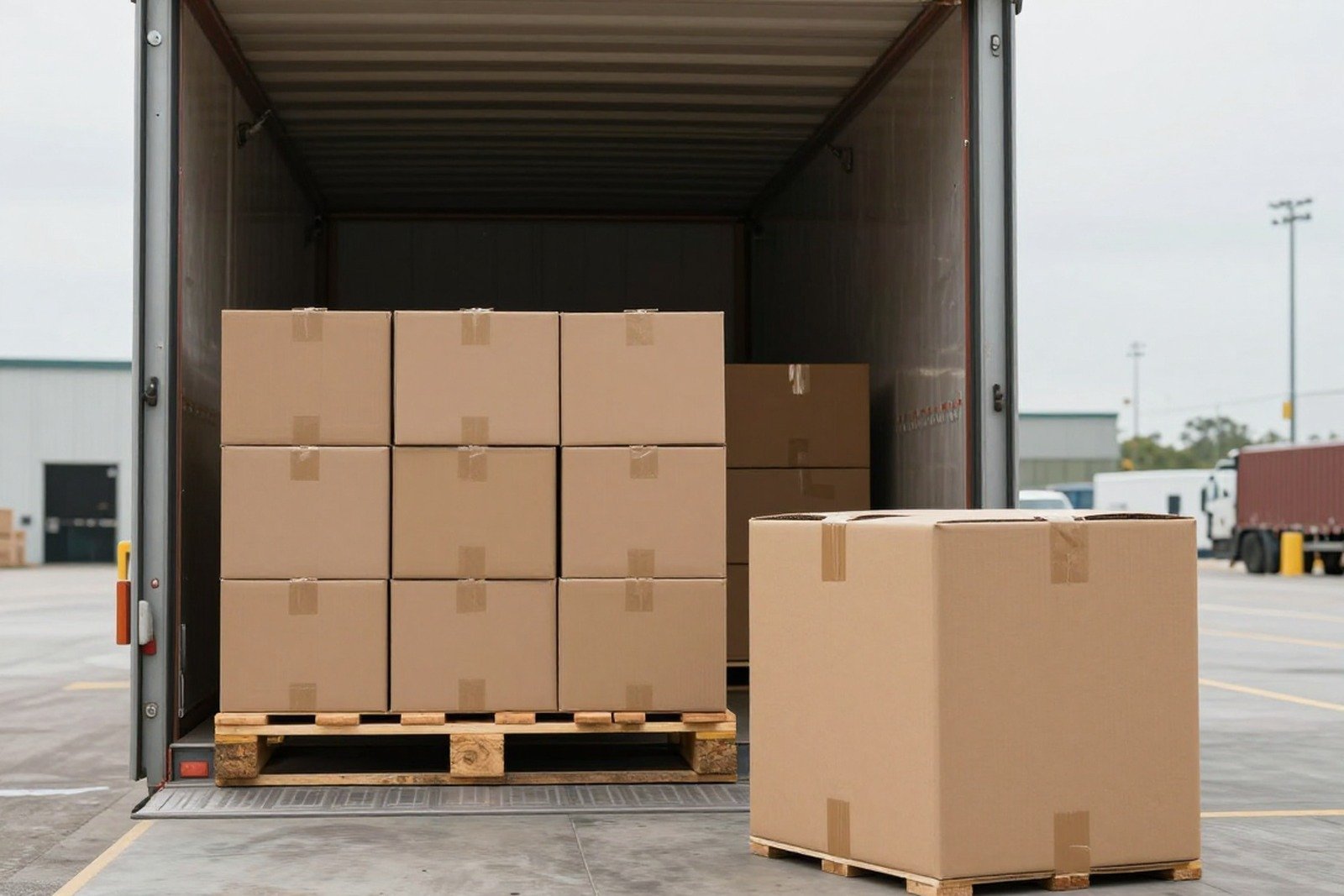
ISTA® 3B is a belonging process Series 3 — General Simulation Performance Test (general simulation), for packages prepared for passage LTL shipping system (Less-Than-Truckload — combined shipments). Unlike 3A, where each package travels separately in the parcel network, 3B simulates the situation Many packages from many different shippers, to many different destinations, are in the same vehicle.
This is a popular distribution channel for industrial, wholesale and project goods — where packages are stacked on top of each other, pushed across vehicle floors, pulled by forklifts and bumped into each other at joints. The article presents the procedure structure, four product groups that 3B distinguishes, the testing sequence of each group and points to prepare before testing.
1. What is ISTA 3B?
The document defines LTL as form of trucking in which packages of different types — often from different shippers and destined for different final destinations — are mixed in the same shipment. From that definition, 3B constructs a test sequence that corresponds precisely to the hazards that mixing poses:
- Stacking throughout the journey, with the load constantly changing as the truck unloads at each point — so there is a category of random vibration with loading load on top.
- Horizontal slip and impact when the vehicle brakes, starts and turns — there should be a category of side or side impacts, along with rotational drops.
- Bales are tall, narrow or off center easy to tip over — should have a tilt/fall category with a tilt angle of 22°.
- Loading and unloading by forklift with goods on pallets or skids — so the pallet group has four items to be handled by forklifts.
Reference documents: ISTA 3B 2017 — Packaged-Products for Less-Than-Truckload (LTL) Shipment (latest technical and editorial change April 2017).
2. Most common misunderstanding about ISTA 3B
- “3B is 3A for heavier loads.” No. 3B is not a volume expansion of 3A; The core difference is distribution channel — LTL instead of parcel. A 20 kg LTL package is still in 3B, not 3A.
- “Just use 3E to build pallets.” Goods on pallets combine flights belongs to the palletized/skidded group of 3B; goods on pallets Full vehicle (FTL) new is 3E. Same pallet, two different processes depending on how they are transported.
- “REACHing 3B means meeting the shipping company’s packaging regulations.” Like all Series 3 processes, 3B simulates general and do not automatically comply Each company’s own packaging regulations.
- “One 3B post is enough for every package in the batch.” 3B grouping by shape and volume; Cylindrical bales or flat/long bales have their own categories, so the correct group must be tested.
3. ISTA 3B divides parcels into how many groups?
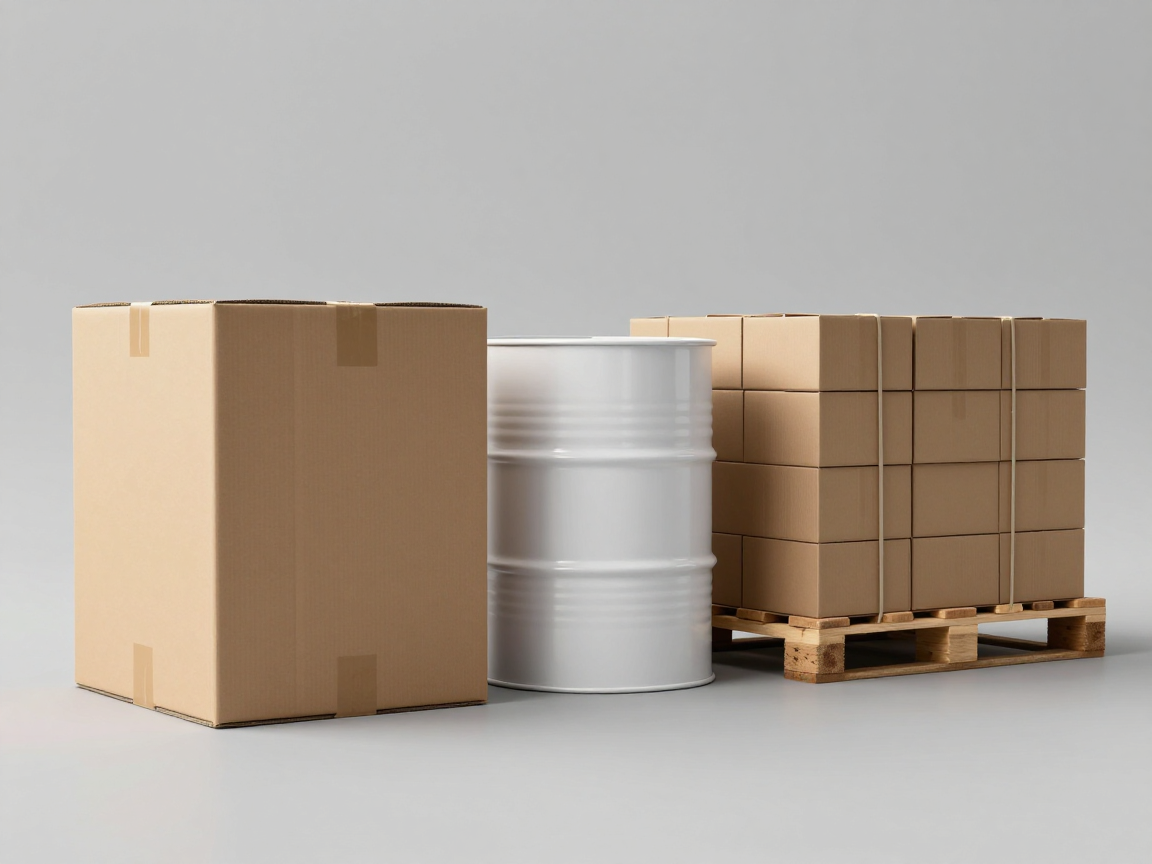
3B divided into four groups, each group has its own sequence table:
| Group | Characteristics |
|---|---|
| Standard — 200 lb (91 kg) or less | Regular package, weight up to 91 kg |
| Standard — over 200 lb (91 kg) | The package is heavy and must be loaded and unloaded with equipment and cannot be lifted by hand |
| Cylindrical (cylindrical) | Packages in tubes, rolls, drums — rollable |
| Palletized/Skidded | Goods placed on pallets or skids, handled by forklift |
In each group, two variations Elongated (long) and Flat (flat) is assigned a separate category — details in the sequence tables below.
4. Test sequence — Standard group, 200 lb (91 kg) or less
| # | Category | Test level/requirement |
|---|---|---|
| 1 | Pre-conditioning | Ambient temperature and humidity — required |
| 2 | Controlled air conditioning | According to the table of standards — option |
| 3 | Tip–tip over | Angle 22° — required for lawsuits height ≥ 1.2 m (48 in) and weight ≥ 45 kg (100 lb) and a bottom edge less than ½ height; or sue height ≥ 760 mm (30 in) has a center of gravity higher than ½ of the bale height |
| 4 | Free fall | 6 falls, height depends on mass — required |
| 5 | Random vibration (vertical) | There is a loading load on the level Grms 0.54 — required |
| 6 | Concentrated impact | Free-fall impact objects or pendulums, 380 mm (15 in) — just with packaging is not sturdy (non-rigid) |
| 7 | Free fall | 6 falls, height depends on mass — required |
| 8 | Full rotation fall | 1 fall — sue only Elongated |
| 9 | Bridge impact | Hazard box falls 410 mm (16 in) — sue only Elongated |
| 10 | Full rotation fall | 2 falls — sue only Flat |
| 11 | Concentrated edge impact | Hazard box falls 410 mm (16 in) — sue only Flat |
This group has two rounds of free fall (6 falls before and 6 falls after shaking) — a point that’s easy to miss if you just skim the table.
5. Test sequence — Standard group, over 200 lb (91 kg)
| # | Category | Test level/requirement |
|---|---|---|
| 1–2 | Pre-conditioning · Controlled conditioning | As above — required · option |
| 3 | Tilt/fall | Angle 22°, conditions apply as above group |
| 4 | Rotational drop | 230 mm (9 in) — falling rotates edges and corners |
| 5 | Inclined or horizontal impact | 48 in/s (1.2 m/s), or alternatively with free fall 76 mm (3 in) |
| 6 | Random vibration (vertical) | There is a loading load on top, Grms 0.54 |
| 7 | Concentrated impact | 380 mm (15 in) — only with non-rigid packaging |
| 8 | Falling rotation | 230 mm (9 in) — repeat after shaking |
| 9 | Inclined or horizontal impact | Repeat after shaking, level as above |
| 10–13 | Full rotational fall · Bridge impact · Full rotational fall · Concentrated edge impact | Applies to Elongated and Flat cases as in the above group |
Differences of the group over 91 kg: There are no free fall rings — replaced by rotating drops, and tilt/horizontal impact items Repeat two rounds, before and after shaking.
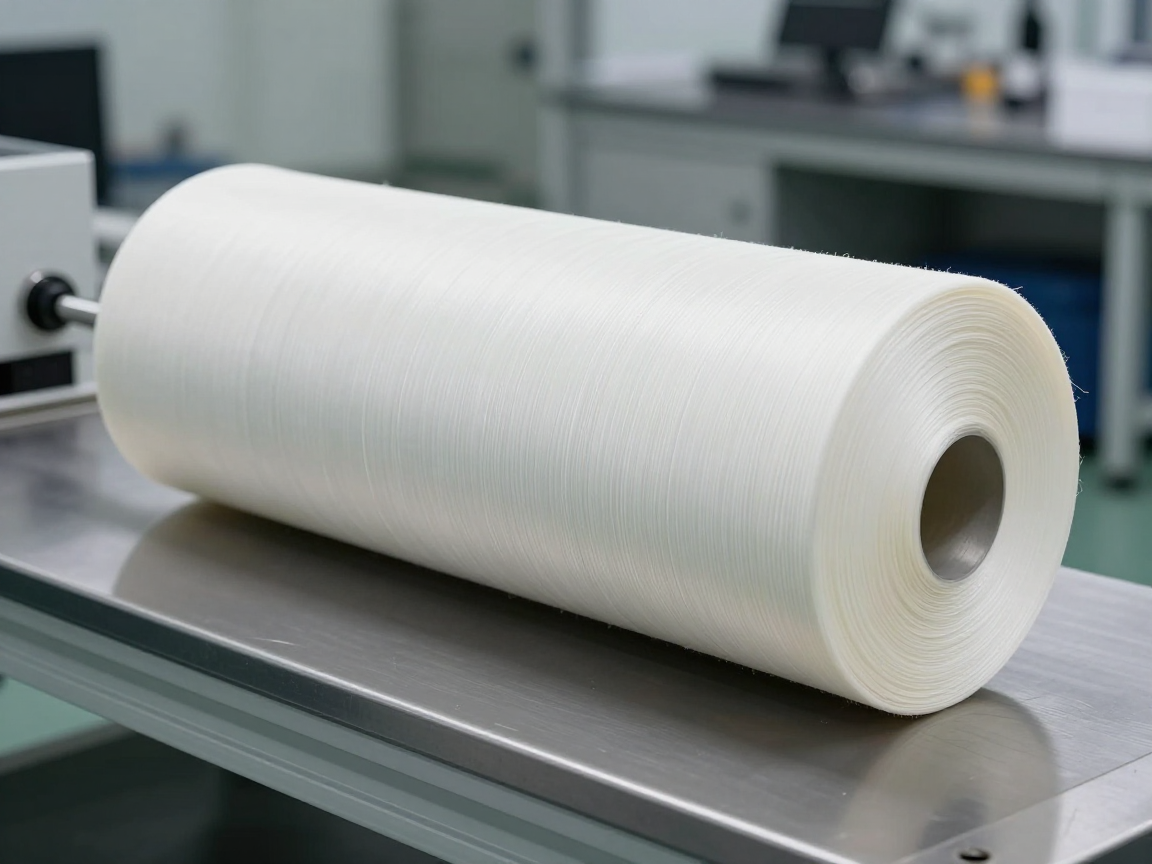
6. Test sequence — Cylindrical group (cylindrical)
| # | Category | Test level/requirement |
|---|---|---|
| 1–2 | Pre-conditioning · Controlled conditioning | Required · option |
| 3 | Free fall | 6 falls, height depends on mass |
| 4 | Random vibration (vertical) | With and without top load, Grms 0.54 |
| 5 | Free fall | 5 falls, height depends on mass |
| 6 | Drop on hazard | 1 fall, height depends on mass |
| 7 | Full rotation fall | 1 time — only with elongated cylinders |
| 8 | Bridge impact | Hazard box falls 410 mm (16 in) — only with long poles |
A special feature of the pillar group is the vibration item that must be performed both states: with top load and no top load — because the drum, reel or tube can be both bottom and top in a single trip.
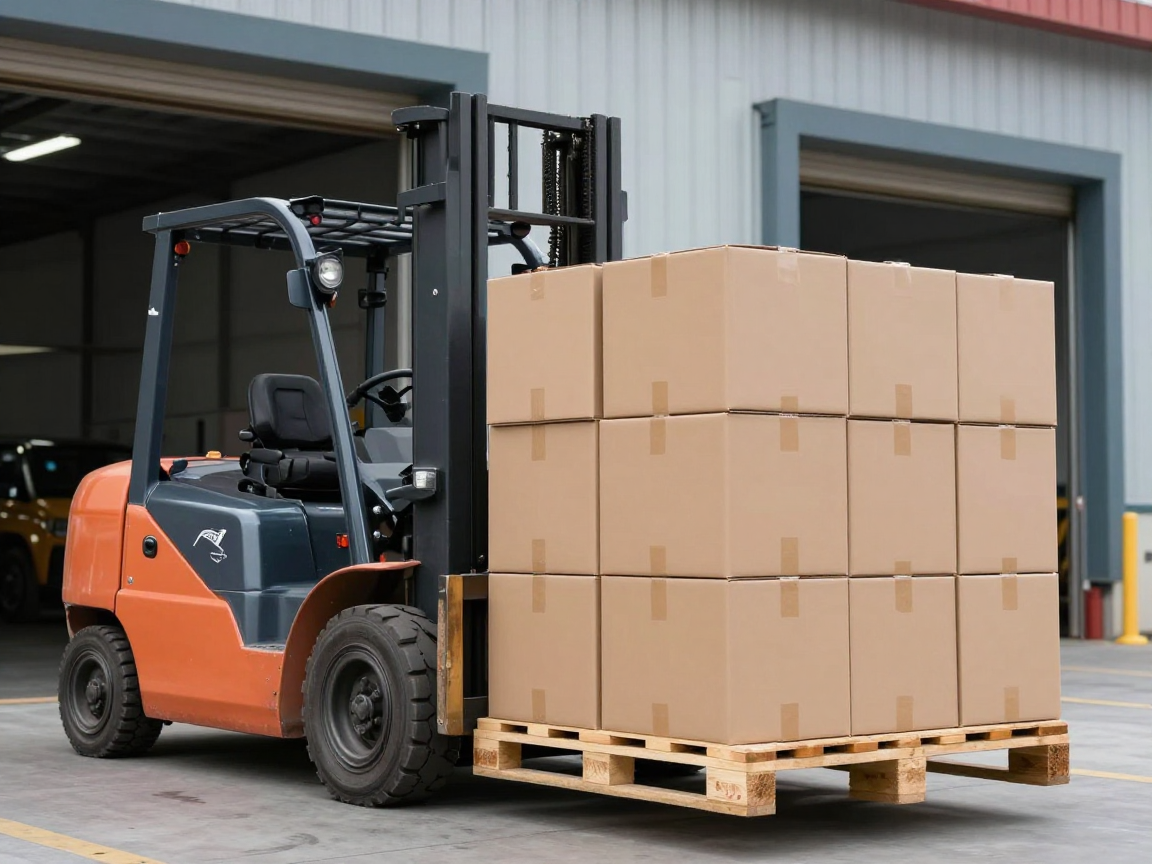
7. Test sequence — Palletized / Skidded group
| # | Category | Test level/requirement |
|---|---|---|
| 1–2 | Pre-conditioning · Controlled conditioning | Required · option |
| 3 | Tilt/fall | 22° angle — required for cargo blocks height ≥ 760 mm (30 in) and the center of gravity is higher than the smallest bottom edge |
| 4 | Falling rotation | Fall rotates edges and corners, height depends on mass |
| 5 | Inclined or horizontal impact | 48 in/s (1.2 m/s), or 76 mm (3 in) free fall |
| 6 | Random vibration (vertical) | There is a loading load on top, Grms 0.54 |
| 7 | Concentrated impact | 380 mm (15 in) — only with non-rigid packaging |
| 8 | Forklift — push flat and rotate | Required |
| 9 | Forklift — pushing and pulling in the lifted state | Required |
| 10 | Forklift — rotates in the lifted state | Required |
| 11 | Forklift — check load stability through handling ramp | Required |
| 12 | Falling rotation | Repeat after the forklift handling sequence |
| 13 | Inclined or horizontal impact | Repeat after the forklift handling sequence |
The four forklift categories are unique to this group — and also the most overlooked when a pallet shipment is tested as bulk cargo.
8. Accompanying equipment and method standards
| Category | Equipment | Method standards |
|---|---|---|
| Climate conditioning | Air conditioning chamber with temperature and humidity recording device | ASTM D 4332 or ISO 2233 |
| Free fall | Free fall machine (or sling with quick release mechanism) | ASTM D 5276 or ISO 2248 |
| Tilt/fall, rotate fall, full rotation fall | Machine falls with support block | ASTM D 6179 or ISO 2876 |
| Inclined/horizontal impact | Inclined impact testing machine (conbur) or horizontal impact system | ASTM D 880 · ASTM D 4003 · ISO 2244 |
| Concentrated impact | Guided free-fall impactor, or pendulum | ASTM D 6344 — impact block length approx 225 mm (8.875 in), diameter 32 mm (1.25 in), heavy 1.4 kg (3 lb) |
| Concentrated edge impact and spherical impact | The machine falls with the hazard box next to it | Hazard box: wooden 305 × 305 × 305 mm (12 × 12 × 12 in), heavy 4.1 kg (9 lb), impact edge armored corner. Bridge impact according to ASTM D 5265 (except hazard box) |
| Fall onto an obstacle | The machine falls with the hazard block | Hardwood or metal hazard block: high 20–25 mm (0.75–1.0 in), wide 150 mm (6 in), at least 200 mm (8 in) longer than the longest edge of the bale, with rounded top edges |
| Vibrate randomly | Vertical random vibration table system | ASTM D 4728 or ISO 13355 |
Support block for rotating fall items: 90–100 mm (3.5–4.0 in) high and wide, at least 200 mm (8 in) longer than the longest edge of the supported bale.
9. Number of samples and sample preparation
- A sample is a required level — a minimum level, not a recommended level.
- ISTA It is recommended to perform the procedure 5 or more times, with a new sample for each test.
- The sample must be a real package, not yet tested; If not available, the replacement sample must be as similar as possible to the actual product.
- The document clearly states: the package has undergone real transportation is not considered a standard sample. Goods sent to the testing laboratory must be over-packing to transport, or new packaging at the testing laboratory.
- Pallets or skids used in the test must be of the same type and condition as in actual use for that shipment — do not use new, better-than-life pallets.
- The document emphasizes the work Fully record configuration, materials and packaging construction, with photos, as small differences can cause large performance differences — and it is recommended to identify and document them Quantity of cardboard paper; If the nominal quantity changes, try again.
10. When should ISTA 3B not be used?
| Real situation | Should switch |
|---|---|
| Packages travel separately within the parcel delivery network, without a combined trip | 3A |
| Unitized goods, traveling by full truckload (FTL) to a destination | 3E |
| Unitized goods go to the distribution center and are then separated to the point of sale | 3E, combined 3F for individual packages |
| Only screening for durability is required at the design stage | Series 1 (1A · 1C · 1G · 1H) |
| Need a partial simulation, fewer categories | 2A/2B |
| Certification is required according to the packaging regulations of a specific carrier or distribution channel | That company/channel’s own program |
11. Common mistakes when implementing ISTA 3B
- Try pallet cargo as bulk cargo. The palletized/skidded group has four forklift handling categories; Ignore them and the test no longer simulates the correct LTL channel.
- Missed the second round of free fall. The Standard ≤ 91 kg group had 6 falls before vibration and 6 falls after vibration — a total of 12 falls.
- Use different pallets than reality. Documents requiring pallets/skids of the correct type and condition as genuine goods; New pallets often give better results than reality.
- Test the shipped sample. Goods that have been in transit no longer represent standard condition; must be repackaged when sending or repackaged in a new packaging at the testing laboratory.
- Do not check the conditions for applying the tilt/fall category. This is a “required” category but has conditions (height, mass, center of gravity position); Wrong determination of a condition leads to the addition or omission of a step.
- Do not determine pass/fail criteria before testing. The four things that shippers must make themselves are outlined in the document — see 4 criteria businesses must determine for themselves before trying.
12. What does the cost and time of ISTA 3B testing depend on?
3B is a long process: the standard group over 200 lb has up to 13 items, the palletized/skidded group also has 13 items but includes four forklift handling tasks. So the cost depends strongly on commodity group (pallet and heavy goods are longer than regular bales), volume (decide the fall height), model number and Whether the right type of pallet is available or not — using a different pallet may actually result in unusable results, you must try again. Common factors: What does the cost and time of ISTA packaging testing depend on?
13. Frequently asked questions
In what core way is 3B different from 3A?
Distribution channel. 3A simulates a single package traveling in a parcel network; 3B simulates LTL multiple shipments, where packages from multiple shippers lie together and are stacked, slid, and collided in the same vehicle.
My goods are on pallets — use 3B or 3E?
Depends on shipping method. If that pallet is shipped with another shipper’s goods, use 3B’s palletized/skidded group. If the entire truck only carries unitized load to one destination, use 3E.
Is the tilt/dump category always implemented?
No. The document sets conditions according to height, mass and center of gravity position: bale ≥ 1.2 m high with weight ≥ 45 kg and bottom edge less than ½ height; or bale ≥ 760 mm high with center of gravity higher than ½ height. For pallet goods, the condition is that the block is ≥ 760 mm high and the center of gravity is higher than the smallest bottom edge.
Why does it have to vibrate both with and without a load on top?
Because in a combined trip, the same type of bale can be at the bottom (with heavy load) in one trip and at the top (no load) in another trip. With the cylindrical group, the documentation calls for both states to be implemented.
Can I use the results of 3B’s previous test to avoid re-testing when changing carton suppliers?
Shouldn’t. The document recommends recording the paper weight of the carton, and states that if the nominal weight changes — even if the carton is still rated at the same performance class — it should be retested.
14. Conclusion
ISTA 3B is a general simulation for LTL shipments. The value of 3B lies in the fact that it accurately simulates three characteristics of a multiplex channel: stacking (vibration with load on), sliding and horizontal impact (tilt/horizontal impact, rotational fall) and Loading and unloading by forklift with pallets.
The first thing to do is determine the correct product group — Standard ≤ 200 lb, Standard > 200 lb, cylindrical, or palletized/skidded — and check if the package falls into the Elongated or Flat variant, as these two variants add their own impact category. Regarding samples, the minimum is one sample; Pallets used in articles must be of the correct type and in the correct condition.
References
- ISTA — Test Procedures (list of current series and procedures, accessed September 27, 2026)
- ISTA — Procedure 3B — Overview (free overview published by ISTA; not enough to conduct testing)
- ISTA — Certify Your Lab (information about testing laboratory certification)
- ISO/ASTM — method standards referenced in the procedure: ISO 2233, ISO 2244, ISO 2248, ISO 2876, ISO 13355; ASTM D 880, D 4003, D 4332, D 4728, D 5265, D 5276, D 6179, D 6344
Related articles
- What is ISTA 6-SAMSCLUB? Packaging test procedure for Sam’s Club distribution system
- What is ISTA 6-AMAZON.COM Over Boxing? Procedure for testing outer box packaging for goods sent to Amazon
- What is ISTA 3L? E-commerce fulfillment process
- What is ISTA 3K? Fast-moving consumer goods packaging test procedure in European retail chains
- What is ISTA 3H? Bulk Transport Containers test procedure
- What is ISTA 3F? Packaging test procedure for individual packages on mixed pallets at retail intersections
- What Is the ISTA Standard? How to Choose the Right Transport Packaging Test (3A, 6-Amazon, ASTM D4169)
- What is ISTA 3A? Packaging test procedure for parcel delivery system (Parcel Delivery)
- What is ISTA 2A? Partially simulated packaging test procedures for packages up to 150 lb (68 kg)
- What is ISTA 2B? Partially simulated packaging test procedures for packages over 150 lb (68 kg)
- What Is ISTA 1E? The Test Procedure for Unitized Loads on Pallets
- What Is ISTA 1H? Random Vibration Testing for Packages Over 150 lb (68 kg)
- ISTA Packaging Test Pass/Fail Criteria: 4 Things You Must Decide Yourself
- What Drives the Cost and Lead Time of an ISTA Packaging Test?
Discuss further
Disclaimer and acknowledgment of intellectual property rights
This article is an explanatory content compiled by us for the purpose of introducing and disseminating knowledge. Article is not a translation, copy, abridgement or replacement of the original standard, and is not evaluated, approved or sponsored by ISTA (International Safe Transit Association)..
The entire content of ISTA standards is copyrighted by the International Safe Transit Association, Inc. (East Lansing, Michigan, USA) — All rights reserved. ISTA® and the ISTA logo are registered trademarks of the International Safe Transit Association, Inc.; Mentioned in this article are for guidance purposes only and do not imply any affiliation, partnership or sponsorship.
Article content For reference only; Before applying for any purpose — testing, evaluation, certification or commercial decision-making — the reader should refer directly to the original ISTA document (the most complete and up-to-date version) and consult an accredited testing facility when necessary.
When performing testing, it is mandatory to use the official, current version of the standard, obtained directly from ISTA. We do not redistribute ISTA materials in any form. Information in this article may be out of date with the current version of the standard.
See more: Copyright Policy & Disclaimer by ticforall.com.