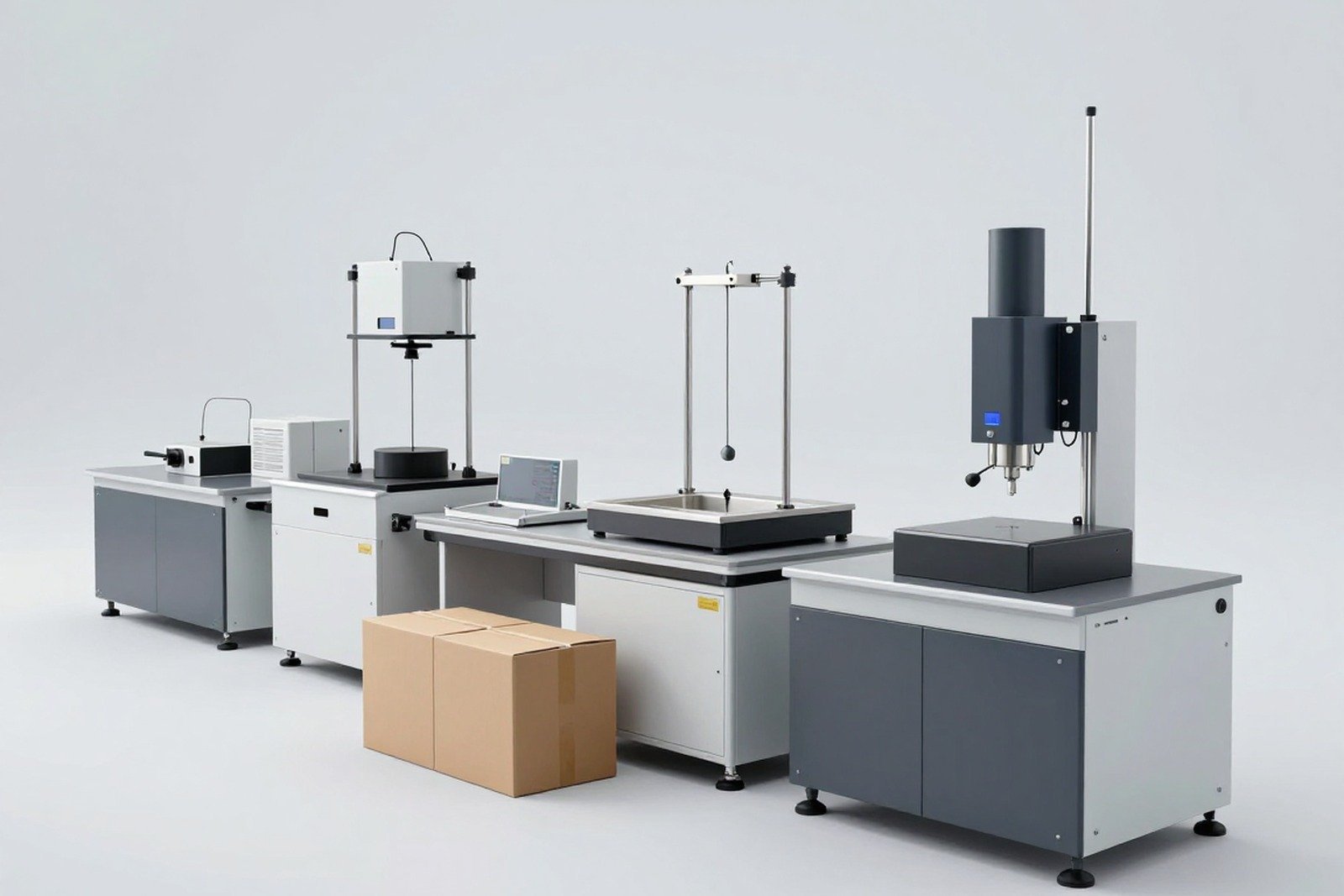
A shipment leaving the port in perfect condition can still reach customers in the US with dented boxes and cracked products. Between those two points were dozens of loading and unloading times, many hours of shaking on the truck, falls from the sorting conveyor belt and low pressure in the aircraft cabin. ISTA® standards exists to simulate that exact sequence of risks in the test room — before you close the container.
This article redraws the map of the entire ISTA series system, delves into the two tests that Vietnamese businesses encounter the most (3A and 6-AMAZON.COM), compares with ASTM D4169, and provides logic for selecting standards by distribution channel. The goal is to help you Choose the correct test code — is not a substitute for purchasing the official standard from ISTA when conducting testing.
What is ISTA?
ISTA (International Safe Transit Association) is a non-profit association headquartered in East Lansing, Michigan, USA. ISTA develops and promulgates transportation packaging performance test procedures, and operates the program. testing laboratory certification so that test results in different laboratories can be compared.
Point to understand right from the beginning: ISTA not a legal regulation. There are no US or EU laws that require goods to meet ISTA. ISTA’s weight comes from the demand side — major retailers, e-commerce platforms and shipping carriers include it in their supplier contracts. With a Vietnamese factory, the ISTA report is usually conditions for being on shelves, is not an export license.
Map of the ISTA standards series

ISTA classifies test procedures according to simulation level actual shipping, not product type. To understand this logic is to understand much of the system.
| Series | Name | Nature | When to use? |
|---|---|---|---|
| 1 Series 1A, 1B, 1C, 1D, 1E, 1G, 1H Series 1 Overview (1A–1H) | Non-Simulated Integrity (Non-simulated integrity) | Test the fundamental mechanical durability of the product + packaging combination. Does not simulate a real route. | Design refinement at the R&D stage. Fastest, fewest steps. Make an internal comparison between packaging options. |
| 2 Series 2A, 2B, 2C | Partial Simulation (Partial simulation) | 1 Series platform plus controlled conditioning and calculated compression testing step. | Goods for export and international distribution but not clearly defined specific transport channel. |
| 3 Series 3A, 3B, 3E, 3F, 3H +Project 3K, 3L, 3M, 3N, 3P | General Simulation (General simulation) | Reproduces motion, force and damage sequence based on actual data of each individual transport channel. | Once you know the distribution channel clearly. This is the level most widely accepted by major retailers. |
| 4 Series 4AB | Enhanced Simulation (Advanced simulation) | The web application generates a customized test plan, following a user-defined delivery risk profile. | When the distribution route is specific, it does not match any 3 Series items. |
| 6 Series 6-AMAZON.COM SIOC & Over Boxing, 6-SAMSCLUB | Member Performance (Performance by member) | Built by an ISTA member (retailer / carrier), reflecting their own operating infrastructure. | When selling, choose the correct procedure; items within Series 6 are not interchangeable. |
| 7 Series 7D, 7E | Development (Development testing) | Only the temperature aspect is evaluated. Do not measure impact, vibration or compression. | Insulation packaging, cold chain, pharmaceuticals. Always have to combine with a Series 1/2/3 procedure to create a full assessment. |
Some notable updates in ISTA’s current catalog:
- 6-FEDEX-A and 6-FEDEX-B are no longer part of the ISTA 6 Series tests. If customer or consulting documents still cite FedEx-A/B, ask again.
- Project 3M Simulate packaged goods shipped internationally from manufacturing facilities in the Asia-Pacific region to distribution centers (DCs) or fulfillment centers (FCs) in the US — a typical route for a Vietnamese factory.
- Project 3L Generic simulation for goods entering an e-commerce retailer’s fulfillment center, not tied to a specific retailer.
- Project 3P exclusively for parcel delivery systems in India; 3N for full vehicle transport (FTL) within Europe.
Quick choice: which distribution channel does your product use?

In 3 Series, the difference between codes lies in the distribution channel, not the product type. This is the group that is most easily confused when consulting:
- 3A — single parcel via courier (UPS, FedEx, DHL…).
- 3B — cargoes that share trucks with other shippers, multiple destinations (LTL).
- 3E — goods packed into uniform pallets, traveling in one vehicle to one destination (FTL).
- 3F — retail packages in mixed multi-SKU pallets, routed by distribution center to retail store.
- 3H — large container or rack frame, required to be moved by forklift or motorized equipment.
- 2C — furniture (case goods): if this is the right industry, 2C is almost always the default choice because the vibration spectrum and compression load have been individually calibrated.
Three questions separate 3B, 3E and 3F: is the goods combined with another shipper (→ 3B)? Have you packed an entire pallet for a destination (→ 3E)? Or are LCL cargoes placed on mixed pallets at DC (→ 3F)? Note that 3F requires significantly more samples than other processes — which should be factored into the budget from the beginning.
ISTA 3A — most common test for parcel shipments
ISTA 3A applies to single package weighing 70 kg (150 lb) or less, sent via parcel delivery system by road or air. ISTA uses the 70 kg mark specifically for 3A (other articles convert 150 lb to 68 kg) because this is a common division point in international parcel systems.
The test divides the parcel into parts four shapes, each type has its own test sequence:
- Standard — all packages that do not fall into the three lower groups.
- Small — small and light packages, tested in a collection bag with inserts, properly simulating a small collection courier.
- Flat — flat bales, the shortest edge is very small compared to the next edge.
- Elongated — the bale is long, the remaining two sides are very small compared to the longest side. If the bale is both flat and long, try the Elongated group.
In essence, 3A combines the following groups of tests into a consecutive series on the same sample: temperature-humidity conditioning (mandatory in room conditions, optional in controlled climate chamber); two drop shock tests, in which the next phase includes the situation of falling on an obstacle bar; Try random vibration according to two different spectrums, with and without overburden on the top of the bale; option vibrate under low pressure conditions pitch simulation — this tests the sealing ability of lids, taped edges, and primary packaging; With the Flat and Elongated events, there are additional spells fall and rotate and concentrated impact; and finally leak test Required if the product is liquid.
Regarding model number: ISTA request run the process once with one sample, but recommended two or more samples for fragile or liquid-containing goods, and five or more runs with a new sample each time are recommended for statistically significant results.
Three detailed articles for each distribution channel: 3A — parcel, 3B — transshipment cargo (LTL) and 3E — full truckload (FTL).
An often overlooked point: Pass/fail criteria are defined by the consignor himself before testing, is not regulated by ISTA. You must determine in advance what constitutes product damage, acceptable tolerance levels, methods for evaluating product condition after testing, and allowable levels of packaging deterioration. ISTA also recommends determining and recording the paper weight of corrugated cardboard — if the weight changes, even though it remains the same durability class, retesting is recommended.
ISTA 6-AMAZON.COM — with businesses selling on Amazon
6-AMAZON.COM system is available two separate articles, it’s easy to get confused:
- 6-AMAZON.COM-SIOC (Ships in Own Container — “shipped in the original container”): goods are sent by the supplier to Amazon’s fulfillment center (FC) and then delivered directly to the customer via parcel or LTL, no Packaged extra by Amazon.
- 6-AMAZON.COM-Over Boxing: retail goods placed by Amazon in an external shipping box with an insert, then sent via parcel to the customer.
SIOC divided into eight groups of bales, Type A to Type H, based on four criteria: Amazon’s outbound delivery method (parcel or LTL), FC handling (off the floor or on separate pallets), package volume, and product group. The grouping framework is as follows:
- Type A, B, C — delivered via parcel, handled on the floor, divided into three increasing weight levels (under 23 kg; 23 to under 45 kg; from 45 kg and up).
- Type D, E — delivered via LTL, processed off the floor, divided by weight and circumference of the package.
- Type F — shipped via LTL, goods received and delivered on separate pallets.
- Type G, H — separately for TVs and monitors, separated by parcel or LTL. Amazon separates this group because of its perishable nature and different handling.
Girth is calculated by: length + 2 × (width + height). This is the parameter that often determines which Type your bale falls into — you should measure it before contacting the lab.
These two packaging directions are different in principle and cannot replace each other: one side has a force-absorbing outer shell, the other side does not. See detailed comparison article: How are SIOC and Over Boxing different? Choose the right test for products sold on Amazon.
Compared to 3A, SIOC’s heavy Types add test groups that a pure parcel problem does not have: try tilting, simulate horizontal clamping force (clamping simulation) for bales whose width is within the specified range, Vertical compression retains force, inclined or horizontal impact, and only Type F is available Simulate forklift operations. This reflects real operations: goods in Amazon’s FC are handled by tongs and forklifts, not just dropped and vibrated.
Model number requirements are also significantly different from 3A: Fragile goods require five samples and all must pass; Non-fragile goods require a sample. TVs and monitors are classified as non-fragile thanks to having their own Type, thereby reducing the number of models.
A note on scope: Amazon’s packaging programs — FFP (Frustration-Free Packaging), SIPP, PFP and the APASS lab network — are regulatory on Amazon’s side, no belongs to ISTA, and changes relatively frequently. The ISTA test serves as technical input for those programs. Please verify applicable requirements directly on your account’s Seller Central or Vendor Central, as conditions may vary by market and time to time.
ISTA or ASTM D4169?
This is the most frequently asked question after “What is ISTA”. The core difference lies in philosophy:
- ISTA provide the pre-packaging process: choose the correct article code (3A, 6-AMAZON.COM-SIOC Type A…), the lab runs in the correct order. Fewer options, but easier to compare between parties and stick with ISTA certified lab systems.
- ASTM D4169 is one frame: the user selects the distribution cycle (e.g. DC-13 for parcel / domestic air routes) and the assurance level (assurance level I, II or III), then this frame generates the corresponding test schedule. More flexible, but requires the editor to clearly understand the actual distribution route.
In fact, Select according to the party requesting the report, do not choose according to technical preferences. E-commerce platforms and retailers often refer to ISTA specifically by name. The medical device industry often uses ASTM D4169 (especially DC-13), sometimes in conjunction with ISTA 3A. If the contract doesn’t say so, ask the buyer before scheduling a test — re-doing a test set because it’s out of order costs much more than a confirmation email.
Also know: many component tests in ISTA procedures are based on the respective ASTM or ISO methods (free fall, random vibration, compression, tilt impact, rotational drop…). The two systems are not opposed at the method level — they differ at the test-scenario level.
What is an ISTA certified testing laboratory?
ISTA certifies two groups of labs: Transport Testing Laboratory (vibration, impact, compression) and Thermal Testing Laboratory (insulated shipping container).
According to ISTA’s announcement, the shipping lab certification process includes: becoming an ISTA member; declare equipment and capacity through the Lab Certification portal, with a short video of less than one minute for each operating device; ISTA review in about 15 working days and issue certification exactly the tests that the lab’s equipment can meet; Recertification every two years, or whenever the device is relocated.
Important point for service buyers: ISTA certification is associated with each test code, not issued to labs in general. A 3A certified lab is not necessarily 6-AMAZON.COM-SIOC Type F certified. Always ask for a specific protocol list before signing a contract.
For thermal labs, the requirements are stricter: there must be at least one employee with Certified Thermal Professional Level II certification, and must pass on-site audit performed by ISTA’s independent auditors; The certification cycle is two years from the date of the audit.
Is there a laboratory in Vietnam that performs ISTA testing?
Yes — and more than most in the industry think.
Look up directly on the phonebook Find a Lab of ISTA, filtered by country “Viet Nam” (implemented on September 27, 2026), the system returns 32 establishments, in it 19 belongs to the Commercial group (receive testing for external parties) and 13 belong to the In-House group (only tested for that business’s own products). Facilities are distributed in Ho Chi Minh City, Hai Phong, Bac Ninh, Hai Duong, Ha Nam and some other localities.
Within the Commercial group are familiar international names, with a list of certified protocols spanning from 1 Series to 3 Series and all eight Types of 6-AMAZON.COM-SIOC. In-House groups are mainly internal labs of electronics factories and packaging manufacturers. In other words, Vietnamese businesses can absolutely try ISTA domestically, it is not necessary to send samples to China or America.
Recommended practice: don’t trust the list in any article — including this one. The ISTA directory changes over a two-year recertification cycle. Please check for yourself ista.org → Design & Testing → Find a Lab or Services, filter by country and according to the correct protocol code you need, then call for verification directly with the lab.
Cost and time
ISTA not announced publicly testing price list, and commercial laboratories in Vietnam also do not list prices on the website. Any specific numbers spread on forums should be considered unauthentic references.
What can be said for sure is variables Push up costs and time:
- Test code. The 6 Series and 3 Series have significantly more steps than the 1 Series; Series 1 is the fastest and cheapest group in the entire system.
- Model number. Fragile goods according to SIOC require five samples and all must pass; 3F also requires a higher number of samples than the average.
- Optional blocks. Controlled climate chamber, low-pressure vibration — choosing it or not will change both price and schedule.
- Specialized equipment. Forklift test tracks, horizontal clamping machines, low-pressure chambers — not every lab has them, and this affects schedule wait times.
The only way to get a real number: send at least two labs a package description (dimensions, weight, product type, distribution route, required post code) and request a parallel quote.
One variable that is often overlooked when scheduling and estimating is climate control time: most processes require 12 hours of preconditioning in the lab, and if controlled conditioning is chosen, a common figure is 72 hours per condition. See article Climate control before packaging testing: 12 hours or 72 hours? — which contains a table of conditions and two exceptions (3K and 7D).
Where to start?
- Ask the buyer Which code do they need — ISTA or ASTM, which series, which Type? This is a decisive step, not a formal step.
- Read the free overview of that code on ista.org to understand the test sequence and equipment needed. If you want to conduct an official test, you must Buy the full standard version from ISTA (free for members) — the overview is not enough to run tests.
- Define your own pass/fail criteria in writing, prior to sample submission. Lab does not do this for you.
- Run internal screening with a 1 Series article if possible, so as not to waste official testing capacity on a design that is bound to fail.
- Select lab Have the correct protocol code certified, and package the sample to be sent carefully — ISTA requires the sample to arrive at the lab in perfect condition: close the outer bag tightly, or let the lab repackage it with new materials.
- Take photos and record configurations, materials, and structures of the product and packaging tested. Seemingly insignificant differences are often the cause of discrepancies in results between tests.
A passing ISTA test does not guarantee a shipment will never fail — ISTA states that the test level is based on general data and may not be representative of a particular distribution system, and some conditions such as humidity, pressure or unusual handling may not be covered. Its real value is turning a vague question (“Is this packaging okay?”) into a repeatable measurement that both the factory and the buyer can read and trust.
References
- ISTA’s official test procedure documents (ISTA Test Procedures & Projects), full version — used to compare the scope of application and test sequence structure of each code.
- ISTA — Test Procedures (list of current series and projects, accessed September 27, 2026)
- ISTA — Getting Started with Design & Testing and Guidelines for Selecting and Using ISTA Test Procedures and Projects
- ISTA — Certify your Lab (testing laboratory certification process)
- ISTA — Find a Lab or Services (lab directory, search by country and by protocol)
- ASTM International — ASTM D4169, Standard Practice for Performance Testing of Shipping Containers and Systems
- ISTA — Procedure 3A — Overview and equipment required (free overview published by ISTA; not enough to conduct testing)
Talk to us
Disclaimer and IP acknowledgement
This article is an explanatory content compiled by us for the purpose of introducing and disseminating knowledge. This article is not a translation, copy, abbreviation or replacement of the original standard, and is not reviewed, approved or sponsored by ISTA (International Safe Transit Association).
Related articles
The entire content of ISTA standards is copyrighted by the International Safe Transit Association, Inc. (East Lansing, Michigan, USA) — All rights reserved. ISTA® and the ISTA logo are registered trademarks of the International Safe Transit Association, Inc.; Mentioned in this article are for guidance purposes only and do not imply any affiliation, partnership or sponsorship.
The content of the article is for reference only; Before applying for any purpose — testing, evaluation, certification or commercial decision-making — the reader should refer directly to the original ISTA document (the most complete and up-to-date version) and consult an accredited testing facility when necessary.
When performing testing, it is mandatory to use the official, current version of the standard, obtained directly from ISTA. We do not redistribute ISTA materials in any form. Information in this article may be out of date with the current version of the standard.
See more: Copyright Policy & Disclaimer by ticforall.com.