Home Blog Page 8

Is there “RoHS certification”? Distinguish between test report – certificate – declaration of conformity

0
Cover image of the article «Is there "RoHS certification"? Distinguish between test report - certificate - declaration of conformity»

This is the most common and also the most costly misunderstanding in the RoHS field: businesses look for an organization to do so “RoHS certification”. In fact, RoHS certification does not exist in the sense of an organization guaranteeing that your product meets RoHS. That responsibility lies with the manufacturer, and the proof is a set of records — not a certificate.

The article clearly distinguishes three types of documents that the market often calls each other: test report, certificate and declaration of conformity.

1. Why is there no “RoHS certification”?

Directive 2011/65/EU operates according to this mechanism:

  1. Manufacturer self-assessment products according to the requirements of the Directive.
  2. Manufacturer Prepare technical documents demonstrate the evaluation process.
  3. Manufacturer Sign the declaration of conformity (DoC) and is responsible for the content of that statement.
  4. The product is okay CE marking on the basis of that statement.

There is no step requiring a third party to “certify” a product to RoHS. That differs from some other areas (for example, radio equipment requires assessment by a designated organization). With RoHS, The manufacturer is solely responsible.

First consequence: if a unit says “we issue RoHS certification for your product”, you need to ask clearly what they are granting — because in legal terms, there is no such type of paper.

Printed test report with blank tables placed on the table with pen
Test report is data. It is only valid when included in an evaluation record prepared and responsible by the manufacturer.

2. Three types of documents, three different roles

Test report Certificate Declaration of Conformity (DoC)
Who created it? Test room (third party) Certification organization Manufacturer/importer
Content Measurement results on specific samples, according to specific methods Confirm scope (e.g. management system, or scope of accreditation) Commitment that the product/product model meets the listed directives
Scope of responsibility Indicates the sample received and the time of testing Range recorded on paper All products have been released to the market
Legal value Yes evidence, is not a legal conclusion Is proof of system capability or scope, not proof of product Yes base for CE marking
Who is ultimately responsible? Test room, within range of results Certification organization, within the scope of the grant Manufacturer/importer

Reading this table vertically will see why the three types of documents cannot be substituted:

  • The test report says that a sample was measured and gave the same results.
  • The certificate says that an organization have capacity or a system that has been evaluated.
  • The declaration of conformity says: Manufacturer’s commitment Its products meet regulations.

3. So why is there still “RoHS certificate” on the market?

There are several real-life situations that lead to the phrase “RoHS certification”:

Actual document type Nature Need to understand correctly
“Certificate of compliance” is included with the test report One page summary by test room issued and confirmed the results on the test sample meeting the limit Still proof by sample, not certification for the entire product line
Management system certification (e.g. ISO 9001) with restricted substance control content Rate the system, not the product Cannot replace test results or technical documents for the product
Certification by a private organization according to its own standards Commercial services under contract Value depends on reputation and content; does not create any liability on behalf of the manufacturer
The manufacturer’s declaration of conformity is incorrectly called a “certification” It’s DoC This is the most important document in the file
The declaration document has a blank signature line placed on the table with a pen
The declaration of conformity signed by the manufacturer is a document with legal weight — not a third-party piece of paper.

4. Is the test report “sufficient” to prove it?

Not self. Test reports are of great value when:

  • Sample in report representative for the product version being sold (same materials, same supplier).
  • Report included enough restricted substances under current regulations — including four phthalates.
  • The results are placed in a review file exemption (if any).
  • In addition to the tested samples, the profile also contains grounds for the parts Can’t try it all (eg material declaration from supplier).

A report that says “pass” for six substances, or one based solely on XRF, or testing on a sample that is no longer representative — all three are inadequate. This is where the technical profile makes a difference.

5. Three questions to ask when receiving a RoHS document

  1. Is this a test report or a declaration of conformity? If it is a test report, ask again: what sample, what date, what method, what substances are included?
  2. Is the sample in the document representative of the lot/model of product I purchased? Otherwise, this document will not help your shipment.
  3. Who signs and is responsible? Documents signed by the manufacturer have a different value than documents issued by the testing laboratory and are different from those issued by the commercial unit.

Small certificate with blank embossed area and rubber stamp on the table
A piece of paper with a third party’s stamp does not replace the manufacturer’s responsibility to conclude compliance.

6. What should businesses do?

Work Why?
Construction technical profile according to EN IEC 63000 This is a requirement of the Directive; is what the market watchdog actually asked
Sign declaration of conformity for each product type It is a legal obligation and cannot be replaced by third party paper
Use test report as evidence in the file, not the entire file The report only covers tested samples
Request supplier material declaration according to the homogeneous material structure Compensate for the part that cannot be tried at all
Save profile 10 years from the time the final product is placed on the market Usual deadline according to EU regulations

7. Frequently asked questions

Is third-party certification required to sell into the EU?

No. RoHS does not require third-party evaluation. The manufacturer self-assesses, prepares technical documents, signs the declaration of conformity and affixes the CE mark. A third party (testing laboratory) provides technical proof, but is not legally required.

What about e-commerce platforms that require “RoHS certificate”?

This is a commercial requirement of the exchange, not a legal requirement. Actual solution: provide a test report from a recognized testing laboratory (eg VILAS or equivalent) with a declaration of conformity. If the exchange requires a specific form, follow it — but understand that the real value is in your profile.

Are test reports from foreign testing laboratories valid in Vietnam?

Reports from accredited testing laboratories (e.g. according to ISO/IEC 17025 in an international accreditation scheme) are generally accepted. The issue that needs to be checked is whether the scope of recognition includes the right substances and methods.

How should a customer insist on “RoHS certification”?

Respond with content: “We provide test reports from accredited testing laboratories, technical documents according to EN IEC 63000 and a signed declaration of conformity. RoHS does not have a third-party certification mechanism for products.” This clear answer is often accepted by professional customers, because they also need correct records.

So is “RoHS compliant” written on the product?

The content of claims is at the discretion of the manufacturer, but must be truthful and authoritative. Writing “certified” when in fact there is only a test report is an expression that could be considered misleading. Clearer labeling — for example the product meets the substance restriction requirements of Directive 2011/65/EU — is more legally secure.

8. Conclusion

There is no “RoHS certification” in the sense of an organization guaranteeing that your product meets RoHS. Yes three types of documents with three roles: test report (sample proof), certificate (system capability or scope), and declaration of conformity (manufacturer’s legal commitment).

The ultimate responsibility always lies with the person bringing the product to market — it cannot be transferred to the testing laboratory or to any other organization.

References

  • Directive 2011/65/EU — manufacturer obligations, declaration of conformity, CE marking, record keeping
  • EN IEC 63000 — technical document for evaluation of electrical and electronic products against quality restriction requirements
  • Regulation (EC) 765/2008 — general framework for CE marking and conformity assessment

Related articles


Discuss further


    Disclaimer

    This article is an interpretive content compiled by us; not legal advice.

    See more: Copyright Policy & Disclaimer by ticforall.com.
    How many samples are enough for a RoHS test kit? Principles for selecting samples, stored samples and control samples

    0
    Cover image of the article «How many samples are enough for a RoHS test kit? Principles for selecting samples, stored samples and control samples»

    “How many samples need to be sent?” is the first question and also the most difficult to answer concisely. There is no one right number for every situation — the number of samples depends purpose of the test, product complexity and the risk level of the material.

    But there is one immutable principle: The number of samples must be enough to make a correct conclusion about the object you want to conclude — and must have a saved sample to retest when needed.

    1. Three different types of “models”, don’t confuse them

    Type Meaning For example
    Product sample Number of finished products sent to the testing room 2 speakers, 3 chargers
    Homogeneous material samples Each material is peeled off from the product sample Cable’s PVC sheath, solder joints, plating layer
    Batch sample Sample taken from a specific production batch to draw conclusions for that batch 5 products taken from batch dated September 12

    These three concepts are often combined into “send several things”. Such bundling leads to two errors: sending too many products but lacking materials to test all substances, or sending one product and then concluding a batch of thousands.

    2. Number of samples according to purpose

    Purpose Commonly used model number Notes
    Rapid screening test of a suspect material 1 material sample Just to know if I need to continue
    Proof of conformity for a product type 1–2 finished products, enough to peel off all representative materials Attach supplier material declaration
    Proof of conformity for a specific batch According to the sampling plan of that lot (usually 3–5 products) Must record batch number and date of manufacture
    Handling disputes with customers Minimum 2 samples, plus samples saved on both sides There should be a third form as a referee
    Complex products, many material groups 2–3 products to have enough test material for each group Avoid having to remove the second one when the model breaks
    Monitor periodically every quarter 1 product, focusing on high-risk materials Includes checking for supplier changes

    Actual reasons for needing more than one product: Dissection destroys the sample. If you only send one and discover that you need to test an additional material you didn’t expect (for example, ink on a stamp), you’ll have to wait for a new sample to be sent — which takes another week.

    A number of similar electronic products are lined up on the sample reception table with test request forms
    Dissection damages the sample, so sending two or more products helps avoid having to wait for a new sample in the middle of the test procedure.

    3. Choose samples strategically, not emotionally

    Part 2 of IEC 62321 (2021 edition) stipulates sampling strategy and mechanical sample preparation — these are the standards to cite when you want strong records. Common ways to do it in practice:

    1. Product material grouping by type (plastic, metal, coating, solder, glue, ink, cable).
    2. Assign risk levels to each group, based on industry experience and the factory’s own history.
    3. Take representative samples for each material group, prioritizing high-risk groups.
    4. Record the sampling location to be able to trace back when there are abnormal results.

    Important point: if the product has five different types of plastic (ABS shell, PC button, PMMA LED, rubber gasket, PVC cord), then those are five separate material samples — not one “plastic” sample.

    4. Retention sample: the thing that is most often abandoned

    Request Recommended
    Quantity At least one intact product, plus the remaining material after testing
    Storage conditions Dry, avoid direct sunlight, avoid high heat; Materials containing phthalates should be placed in a sealed bag, avoiding contact with other soft plastics
    Save time Recommended to save at least as long as your records (usually 10 years for EU-compliant records)
    Label Product code, batch number, sampling date, collector

    Warning about cross-contamination: Phthalates can migrate between materials in the same soft plastic bag or in humid storage environments. Samples of materials used for phthalate testing should be packaged separately.

    5. Control samples: three types are required

    Type Purpose
    White sample Detect contamination from chemicals, tools, and test room environment
    Standard sample (certification material) Check the accuracy of the equipment and the whole process
    spike Check recovery efficiency — especially important with GC-MS for phthalates and PBB/PBDEs

    This is part of the testing room’s job, but businesses should know to ask. A report that does not mention blank samples and spiked samples is a report in which you have no basis to evaluate the quality of the results.

    Labeled sealed sample bags are placed separately in the sample storage tray
    Stored samples should be packaged separately by material — phthalates can migrate between soft plastic materials in the same bag.

    6. Six errors in sampling

    1. Send a sample for a large batch. The results represent only that sample, not the batch — unless you have a sampling plan and statistical reasoning.
    2. Do not record batch number or date of manufacture. It cannot be traced back, so when there is an incident, the scope of impact is unknown.
    3. Take samples from test batches, not actual production batches. “Beautiful” samples do not represent sales.
    4. Do not sample small materials. Labels, glue, ink, gaskets — small but often exceeding the limit.
    5. Do not save the template. When customers or supervisory authorities are suspicious, you have nothing to show for it.
    6. Sample does not represent the version currently on sale. Changed plastic supplier or changed plating layer but still using the results of the old model.

    7. A specific example for easy visualization

    Product: a set of bluetooth speakers, the purpose is to prove compliance for the product model, EU market.

    Work Content
    Product samples sent 2 pcs (one to peel, one to save/check)
    Homogeneous material peels off ABS shell, speaker grille (metal), rubber gasket, solder joints on circuit board, charging cable (PVC shell + copper conductor), plated connector pins, ink on shell, stamp, glue
    What to try? XRF complete screening; Quantitative analysis for total Pb/Cd/Hg/Cr in risk groups; Cr(VI) for plating; Phthalates for PVC covers and gaskets; PBB/PBDE for plastics (especially if recycled plastics are involved)
    Saved template 1 intact unit + remaining materials, packaged separately in PVC group

    With this set, the “enough” number of models isn’t 2 — it’s 2 units plus enough materials to test all risk groups. If the speaker grille is chrome-plated metal, enough plating must be taken to test for Cr(VI) by area.

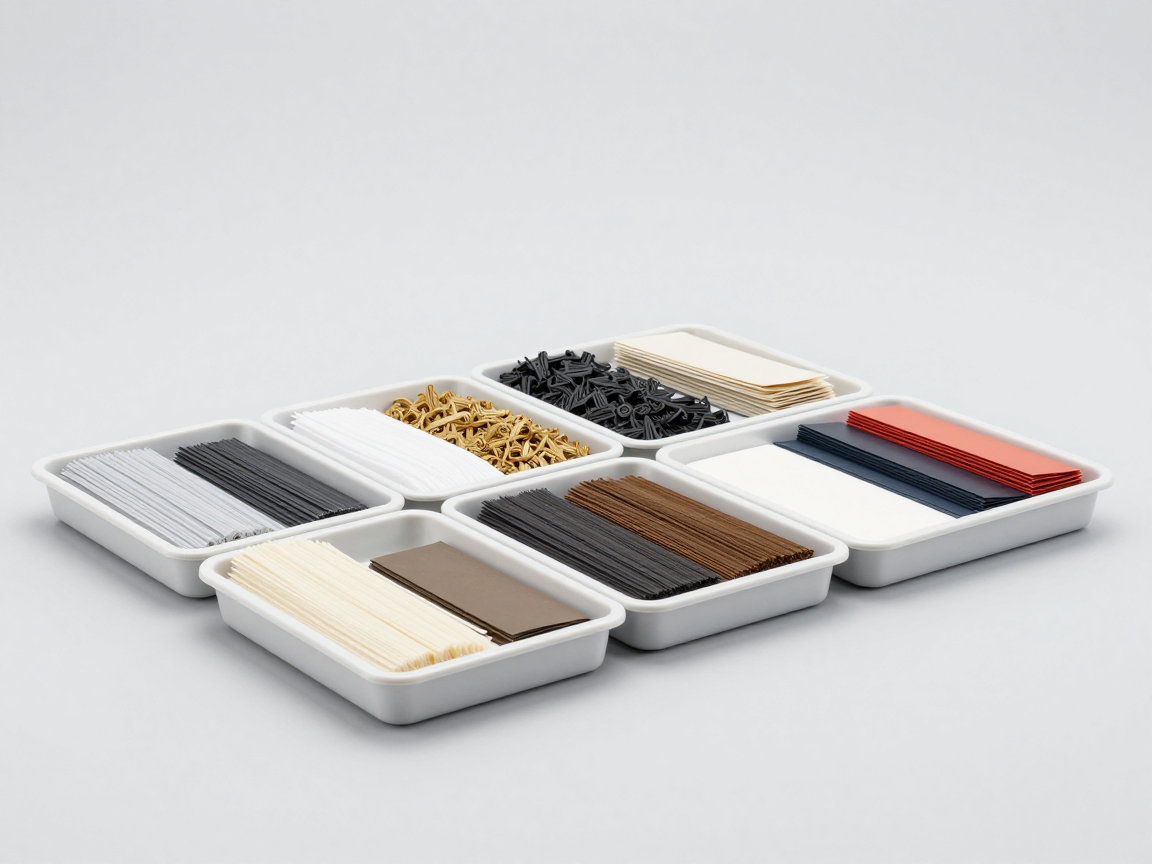
    Disassembled set with materials sorted into groups in separate trays
    A “sufficient” number of samples is enough to test all risk material groups — not the number of products sent.

    8. Frequently asked questions

    Can I send 1 product?

    Yes, if the purpose is just screening or simple product testing and you accept the risk of sending additional samples mid-process. For documents proving compliance with regulations, you should send at least 2.

    The customer asked to try 5 samples, should I comply?

    The customer’s requirements are commercially binding, but the purpose should be clearly asked: test 5 samples to assess variation between different batches, or 5 samples from the same batch to check uniformity. These two purposes lead to two different sampling plans.

    How long do samples need to be kept?

    There are no hard rules for sample retention; The regulation lies in the obligation to keep technical records (10-year practice with RoHS/EU). In fact, samples should be saved at least until the product has reached the end of its sales life, and at least 3–5 years.

    Is the peeled material “expired”?

    Yes. Some materials change over time: metal surfaces oxidize, phthalates can diffuse or evaporate, plastics become brittle and crack. Therefore, stored samples should be used for control purposes, and when new conclusions are needed, new samples should be taken from the batch being sold.

    Can many materials be combined into one sample to make it quick and cheap?

    No, for the purpose of concluding compliance. Pooling dilutes the signal and destroys traceability. Pooling is only suitable for internal screening when the material structure is clearly understood.

    9. Conclusion

    There is no correct number of samples for all cases. Three things to do: one, clearly identify the purpose (specific product type or batch); two, ensuring there is enough homogeneous material to test all risk groups; three, always leave the sample properly packaged.

    If you have to choose a number as default, choose it 2 complete products plus enough materials for risk groups (PVC, plating, welds, recycled plastic, glue/ink/stamp). That is the minimum level for a dossier to be both well-founded and capable of being criticized when needed.

    References

    • IEC 62321-2:2021 — mechanical sampling and sample preparation strategies
    • IEC 62321-3-1, 62321-5, 62321-6, 62321-7-1, 62321-7-2, 62321-8 — method sections
    • EN IEC 63000 — technical document for evaluation of electrical and electronic products against quality restriction requirements

    Related articles


    Discuss further


      Disclaimer

      This article is an interpretive content compiled by us; not legal advice. Recommended sample sizes are based on testing practices; Businesses need to agree with the testing room and with customers for each specific case.

      See more: Copyright Policy & Disclaimer by ticforall.com.
      What is IEC 62321? What parts does the RoHS test method set include and what substances is it used for?

      0
      Cover image of the article «What is IEC 62321? What parts does the RoHS test method set include and what substances is it used for?»

      Every RoHS test report cites at least part of the IEC 62321. But very few people who read the report understand how this set of standards is organized, which parts are used for which substances, and why some parts almost never appear in the report.

      This article is a map of the standards — so when you pick up a test report, you know what it’s about.

      1. What is IEC 62321?

      This is a set of international standards Determination of certain substances in electrical and electronic products (electrotechnical products), developed by IEC, includes many parts released in stages. This set of standards does not prescribe limit — the limit is in Directive 2011/65/EU. IEC 62321 only specifies way of determination content of those substances.

      This distinction is important in practice:

      Text Regulate what?
      Directive 2011/65/EU (and 2015/863) Which substances are restricted, what are the limits, and what are the obligations of the business?
      IEC 62321 (parts) How to sample, dissect, screen and analyze to determine content
      EN IEC 63000 How to prepare technical documents to evaluate products against substance restriction requirements
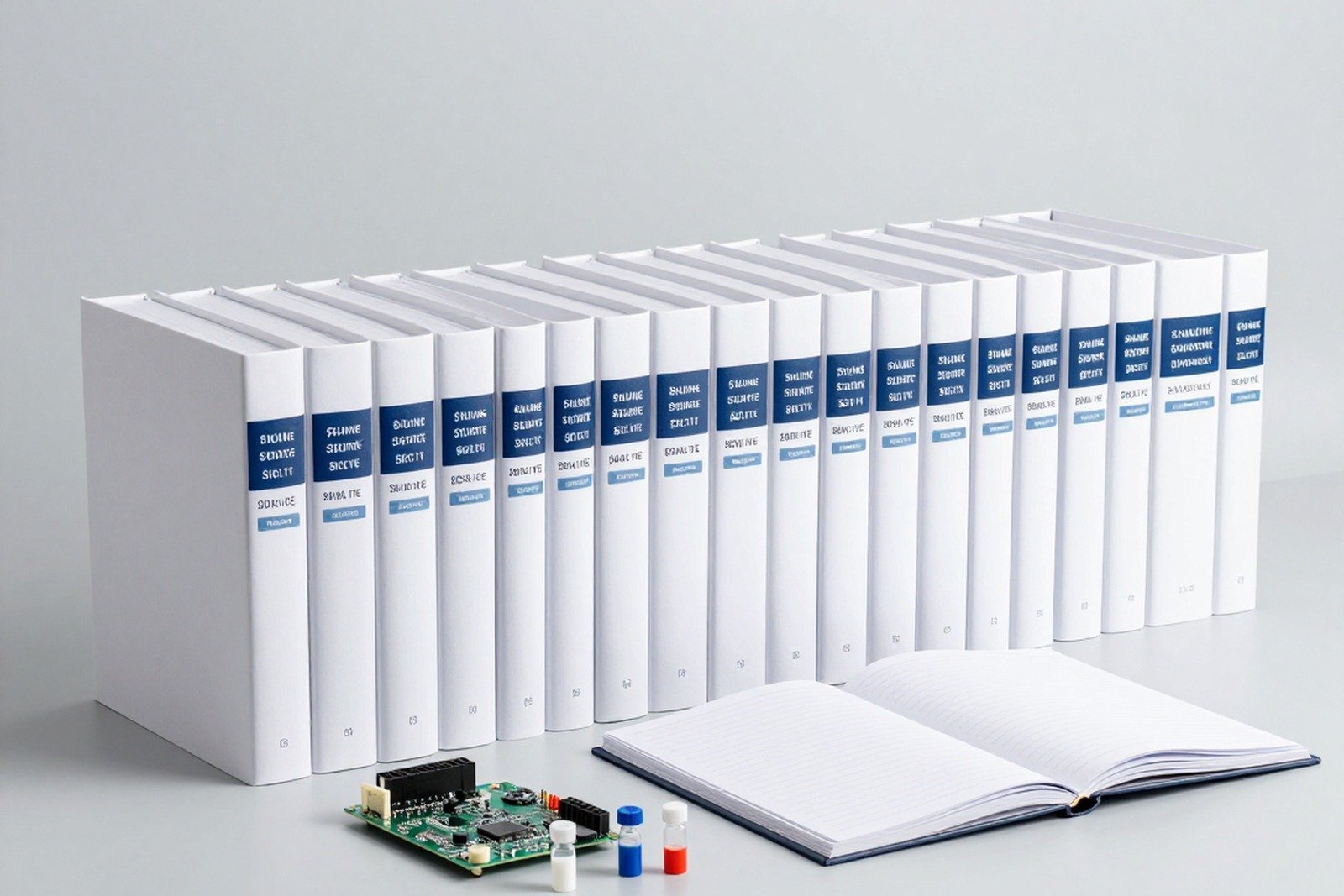
      A row of thick standard books stands next to the electronic circuit board on the desk
      IEC 62321 does not set a limit — it specifies how to determine the content to compare with the limit set by the RoHS Directive.

      2. What parts does the standard include?

      The set of standards is divided according to function (sampling, extraction, screening, analysis) and follow substance group. These are the most important parts:

      Part Content When to use?
      Part 1 Overview and general guidance for the entire set of standards Do not use directly in testing; used to understand the structure of the standards set
      Part 2 (2021 version) Sampling strategy and mechanical sample preparation The step of disassembling every product — is the foundation of every result behind
      Part 3-1 X-ray fluorescence (XRF) screening Rapid screening of heavy metals in plastics and metals
      Part 3-2 (2020 version) Screening of total fluorine, chlorine and bromine in polymers and electronic materials by sample combustion – ion chromatography (C-IC) Quick halogen group test when flame retardants or PVC are suspected
      Part 4 Determination of mercury in polymers, metals and electronic materials Mercury (Hg) — usually according to CV-AAS, CV-AFS, ICP-OES, ICP-MS techniques
      Part 5 (2013 version) Cadmium, lead and chromium in polymers and electronic materials; cadmium and lead in metals — by AAS, AFS, ICP-OES and ICP-MS The three major metals (Pb, Cd, total Cr) — the most cited section
      Part 6 PBB and PBDE in polymers by GC-MS Brominated flame retardants group; especially with recycled plastic
      Part 7-1 Cr(VI) in anti-corrosion coating on metals by colorimetric method Galvanized parts have a chromium passivation layer
      Part 7-2 Cr(VI) in polymers and electronic materials by colorimetric method Cr(VI) in plastics, electronic materials — different subjects from 7-1
      Part 8 (2017 version) Phthalates in polymers by GC-MS and by Py/TD-GC-MS DEHP, BBP, DBP, DIBP — four “new” RoHS substances

      Important note: This set of standards is updated in parts, not at one time. You may encounter part 2 of the 2021 version but part 5 of the 2013 version, part 8 of the 2017 version — that’s normal. Before making references to a contract, check the current version of each section on the IEC site.

      3. Read a test report: what part to look for?

      On the report it says Meaning what did the testing room do?
      IEC 62321-3-1 Only screening by XRF — not a chemical conclusion
      IEC 62321-5 Analyzed metals (Pb, Cd, total Cr) by quantitative method
      IEC 62321-4 Mercury determined
      IEC 62321-6 Tested for PBB and PBDE by GC-MS
      IEC 62321-7-1 or 7-2 Identified Cr(VI) — not total chromium
      IEC 62321-8 Four phthalates tested
      IEC 62321-2 Disassembled according to standards (usually recorded, does not replace analysis results)

      How to quickly check whether a set of documents is complete: compare the list of restricted substances with the sections that appear on the report. If the report only has 3-1 (XRF) and 5 (metal), then PBB/PBDE, Cr(VI) and four phthalates were not tested — even though the report cover may say “RoHS”.

      Glassware, ceramic mortar and pestle and chopped material samples are arranged on the sample preparation table
      Part 2 of IEC 62321 specifies the mechanical sampling and sample preparation strategy — all downstream analysis is based on this input.

      4. Three technical groups in the standard set

      Screening group

      Includes XRF (part 3-1) and sample combustion – ion chromatography for halogens (part 3-2). The goal is to quickly reduce the number of samples that must be analyzed. Screening results always have an “inconclusive” zone and are not in themselves conclusive.

      Elemental analysis group

      Includes mercury (part 4) and total Cd, Pb, Cr groups (part 5). Techniques listed in the standard include AAS, AFS, ICP-OES and ICP-MS. The choice of technique depends on the limit needed, the type of sample matrix and the capabilities of the testing laboratory — for example, ICP-MS gives the highest sensitivity, ICP-OES is suitable when the concentration is higher.

      Organic compound analysis group

      Including PBB/PBDE (part 6) and phthalate (part 8), using GC-MS. This is a group that requires careful sample extraction, because the results strongly depend on the quality of the extraction. Part 8 also shows how to use additional pyrolysis/thermal adsorption accessories (Py/TD-GC-MS) for some cases.

      Laboratory gas chromatograph mass spectrometer with front sample vial tray
      GC-MS is the technique for PBB/PBDEs and four phthalates — a group of substances that XRF cannot test for at all.

      5. Why is the standard set so divided?

      Three practical reasons:

      1. Because different materials need different treatments. Metals and polymers cannot decompose by the same process. Cr(VI) in thin coatings must be evaluated by area (µg/cm²), while heavy metals in plastics must be evaluated by mass percentage.
      2. Because different groups of substances require different equipment. Metals use atomic spectroscopy; organic compounds using gas chromatography mass spectrometry.
      3. Because the set of standards is updated partially. When the EU added four phthalates, it only needed to add section 8 instead of amending the entire set of standards.

      6. China uses its own set of standards: GB/T 39560

      Points businesses exporting to China must remember: mandatory standards GB 26572-2025 (effective August 1, 2027) uniquely designates the string GB/T 39560 do the test method. This series is built according to the structure corresponding to IEC 62321, but test reports for the Chinese market need to cite the correct set of Chinese standards specified.

      Practical consequence: a report stating only IEC 62321 may not be directly acceptable for the purpose of demonstrating compliance with GB 26572-2025. Please check with the testing laboratory before sending samples. Details in the article GB 26572-2025: China’s first mandatory RoHS standard.

      7. Frequently asked questions

      The test report only states IEC 62321 without any part — is there any problem?

      Yes. “IEC 62321” is the name of the whole set of standards, not enough to know what was tested. A proper report must clearly state the section (eg 62321-5, 62321-8). If not clearly stated, ask the testing laboratory to supplement or correct it.

      Why don’t I see part 3-1 in the report but see part 5?

      Because part 3-1 is screening. When the screening results are in the clear pass zone, many dossiers are only kept in internal minutes and not included in the main report. It is imperative that the report contains sufficient results for every restricted substance.

      Is there any part of IEC 62321 devoted to material declaration?

      No. Material declaration falls within the scope of other standards (e.g. IEC 62474 for material declaration in the electrical and electronics industry, or IPC-1752A). IEC 62321 is a set of testing standards.

      Is it okay if the test lab uses the internal method instead of IEC 62321?

      Technically acceptable if the method is validated and has equivalent reliability. But in commerce and in regulatory compliance documents, citing internationally recognized standards makes documents much easier to accept. For the Chinese market, designated standards are mandatory.

      Which is the latest version of IEC 62321?

      Depends on each part. The standards are updated individually, so the parts have different issuance years (for example, part 2 version 2021, part 5 version 2013, part 8 version 2017). Before making references to a contract, check the current version of each section on the IEC site.

      8. Conclusion

      IEC 62321 is a set of standards Specifies how to test, no limit specified. This set is divided by function (part 2 sampling and extraction, parts 3-1 and 3-2 screening) and by substance group (part 4 mercury, part 5 Cd/Pb/Cr, part 6 PBB/PBDE, part 7-1 and 7-2 Cr(VI), part 8 phthalate).

      Practical use: when receiving a report, compare the restricted substances list with the sections cited. A report missing sections 6, 7 or 8 means PBB/PBDE, Cr(VI) or four phthalates were not tested — even if the report cover says “RoHS”.

      References

      • IEC 62321-2:2021 — mechanical sampling and sample preparation
      • IEC 62321-3-1 — XRF screening; IEC 62321-3-2:2020 — screening of total fluorine, chlorine and bromine by sample combustion – ion chromatography
      • IEC 62321-5:2013 — cadmium, lead and chromium in polymers, electronic materials; cadmium and lead in metals, by AAS, AFS, ICP-OES and ICP-MS
      • IEC 62321-8:2017 — Phthalates in polymers by GC-MS and Py/TD-GC-MS
      • Directive 2011/65/EU and Directive (EU) 2015/863
      • GB 26572-2025 — China mandatory standard, GB/T 39560 series designation

      Related articles


      Discuss further


        Disclaimer

        This article is an interpretive content compiled by us; not legal advice. The IEC 62321 standard is updated in parts, so the number of years of publication may vary between parts.

        Before citing in contracts or regulatory compliance documents, businesses need to compare the current version of each section on the IEC site.

        See more: Copyright Policy & Disclaimer by ticforall.com.
        RoHS test procedure from A to Z: from sample receipt, extraction, screening to reporting

        0
        Cover image of the article «RoHS test procedure from A to Z: from sample receipt, extraction, screening to reporting»

        This article is the pillar of a series on RoHS: the entire path of a model, from the time a business submits a request to the time it has a report and a record that stands up to market surveillance agencies.

        The most important points to understand before reading: The test result is only correct if the previous steps are correct. If the analysis is wrong, the analysis results will be meaningless no matter how accurate they are. Without risk assessment, the dossier may be full of reports but still lack substance.

        1. The big picture: 8 steps

        Step Work Who did it? Output
        0 Receive and clarify requests Business + test room Description of scope, target market, applicable standards
        1 Collect information and assess risks Enterprise (chair) List of materials, BOM, supplier declaration
        2 Select template Business + test room Representative sample, saved sample
        3 Dissection until homogeneous material Test room List of homogeneous materials with sample symbols
        4 Screening (XRF) Test room Screening results by 3 regions
        5 Try to confirm by chemical method Test room Quantitative results for each substance
        6 Evaluate results (including exemptions) Business + test room Pass/fail conclusion for each material
        7 Reporting and documentation Test room + business Test reports, technical documents, declaration of conformity

        In these 8 steps, Enterprises must preside over steps 1 and 6. The testing laboratory cannot know which exemptions your product has, nor can it know which materials pose the highest risk in your line. This is the reason why many businesses receive a “pass” report but still do not feel secure.

        Khu vực tiếp nhận mẫu trong phòng thử nghiệm với các mẫu sản phẩm điện tử được ghi nhãn và xếp trên kệ
        Steps 0 and 1 largely determine the quality of the results: clarify the scope and assess the risks before the sample enters the testing room.

        2. Step 0 — Clarify requirements before submitting the form

        Three questions must be answered clearly, in writing:

        1. What is the purpose of this test? Internal control, proving compliance to customers, or resolving a specific dispute? These three purposes lead to three very different sampling strategies.
        2. Which is the target market? EU, China or both. This determines the set of standards cited — for example, for the Chinese market, from August 1, 2027, the GB/T 39560 series must be taken into account, not just IEC 62321.
        3. According to which documents are standards and limits applied? If the customer requires a specific regulation (e.g. their internal standard), it must be stated at the outset.

        3. Step 1 — Collect information and assess risks

        This is the most laborious step and also the most overlooked step. Nature: You can’t test every material in a product — a circuit board can have 20–50 homogeneous materials. Therefore, priority must be given according to risk.

        Information to collect:

        • BOM and drawings at a level of detail sufficient to identify the material (not just the part number).
        • Declare materials from suppliers — according to the homogeneous material structure, with the content of restricted substances.
        • History: Has the product/component ever had results exceeding the limit? Has the supplier changed its technology recently?
        • Material source: recycled plastics, galvanized steel, brass alloys, PVC — these are known high-risk groups.

        How to assess risks along two axes — common and consequences:

        High risk Why? Priority
        PVC cable cover, soft plastic pipe Phthalates, lead, cadmium Required phthalate chemical testing
        Galvanized details with passivation Cr(VI) Test for Cr(VI) by the overlay method
        Recycled plastic (ABS/HIPS) PBDE, cadmium from impure sources GC-MS test for organic bromine
        Brass alloy, valves, connecting pipes Lead up to 4% in many grades Check the 6(c) exemption and applicable deadline
        Printing ink, glue, stamps Phthalate, Cr(VI), lead Often overlooked in the dissection category
        High temperature weld Lead under 7(a) exemption Confirm the correct exemption subsection

        4. Step 2 — Choose a template

        Three principles of practice:

        1. The sample must be representative of the version in production — same supplier, same material grade, same process. If the supplier changes the source of the resin, the old sample is no longer representative.
        2. Batch samples when batch conclusions are needed: if the purpose is to demonstrate a specific batch, there must be a sample taken from that batch and the batch number must be clearly stated.
        3. Always save control samples — the remaining sample, preserved in the right conditions, so that it can be retested in case of dispute. Without a sample, it is impossible to criticize.

        The number of samples and sampling method have their own principles, which are presented in detail in the article on sample selection for a RoHS test set.

        5. Step 3 — Dissection until uniform material

        This is the step that determines the correctness of everything behind. Principle: separation by mechanical means (removing, cutting, crushing, grinding, grinding) down to the smallest unit of material that still has material significance — plating, paint, weld, each type of plastic.

        The output of this step should be one homogeneous material list with sample designation, with a description of the location in the product. Without this list, it is impossible to read the results later, and even more impossible to explain to the customer why a result above the limit is acceptable.

        Concepts and common errors are presented in the article What is “homogeneous material”?

        Bàn sample disassembly với các chi tiết điện tử đã tháo rời, dây cáp cắt dọc và khay mẫu có ghi nhãn
        Stripping creates a uniform material list with sample designations — this is the backbone of the entire RoHS filing.

        6. Step 4 — XRF screening

        The purpose of screening is Reduce the number of samples requiring chemical analysis, not to conclude. Screening results are divided into three zones: pass, inconclusive (close to the limit) and fail. All samples in the inconclusive and failed zones must move on.

        Two parallel limitations to remember: XRF does not distinguish Cr(VI) from Cr(III), and Four phthalates were not tested at all. That is, an XRF-only procedure has never tested 4 of the 10 restricted substances. Details in the article XRF RoHS screening: how to read the results, how much to trust.

        7. Step 5 — Test confirmation for each substance

        Quality Commonly used method Corresponds to IEC 62321
        Lead, cadmium, mercury in plastic/metal ICP-OES or ICP-MS after sample digestion; AAS for some cases Part 5 (lead, cadmium), part 4 (mercury)
        Cr(VI) on metal coating Colorimetric with diphenylcarbazide Part 7-1
        Cr(VI) in polymers and electronic materials Measure color after extraction; Ion chromatography is an additional technique when the sample matrix is complex Part 7-2
        PBB and PBDE GC-MS after extraction Part 6
        Four phthalates GC-MS after extraction Part 8
        Initial screening XRF Part 3-1

        Note on the Chinese market: GB 26572-2025 uniquely specifies the chain GB/T 39560 do the test method. The principle is almost equivalent to IEC 62321, but the report needs to cite the correct set of Chinese standards specified.

        Máy quang phổ ICP-OES trong phòng thí nghiệm với các mẫu dung dịch đã phân huỷ
        The confirmation step uses chemical methods: ICP for metals, GC-MS for organic bromine and phthalate, colorimetry/ion chromatography for Cr(VI).

        8. Step 6 — Evaluate results: a step that factories often skip

        Test results are data. The conclusion is: reviews. The gap between these two things is where the most errors arise.

        Correct evaluation order:

        1. Determine which materials exceed the limit and to what extent.
        2. Check for exemptions before concluding a violation. Materials that exceed the limit but fall within a valid exemption are eligible. This is a step that many businesses skip, leading to unnecessary material replacement — or conversely, confidence that the exemption has expired.
        3. Check the exemption’s expiration date by each subsection (e.g. 6a, 6b, 6b-III, 7a-I) and by the 2026–2027 milestone. See article RoHS Annex III Exemption.
        4. Consider representativeness: this result represents which version, which batch, which time period.
        5. Record the entire argument — conclusions without arguments are worthless when questioned.

        9. Step 7 — Reports and records

        The test report is part of the technical file, not the entire file. Three documents need to be clearly distinguished:

        Documents Who created it? Role
        Test report Test room Data for submitted samples
        Technical profile Enterprise Demonstrate the evaluation process, including the non-testable portion
        Declaration of Conformity (DoC) Enterprise (responsible person) Legal declaration, signed and responsible for the content

        Commonly misunderstood point: there is no organization that “issues RoHS certification” in lieu of the manufacturer’s responsibility. Test reports are proof; The new declaration of conformity is a legal commitment.

        10. Typical time

        Stage Common time
        XRF screening of several materials During the day
        Dissecting a complex product 1–3 business days
        Metal analysis (ICP) 3–5 business days
        GC-MS for PBB/PBDE and phthalates 5–7 business days
        Cr(VI) by coating method 3–5 business days
        Output a complete report for a set of samples 7–10 business days

        This number varies according to laboratory load and whether the sample must be reprocessed or not. Safety plan: calculate 2 weeks for a new set of documents, and send samples at least 3 weeks before the reporting deadline.

        11. Six errors that cause processes to fail

        1. There is no uniform material list. Send the “whole product” to the testing room and then receive a conclusive unusable report.
        2. Just do XRF. Four phthalates and Cr(VI) were not tested — but the records appear as if 10 substances were tested.
        3. Skip glue, ink, stamp, coating. These are the materials that are most likely to exceed the limit and are most likely to be missed.
        4. Do not check exemptions before concluding. This leads to two opposite mistakes: replacing unnecessary materials, or relying on expired exemptions.
        5. Do not save the template. Without a control sample, when there is a dispute, businesses have no basis for criticism.
        6. Records do not update when changed. Changing plastic suppliers, changing plating, changing ink — each change makes the old results less representative.

        12. Frequently asked questions

        Is it mandatory to test every material uniformly?

        In principle, any homogeneous material should be below the limit. In practice, the profile is built by combining: testing representative samples by material group, material declaration from the supplier, and risk assessment. It is imperative grounded for each conclusion — not trying everything, but not jumping to conclusions about the unfounded.

        How is this process different when selling into China?

        Three points: the specified test method (GB/T 39560), the requirement for the EFUP label and substance declaration sheet, and the grouping of products according to regulatory management categories. See article GB 26572-2025.

        The product has many color versions and lengths, how to try it?

        Group variations by material: test a representative sample for each different material group. Shells of different colors but the same type of plastic and the same supplier can use the same result if there is a basis (material declaration, stability history). If there is no basis, it must be tested — especially with colorants because cadmium and chromium are often found in pigments.

        Can old test reports be reused?

        Yes, if three conditions are true: (1) the report includes all substances restricted under current regulations (including the four phthalates); (2) the sample in the report still represents the production version; (3) there have been no changes in materials, suppliers or processes since then.

        Who is ultimately responsible?

        The person who puts the product on the market — for exports to the EU, is usually the manufacturer or importer listed on the product. The test room provides data; The responsibility for concluding compliance with regulations belongs to the enterprise.

        13. Conclusion

        The RoHS test procedure has eight steps, but only three steps determine the quality of the documents: risk assessment (know what to try), dissection (try the correct object), and Evaluate the results to consider exemption (correct conclusion). The rest is technical — important, but the above three steps cannot be compensated for if they are done poorly.

        If you can do only one thing to improve your RoHS profile, do this: Create a uniform list of materials for key products, with the risk level of each material. It’s the foundation of everything else.

        References

        • IEC 62321 (parts) — determination of restricted substances in electrical and electronic products
        • IEC 62321-2 — mechanical sample removal, disassembly and preparation
        • IEC 62321-3-1 — XRF screening
        • Directive 2011/65/EU and Annex III (exemptions)
        • Harmonized standard EN IEC 63000 — technical document for evaluation of electrical and electronic products against quality restriction requirements

        Related articles


        Discuss further


          Disclaimer

          This article is an interpretive content compiled by us; not legal advice. Times and procedures stated are based on common testing practice and may vary by testing laboratory.

          See more: Copyright Policy & Disclaimer by ticforall.com.
          XRF reports “Cr” exceeds the limit: why is it not sure it is Cr(VI) and what should be tested next?

          0
          Cover image of the article «XRF reports "Cr" exceeds the limit: why is it not sure it is Cr(VI) and what should be tested next?»

          This is probably the most controversial situation between the factory and the testing laboratory: the XRF machine reports high chromium, the factory wants to know immediately “whether there is a violation”, and the testing laboratory can only answer “no conclusion yet”. Both sides are right — because this is a limitation measuring principle, not excessive caution.

          The article explains why high chromium results from XRF do not say anything about Cr(VI), and the correct procedure to reach a conclusion.

          1. Total chromium and Cr(VI): two different concepts

          RoHS restrictions 6-valent chromium — Cr(VI), also known as hexavalent chromium. But chromium exists in many different oxidation states, the most common being:

          Form Characteristics Is it restricted by RoHS?
          Cr(III) — trivalent chromium Stable, much less toxic; Used in trivalent chromium passivation layer, tanning, pigment No
          Cr(VI) — hexavalent chromium Strong oxidizer, toxic, causes allergies and cancer; Used in traditional chrome passivation layer, anti-rust paint, hard chrome plating Yes — limit 0.1 %

          XRF counts chromium atoms. It does not read oxidation state. So:

          • “High Cr” result could be 100 % Cr(III) → valid.
          • A “low Cr” result may also still contain Cr(VI) → with coating, the assessment is completely different (see section 4).

          In other words, XRF inability to answer questions about Cr(VI) — in both directions. This is why many testing laboratories only use XRF to decide whether further analysis is needed or not.

          Galvanized steel part with polished chrome passivation next to the handheld XRF machine on the table
          Total chromium and Cr(VI) are two different questions — XRF only answers the first.

          2. Why do you encounter high levels of chromium more often than you think?

          In electronic and mechanical goods, chromium appears in places that are easy to miss:

          • Chromium passivation layer on galvanized or electroplated steel parts — this is the most common source. This layer is very thin but lies exactly on the surface, so XRF measures it immediately.
          • Hard chrome plating on wear-resistant parts, shafts, molds.
          • Paint and anti-rust coating containing chromium pigment (for example, paint containing chromium zinc).
          • Printing inks and plastics contain pigments contains chromium; Some types of recycled plastic contain chromium from other sources.
          • Leather and fabric materials used for chrome tanning — not RoHS-compliant but commonly found in product accessories.

          Common point: chromium is usually located extremely thin surface layer. This creates two opposing consequences — XRF is easy to detect, but sampling for Cr(VI) is also easy to get wrong.

          3. Correct procedure after XRF reports high chromium

          1. Correctly identify chromium-containing homogenous materials. Don’t even try the details. It must be determined whether it is a passive layer, a plating layer, or a paint layer — because each layer is a separate subject of evaluation.
          2. Choose the method according to the nature of the chromium layer:
            • Coatings, passivation layers, plating layers: using methods color measurement (colorimetric, with diphenylcarbazide) — this is the method specified for metal coatings. When the sample matrix is ​​complex or requires confirmation, ion chromatography can be used.
            • Bulk materials (plastics, polymers, electronic materials): determination of Cr(VI) by post-extraction colorimetry — IEC 62321-7-2 specifies the method for this group of materials; In case chromium is dispersed in metal, it dissolves and analyzes like a normal sample, compared to the limit of 0.1%.
          3. Compared to the correct type limit: with coating, Cr(VI) results are often expressed accordingly mass per area (µg/cm²) not by percentage. The corresponding limit for the overlay is 0.1 µg/cm² — this figure is essentially different from 0.1 % by mass.
          4. Clearly state in the report: method, sample area, sample mass, and limit used.

          Step 3 is the most overlooked step. When seeing the result “0.08 µg/cm²”, readers often compare it to 0.1 % and then conclude “much lower than the limit, pass” — while 0.08 µg/cm² compared to the limit of 0.1 µg/cm² is close to the limit, should be handled with caution.

          Test solution in volumetric flasks on laboratory table with pipette and cut metal sample
          Colorimetry and ion chromatography answer the question that XRF cannot answer: of the amount of chromium measured, how much is Cr(VI).

          4. Two chemical methods: colorimetry and ion chromatography

          Colorimetric Ion chromatography (IC) — complementary technique
          Principle Cr(VI) reacts with the reagent to form a pink-purple complex; Measure color intensity using a spectrophotometer Separate Cr(VI) on ion exchange column and measure; Total chromium determined by ICP after oxidation
          Corresponds to IEC 62321 Part 7-1 (metallic coatings) Part 7-2 (polymers and electronic materials) — all use colorimetric methods
          Advantages Fast, low cost, great for coating Good discrimination and quantification when the sample matrix is complex; better handling of difficult samples; is an additional technique besides colorimetry
          Limitations Sensitive to color interference and complex sample backgrounds Higher costs, more complex equipment and techniques
          Most suitable Plating layer, passivation layer, light colored sample Samples have complex backgrounds, samples with many metals, and require high reliability

          In reality, the two methods are not mutually exclusive. In many cases, colorimetry is used for quick checks, and ion chromatography for confirmation when results are close to the limit or when there is a dispute.

          5. Three traps when sampling Cr(VI)

          1. Take the wrong class. If you also submit the part for “Cr(VI) testing”, the testing laboratory is forced to choose the treatment — and the results may reflect the base and not the coating. If you only need to evaluate the passive layer, be clear and ask how to sample.
          2. If the sample is left for a long time, the surface will oxidize. Cr(VI) is the oxidized form; Sample surface changes over time and storage conditions may alter results. Samples should be stored dry, clean, and sent promptly.
          3. Wrong units and limits. As mentioned in section 3: µg/cm² for coating, % by mass for bulk material. These are two different assessments, not directly comparable to each other.

          6. If the result is correct that Cr(VI) exceeds the limit, how to handle it?

          Processing direction Characteristics
          Switch to trivalent chromium (Cr(III)) passivation layer The most common direction and usually already available from the supplier; Corrosion resistance needs to be checked again
          Switch to a chromium-free coating For example organic or titanium/zircon based coatings; Need to rerun to test reliability
          Use exemptions if applicable Only if the specific application falls under a valid exemption — must be documented
          Supply chain control Require galvanized parts suppliers to submit Cr(VI) reports in batches, not just once

          Practical lessons: moving away from Cr(VI) It’s not just about changing chemicals. The new passivation layer may be less corrosion resistant, so environmental testing (salt haze, thermal cycling, humidity) must be rerun. This is why the transition takes time, and why many businesses still have to rely on exemptions in some applications.

          Galvanized metal parts with different passivation layers are sampled and placed in a test tray
          Switching to a trivalent chromium passivation layer is the most common route — but the corrosion resistance must be retested, not just chemically changed.

          7. Frequently asked questions

          XRF reports about 0.2% chromium, is that a violation?

          Cannot conclude yet. Need to know what form that chromium is in. If the plating uses trivalent chromium passivation, the total chromium content can exceed 0.1% without significant Cr(VI).

          Is there any type of XRF that can differentiate Cr(VI)?

          Not commonly used in practice. Distinguishing oxidation state requires specialized spectroscopic techniques with specific equipment, which is not common in commercial RoHS testing. The standard way is to use chemical methods (colorimetry or ion chromatography).

          Why are Cr(VI) results on coatings in µg/cm²?

          Because the coating is very thin, the mass percent concentration does not reflect the true amount of chromium that may be exposed. The assessment based on mass per area is more suitable for the nature of the coating, and the corresponding limit is 0.1 µg/cm².

          What if Cr(VI) exceeds the limit when the product is sold?

          Depending on the circumstances, it may be necessary to compare whether an exemption applies, and there is an obligation to take corrective measures (recall, notification, correction) according to regulations. This is a situation that requires legal consultation, not just technical consultation.

          Is Cr(VI) regulated in any market other than the EU?

          Yes — for example in China, GB 26572-2025 imposes the same 0.1 % limit for Cr(VI) in a list of 10 substances. See more articles about GB 26572-2025.

          8. Conclusion

          When XRF reports high chromium, the correct question to ask is not “by what percentage” but rather “What form is chromium in and what layer is it in?”. Three steps: identify the correct homogeneous material, choose the correct method (colorimetric or ion chromatography), and compare to the correct limit type (µg/cm² for coating, % for bulk material).

          In fact, the majority of high chromium cases are trivalent chromium passivates — that is, valid. But only chemical results can answer, and a good profile always has that result.

          References

          • IEC 62321-7-1 — colorimetric determination of Cr(VI) in metallic coatings
          • IEC 62321-7-2 — colorimetric determination of Cr(VI) in polymer and electronic materials
          • Directive 2011/65/EU, Annex II — 0.1 % limit for Cr(VI)

          Related articles


          Discuss further


            Disclaimer

            This article is an interpretive content compiled by us; not legal advice. Thresholds and methods are stated for reference; Enterprises need to compare the text of Directive 2011/65/EU and the corresponding parts of IEC 62321.

            See more: Copyright Policy & Disclaimer by ticforall.com.
            Directive (EU) 2025/2456: RoHS moves technical assessment to ECHA — what businesses need to know

            0
            Cover image of the article «Directive (EU) 2025/2456: RoHS moves technical assessment to ECHA — what businesses need to know»

            Date December 12, 2025, Directive (EU) 2025/2456 published in the Official Journal of the European Union. This document amends the RoHS Directive — but does not change the limit, does not add substances, does not expand the scope. It changes evaluation apparatus: transfer the task of scientific and technical assessment to European Chemicals Agency (ECHA).

            This is an important change for businesses, because it directly affects two procedures that businesses must use: Please extend the exemption and Restricted substance list review.

            1. What happened — in the correct order

            Time Events
            October 19, 2021 The Committee announces the 2022 work program, which outlines plans to amend regulations restricting toxic substances in electronic devices
            February 14 – March 14, 2022 Get opinions on impact assessment
            March 10 – June 16, 2022 Public consultation on the review of the RoHS Directive; receive 153 comments
            December 7, 2023 Committee announced evaluation report RoHS Directive
            March 15, 2024 Parliament appoints a rapporteur for the dossier
            June 14, 2024 The Council adopted the negotiating stance
            February 18, 2025 The Parliament’s Environment Committee (ENVI) passed the report: 71 in favor, 3 against, 7 abstentions
            April 1, 2025 Parliament approved the negotiating position
            June 12, 2025 The two lawmakers reached a temporary agreement
            October 21, 2025 Parliament officially voted: 477 in favor, 93 against, 76 abstaining
            November 13, 2025 Council approved
            November 26, 2025 Final document signed
            December 12, 2025 Published in the EU Official Gazette

            Important note on scope: Committee chose not to rewrite the entire RoHS Directive. The assessment concluded that the Directive generally operates well; The problem lies in the procedure. The legislative response is therefore a targeted amendment, not a new Directive in its place.

            Stack of printed legal documents placed on desk with pen and magnifying glass
            Directive (EU) 2025/2456 does not change the limit or the substance list — it does who reviews and according to what process.

            2. Why must it be fixed — two weaknesses are named

            The Committee’s assessment report identifies two main weaknesses, both of which are directly related to the business’s work:

            1. Transparency. The exemption decision process and substance list review process are not clear enough to stakeholders.
            2. Efficiency. Hundreds of exemption requests at the same time, limited assessment resources lead to slow progress. Famously, many extensions were announced as a result next or after old expiration date — creating legal space for businesses using the exemption.

            The chosen course of action: placing the technical assessment in the hands of a specialized chemicals agency — ECHA — instead of leaving it to the Commission itself. This is also the spirit of the package “one substance, one assessment” (one substance, one assessment).

            3. What does Directive 2025/2456 change?

            Mission Before After
            Technical review of requests for time-limited exemptions The European Commission organizes the assessment (usually through an outsourced consultant) Switch ECHA
            Process for reviewing the list of restricted substances (Appendix II) Committee Switch ECHA

            This is about change assign tasks. It does not automatically change the list of substances or limits, nor does it change the obligations of businesses.

            4. What is NOT changing

            • 10 restricted substances and limit 0.1% (cadmium 0.01%) based on homogeneous material: remain the same.
            • List of exemptions and deadlines for each item: still decided by separate Authorization Directives — for example, three documents announced on November 21, 2025 updating groups 6, 7(a) and 7(c).
            • Corporate obligations: technical dossier, declaration of conformity, CE mark, 10-year record keeping — kept intact.
            • Harmonized standards for technical documents: still EN IEC 63000.
            • How to prove compliance: still testing, material declaration, supplier records.
            Handheld X-ray fluorescence analyzer placed on table with electronic circuit board
            What businesses must do remains the same: testing, material control and record keeping — only the path of the exemption procedure has changed.

            5. What else did the EU Council say?

            In its stance on the RoHS-related proposal, the EU Council raised two notable points for businesses:

            • The committee should Review and revise the list of restricted substances periodically, at least every 5 years, to ensure a high level of protection for human health, the environment and consumer safety.
            • The transfer of duties to ECHA will increases the volume and scope of work of ECHA’s scientific committees, and needs stable and capable resources to handle; The Council therefore included a review provision.

            Practical implications: The list of 10 substances is not immutable. The 5-year periodic review mechanism is a signal that we should monitor regularly, instead of waiting until there is a new document.

            6. How are businesses affected?

            Case Impact Things to do
            The business is using the exemption and plans to apply for an extension The request will be assessed by ECHA instead of the Commission Prepare a more complete set of technical data: alternatives analysis, reliability data, production volumes, application scope
            Businesses are dependent on existing exemptions Do not change immediately; but progress and decision-making may change Don’t wait for the procedure — there must still be a material conversion plan according to the 2026–2027 deadline
            Businesses interested in new substances may be limited Mechanism to review the list of key substances Monitor information from ECHA in parallel with the Committee; Monitor all dossiers suggesting additional substances
            Businesses only sell, do not produce Almost unchanged Manufacturer’s documentation must still be saved; When there is a change in exemption, documents are required to be updated

            7. What to prepare for an extension request going through ECHA

            The rules for submitting requests remain unchanged: no later than 18 months before the expiration date, and in fact most requests are sent through industry associations to have collective weight. But the quality of the documents needs to be higher. Should be prepared:

            1. Description of specific application — exact to components and functions, not generic descriptions.
            2. Substitutability data: What materials were tested, what were the results, why did they not meet the requirements (reliability, temperature, longevity, cost, availability).
            3. Conversion roadmap: specific timelines, technical steps, and barriers.
            4. Market data: volume of products, number of affected businesses, number of jobs involved.
            5. Impact analysis if not renewed: risk of loss of production capacity, supply chain disruption, and impact on supporting industries.

            This is the type of filing that a single business rarely does well on its own. If you are using a limited exemption in 2026–2027, you should contact your industry association soon, rather than waiting for the deadline.

            Technical files open on the table with blank charts, pens and small electronic components
            Waiver extension applications require technical and market data — not just an application description.

            8. Frequently asked questions

            Does Directive 2025/2456 change the limit or add new substances?

            No. This is a document on transferring scientific and technical assessment tasks to ECHA. Substance lists and limits remain as current.

            Do businesses have to do anything immediately because of this document?

            No new obligations arise directly. What needs to be done is Adjust expectations and internal processes: if you are preparing an application for an exemption extension, the application should be prepared in a more rigorous manner; and if you’re tracking the possibility of adding a new substance, the tracking clue now includes ECHA.

            Is the EU about to rewrite the entire RoHS Directive?

            Not according to this profile. The Committee has evaluated and concluded that the Directive generally operates well; The treatment direction is targeted modification. This is an important difference compared to many rumors in the market about “new RoHS”.

            When is the specific application date of the transfer?

            The directive has a roadmap for transferring tasks; Detailed application milestones for each procedure should be collated directly in the document on EUR-Lex and followed by official announcements from the Commission and ECHA. As a practical matter, businesses should assume the new requirement will go through ECHA and prepare the corresponding documentation.

            Does the 5-year review of the substance list mean more restricted substances are coming?

            There are no documents that add new substances. What the EU Council stated is: mechanism: The Committee should review and revise the list at least every five years. This is a risk to monitor, not a change that has occurred.

            9. Conclusion

            Directive (EU) 2025/2456 is the final result of the RoHS review starting in 2021 — and a Modest in scope but important in operation: technical review of exemptions and review of substance lists moved to ECHA, with the expectation of greater transparency and efficiency.

            For businesses, three things to remember: one, limit and 10 constant substances; two, the exemption deadline is still determined by the individual Mandate Directives and the 2026–2027 milestones are still running; three, the substance list will be reviewed periodically so monitoring needs to become a habit, not a one-time event.

            References

            • Directive (EU) 2025/2456 of the European Parliament and of the Council of 26 November 2025, amending Directive 2011/65/EU on the transfer of scientific and technical tasks to the European Chemicals Agency (published in the EU Official Gazette on 12 December 2025)
            • European Parliament — Legislative record: amendments to regulations restricting toxic substances in electronic devices (information updated August 1, 2026)
            • European Commission RoHS Directive assessment report, published December 7, 2023
            • Communiqués of the European Parliament, June 12, 2025 and October 21, 2025

            Related articles


            Discuss further


              Disclaimer

              This article is an interpretive content compiled by us; not legal advice. The timelines are stated for reference as of September 28, 2026.

              Before applying for a specific application, businesses need to compare the full text of Directive (EU) 2025/2456 and Directive 2011/65/EU (consolidated version) on EUR-Lex, and consult with a recognized testing unit or consultant.

              See more: Copyright Policy & Disclaimer by ticforall.com.

              RoHS 2026: changes Vietnamese businesses must understand before import season

              0
              Cover image of the article «RoHS 2026: changes Vietnamese businesses must understand before import season»

              If you only read one article about RoHS this year, make it this one. 2025–2027 is the period where RoHS has changed the most since 2019: The EU just extended a series of exemptions with milestones falling in 2026–2027, the EU moved its technical review apparatus to ECHA, and China introduced the RoHS standard for the first time required.

              The article summarizes the changes over time, and ends with a to-do list in 2026.

              1. Summary table: what milestones, what tasks

              Mold Change Who is affected?
              Announced November 21, 2025 Three Authorization Directives (EU) 2025/2364, 2025/1802, 2025/2363 Update exemption from Annex III on lead (groups 6, 7a, 7c) Manufacturer uses exemptions: alloys, brass alloys, high temperature welds, glass/ceramic components
              Announced December 12, 2025 Instructions (EU) 2025/2456 — transfer the task of scientific and technical assessment to ECHA The entire business is interested in the exemption process and substance list
              December 11, 2026 Expiry of exemptions 6a and 6b-I (groups 1–7, 10) Hot-dip galvanized steel details; Recycled aluminum contains lead
              June 11, 2027 Expiry of exemptions 6b and 6b-II (groups 1–7, 10) Aluminum alloy contains up to 0.4% lead; Machined and cut aluminum
              June 30, 2027 Expired 6a-I, 6a-II, 6b-I/6b-II (industrial group 9, 11), 6b-III, 6c, 7a, 7c-I Brass alloy ≤ 4% lead; high melting temperature weld; glass/ceramic of components
              August 1, 2027 GB 26572-2025 of China takes effect All electrical and electronic products circulating on the Chinese market, including imported goods
              December 31, 2027 Expiration 7a-I to 7a-V; 7c-II; 7c-V; 7c-VI Semiconductor and die mounting; dielectric ceramic capacitors; PZT/PTC ceramic; functional glass
              Calendars and technical files on the desk next to electronic parts and metal components
              Four milestones need to be circled in red: December 11, 2026, June 11, 2027, June 30, 2027 and December 31, 2027 — plus the August 1, 2027 milestone of the Chinese market.

              2. EU: new limited lead exemption

              Three Mandatory Directives adopted by the Commission on September 8, 2025 and published in the EU Official Gazette on November 21, 2025, update three groups of exemptions:

              • Group 6 — lead is an alloying element in steel, aluminum and copper alloys. Points of interest: the items are small cup by application (6a-I, 6a-II, 6b-I, 6b-II, 6b-III), and two entries attaching word origin conditions Recycled aluminum contains lead.
              • Group 7(a) — lead in high-melting-temperature solder joints (alloys containing 85% or more lead). Original Section 7a expires June 30, 2027; Subsections 7a-I to 7a-V expire December 31, 2027.
              • Group 7(c) — lead in glass or ceramic components. Two items completely new are separated: 7c-V (functional glass: high-voltage diode protection, sealing, resistor materials, microchannel plates…) and 7c-VI (PZT ceramic and PTC positive thermal coefficient ceramic).

              Things businesses often miss: When the EU splits an old section into multiple subsections, businesses not only have to update deadline date but also need to update correct item number in the technical dossier and declaration of conformity. Writing “7a” when actually using 7a-III will cause the application to be interpreted according to the earliest deadline.

              3. EU: ECHA receives technical assessment

              Date December 7, 2023, the Commission publishes a report evaluating the RoHS Directive. Conclusion: The directive generally works well, but has two weaknesses — transparency and process efficiency decide on exemption and update the list of substances.

              To handle it, the Committee chooses a way do not rewrite the entire Directive, but only transferred the task of scientific and technical assessment European Chemicals Agency (ECHA). This proposal is included in the package “one substance, one assessment” and completed Directive (EU) 2025/2456.

              This process goes through all the steps of normal legislative procedures: Parliament approved on October 21, 2025 (477 votes in favor, 93 votes against, 76 abstentions), Council approved on November 13, 2025, document signed on November 26, 2025 and published in the EU Official Gazette on December 12, 2025.

              A notable point in the Council’s position: the list of restricted substances should be determined by the Commission reviewed and revised periodically at least every 5 years. Implication: don’t take the current list of 10 substances as immutable. The Council also noted that transferring tasks to ECHA would increase the workload of ECHA’s scientific committees, and would require stable resources to handle them.

              4. China: from recommendation to requirement

              Date August 1, 2025, China announced GB 26572-2025 — RoHS standard required First, potency August 1, 2027, completely replaces GB/T 26572-2011 (standard recommended).

              In the Chinese standards system, “GB/T” is a recommendation — enterprises may not comply; “GB” is mandatory and is the basis for market surveillance and sanctions. Removing the letter “T” means changing the essence, not the words.

              Four main contents of the new standard:

              1. 6 → 10 substances: Add four phthalates DBP, DIBP, BBP, DEHP with limit ≤ 0.1% — similar to EU.
              2. Uniquely designate the GB/T 39560 series do the test method. This is clearly different from the EU: the EU does not specify just one set of methods.
              3. Divide into two product groups: Group I (in the list of conformity management) must meet both substance limits and label requirements; Group II only has label obligations.
              4. Labels become mandatory at national standards level, through content integration SJ/T 11364-2024 — includes the EFUP label and toxic substance declaration sheet.

              Small but easily overlooked things: pre-printed label mold. Many factories in Vietnam still use the 6-substance table of the 2011 standard. From 2027, the table must have 10 substance lines.

              Small electronic products placed next to cartons and inspection panels on the packaging table
              China is the second market, after the EU, to change RoHS requirements from voluntary to mandatory with a list of 10 substances.

              5. Vietnam: domestic documents are still temporary regulations

              On the Vietnamese side, Circular 30/2011/TT-BCT (issued on August 10, 2011) regulations temporary Limit the allowable content of some toxic chemicals in electrical and electronic products. Similar approach to RoHS: limits calculated according to homogeneous material product composition.

              Point to note: this is text temporary, came out before the EU added four phthalates and before China moved to a mandatory standard. Therefore, enterprises producing for the domestic market should still compare themselves against international standards if they want to use the same records for many markets.

              6. What will NOT change (to avoid worrying too much)

              • The limit is still 0.1% (0.01% cadmium alone) calculated accordingly homogeneous material. There are no changes to the limit in the above-mentioned documents.
              • The list of substances is still 10 substances. The three Authorization Directives of November 2025 are about exemption, no new substances added. Directive 2025/2456 is about evaluation apparatus.
              • Obligation to keep records for 10 years and the CE marking and declaration of conformity obligations remain in effect.
              • Harmonized standards for technical documents remains EN IEC 63000.
              Industrial electronic circuit board with power components and heatsink on table, next to wires and brass parts
              Groups most affected by the 2026–2027 milestones: high-temperature welds, brass alloys, galvanized steel parts, and glass/ceramic components.

              7. Things to do in 2026 — list of 8 things

              1. Mapping exemptions: product → components/materials → currently used exemption item → corresponding term (according to the table in section 1).
              2. Check out the subsection: correctly identify 6a-I/6a-II/6b-I/6b-II/6b-III and 7a-I…7a-V; Check if your PZT or PTC ceramic application is now 7c-V or 7c-VI.
              3. Update documents and declaration of conformity by new item number — don’t just change the due date.
              4. Check out these four phthalates if you haven’t tried them before: starting from PVC cables, soft plastic covers, glue, and printing ink.
              5. Choose a testing room according to the right market: For sale into the EU, IEC 62321 is sufficient; If selling to China, you must ask clearly whether the report cites GB/T 39560 or not.
              6. Update label mold from 6 to 10 substances for the Chinese market; Check the EFUP label specifications.
              7. Test run replacement materials 6 months ahead of schedule: Changing materials is not just about changing suppliers, but also having to rerun reliability tests (high temperature, thermal cycling, corrosion).
              8. Track two sources: exemption information from the European Commission and ECHA; and China’s compliance management list (the list can be expanded, changing product obligations).

              8. Frequently asked questions

              Will 2026 add new restricted substances?

              As of the time of writing, There are no documents that add new substances go to Appendix II. The 2025 changes are to exemptions and to the assessment apparatus. However, both the EU (following the Council’s position) and China have put in place mechanisms to periodically review the substance list — so this is a risk to monitor, not one that has already occurred.

              The exemption expires midway, what happens if the goods are in production?

              General principle: products that have been placed on the market before the new obligation takes effect can continue to be sold. But time to market must be proven — export records, invoices, delivery dates become important documents. Details are in the article about exemptions from Appendix III.

              What should businesses exporting to both the EU and China do first?

              Priority according to the nearest milestone: December 11, 2026 (group 6a) — but preparation must begin in 2026. Regarding the dossier, most of the content is shared (list of substances and limits are almost identical); the main difference is specified test method and label request.

              Is it necessary to redo all the existing testing?

              Not necessarily. If the old report includes all 10 substances (including phthalates) and the sample is representative of the production version, most of the results can be reused. The things that have to be done again are: adding phthalates (if not already there), retesting when changing materials/suppliers, and reporting according to the target market’s specified standards.

              If ECHA accepts, will the exemption processing time be faster?

              This is the expectation and also the goal of change — but the results cannot yet be confirmed. The EU Council has noted that the transfer of tasks increases the workload of ECHA scientific committees and requires stable resources. Businesses should continue with material conversion plans, not wait for the procedure.

              9. Conclusion

              2026–2027 is the period does not add new substances, but greatly changes the exemptions, assessment apparatus and legal requirements of the Chinese market.

              Four milestones need to be circled in red: December 11, 2026 (6a), June 11, 2027 (6b), June 30, 2027 (6a-I, 6a-II, 6b-III, 6c, 7a, 7c-I and items in groups 9/11), December 31, 2027 (7a-I…V, 7c-II/V/VI) — plus August 1, 2027 for China GB 26572-2025.

              The most important thing, and also the most easily procrastinated, is map exemptions for each product. Without that map, it is impossible to know which products must be redesigned, and according to what milestones.

              References

              • Authorization Directives (EU) 2025/2364, (EU) 2025/1802, (EU) 2025/2363 — published in the EU Official Gazette on 21 November 2025
              • Directive (EU) 2025/2456 — transferring scientific and technical tasks to ECHA (signed November 26, 2025, announced December 12, 2025)
              • European Commission RoHS Directive assessment report, published December 7, 2023
              • European Parliament — Legislative records on amendments to regulations restricting toxic substances in electronic devices (updated August 1, 2026)
              • GB 26572-2025 — Requires restrictions on the use of toxic substances in electrical and electronic products (announced August 1, 2025, effective August 1, 2027)
              • SGS Safeguards 137/25 (September 18, 2025) about GB 26572-2025
              • Circular 30/2011/TT-BCT dated August 10, 2011 of the Ministry of Industry and Trade

              Related articles


              Discuss further


                Disclaimer

                This article is an interpretive content compiled by us; not legal advice. Timelines and content are stated for reference as of September 28, 2026 and may have been updated thereafter.

                Before applying to a specific product or shipment, businesses need to compare the verbatim documents on EUR-Lex and the GB 26572-2025 standard, and consult with a recognized testing unit or consultant.

                See more: Copyright Policy & Disclaimer by ticforall.com.

                GB 26572-2025: China’s first mandatory RoHS standard, effective August 1, 2027

                0
                Cover image of the article «GB 26572-2025: China's first mandatory RoHS standard, effective August 1, 2027»

                Date August 1, 2025, China officially announced GB 26572-2025 — “Requirements to limit the use of hazardous substances in electrical and electronic products”. Here it is first mandatory RoHS standard of China, yes effective from August 1, 2027 and completely replace GB/T 26572-2011.

                For Vietnamese businesses exporting to China — or buying components from China to resell — this is the biggest change in the past 15 years in this market. The article fully summarizes the new content and a to-do list before 2027.

                1. From “GB/T” to “GB”: why is the letter T important?

                The Chinese standard system distinguishes two types very clearly:

                Symbol Type Properties
                GB/T National standards recommended Voluntary application; Businesses can choose to comply or not
                GB National standards required Forced compliance; is the basis for market surveillance and sanctions

                Old standard GB/T 26572-2011 is a recommended standard — businesses comply largely because of commercial requirements from customers, not because of direct legal obligations. New standard GB 26572-2025 remove the “T”: from August 1, 2027, this is a legal obligation.

                Practical consequences: electronic goods entering the Chinese market will have an additional layer of mandatory inspection, which may be inspected at the port, at the warehouse or at the point of sale; and Chinese importers will tighten documentary requirements with foreign suppliers long before the effective date.

                Small electronic products stacked in cartons with inspection records on the table
                GB 26572-2025 raises China’s RoHS requirement from recommended level to level required — that is, from a commercial requirement to a legal obligation.

                2. Four main changes of GB 26572-2025

                1. Expanded from 6 to 10 substances — adds four phthalates, similar to EU RoHS.
                2. Specify only one set of test methods: string GB/T 39560.
                3. Divide into two product groups with different obligations: Group I and Group II.
                4. Raise label regulations to mandatory level — the content of SJ/T 11364-2024 is incorporated into the mandatory national standard.

                3. List of 10 substances and limits

                # Quality Abbreviation Threshold (% mass)
                1 Lead Pb ≤ 0.1
                2 Mercury Hg ≤ 0.1
                3 Cadmium CD ≤ 0.01
                4 Hexavalent chromium Cr(VI) ≤ 0.1
                5 Polybrominated biphenyls PBB ≤ 0.1
                6 Polybrominated diphenyl ethers PBDE ≤ 0.1
                7 Dibutyl phthalate DBP ≤ 0.1
                8 Diisobutyl phthalate DIBP ≤ 0.1
                9 Benzyl butyl phthalate BBP ≤ 0.1
                10 Bis(2-ethylhexyl) phthalate DEHP ≤ 0.1

                The four new substances are four phthalates (DBP, DIBP, BBP, DEHP) — plasticizers commonly found in PVC of cables, flexible housings, glues and printing inks. These are also the four substances that the EU added to RoHS with Directive (EU) 2015/863. In other words: after this change, The substance lists of China and the EU almost overlap in quantity and limit.

                Implication for Vietnamese businesses: if the product has met EU RoHS and has been tested for phthalates in cables, fabric covers, and soft plastic covers, then the “substance” part is considered done. The missing part is usually label and Test method according to GB/T 39560.

                Close-up of the black PVC cable and soft plastic case of the electronic device
                The four new substances are phthalates – plasticizers concentrated in the PVC of cables and soft plastic covers, exactly where the limit is most likely to be exceeded.

                4. Test method: GB/T 39560 series is the only choice

                This point is clearly different from the EU. EU RoHS no specify only one set of test methods — businesses can use IEC 62321, or an in-house method of equivalent reliability, as long as it can be proven. GB 26572-2025 then Specify series GB/T 39560 as the only method of determination.

                GB/T 39560 series (“Determination of certain substances in electrical and electronic products”) is built in accordance with the international standard IEC 62321, including the following main parts:

                Content Corresponds to IEC 62321
                Overview and general instructions Part 1
                Dissection, disassembly and mechanical sample preparation Part 2
                X-ray fluorescence (XRF) screening Part 3-1
                Determine mercury Part 4
                Determination of cadmium, lead, chromium in polymers and electronics Part 5
                Determination of PBB and PBDE Part 6
                Determination of hexavalent chromium (colorimetric method; ion chromatography method) Parts 7-1 and 7-2
                Determination of phthalates Part 8

                Consequences to note: a RoHS test report according to IEC 62321 in a Vietnamese laboratory may not be accepted directly for the purpose of demonstrating compliance with GB 26572-2025, since the standard requires a method according to GB/T 39560. In fact the two sets of standards are very close in principle and equipment, but Must ask the testing room first: whether the report properly cites GB/T 39560 or not.

                5. Two product groups: Group I and Group II

                Group I Group II
                Conditions Product is inside regulatory management list (list published by the management agency) Remaining products
                Obligation on substance limitation Required reached the limit of 10 substances Only obligation label; REACHing the substance limit is encouraged voluntarily
                Label obligations Yes Yes

                This grouping is a point to grasp firmly because it is decisive volume work: products in Group I must be fully tested; Group II products still must be properly labeled but are not required to prove substance limits. Businesses need to check the current list to know which group their products belong to — and should ask the Chinese importer, because this is the basis they use when checking goods.

                6. Label: EFUP and list of 6 substances are now mandatory

                Previously, China’s label regulations were in standard SJ/T 11364 (2014 version). GB 26572-2025 include these label requirements in mandatory national standards, through the integration of the content of SJ/T 11364-2024.

                Two familiar label ingredients of the Chinese market:

                • EFUP label (Environment-Friendly Use Period): “environmentally friendly use period” symbol — a circle with an arrow and a number in the middle, representing the number of years (from the date of manufacture) that toxic substances in the product do not leak out under normal use conditions. If this cycle is shorter than the design life, it is necessary to record the manufacturing date in the form of day/month/year (4 digits for the year).
                • Table announcing toxic substances: The table lists 10 substances (after updating) and for each substance, write “O” (content below the required limit) or “X” (exceeds the limit), with an EFUP label in the middle of the table.

                Practical note: Many pre-printed label sets in Vietnam still follow the table 6 substances of GB/T 26572-2011. With the August 1, 2027 date and the addition of four phthalates, the label mold needs to be updated to 10 lines of substance. This is a small thing but the easiest to miss, because it lies in the printing stage, not in the technical stage.

                Rear view of a small electronic device with blank label area and unprinted white label
                China’s labeling regulations are now mandatory at the national standard level — and the substance declaration table must be updated from 6 to 10 substances.

                7. Update terminology

                GB 26572-2025 changes the wording and adds three new definitions:

                • The phrase “restricted substances” is replaced by “toxic substance” (hazardous substances).
                • Additional definitions “environmentally friendly use cycle” (environment-friendly use period).
                • Additional definitions “regulatory management list” — basis for determining Group I.
                • Additional definitions “exemption” (exemption).

                It may sound like just a matter of words, but here’s an important signal: defining “exemption” right in the standard means that China’s exemption mechanism will be more clearly operational — and businesses using exemptions will have to clearly state it in their records, just like the EU is doing.

                8. Quick comparison of EU RoHS and GB 26572-2025

                Criteria EU — Directive 2011/65/EU China — GB 26572-2025
                Limited number of substances 10 10 (after update)
                Threshold 0.1% (Cd 0.01%) according to homogeneous material 0.1% (Cd 0.01%)
                Test method No single indication; IEC 62321 is the common reference Unique designation GB/T 39560
                Label No separate RoHS label; CE marking is required The EFUP label and substance declaration sheet are required
                Exemption mechanism Annexes III and IV, extended in installments There is a definition of exemption in the standard
                Time of application 2011/65/EU from 2013; Phthalates from 2019/2021 Required words August 1, 2027

                9. What do Vietnamese businesses need to do, according to the timeline?

                1. Right now — browse the categories: Determine whether products sold into China belong to Group I or Group II. Ask the Chinese importer directly; This is the party responsible before the domestic management agency.
                2. Before 2027 — test for four phthalates: If you’ve never tried phthalates, start with PVC cables, flexible plastic covers, glue and ink. This is the highest risk group.
                3. Before 2027 — test room closing with GB/T 39560: Check the scope of accreditation of the testing laboratory and request a report citing the correct GB/T 39560 series.
                4. Before 2027 — label mold update: From the table of 6 substances to 10 substances; Check the EFUP label specifications and manufacturing date.
                5. Before 2027 — technical profile update: Added phthalate results, new substance declaration table, and component supplier documents.
                6. Periodically — monitor the compliance management list: The catalog can be expanded, changing the grouping of your products.

                10. Frequently asked questions

                Does GB 26572-2025 apply to imports into China?

                Yes. Mandatory national standards apply to products circulating in the Chinese market, regardless of domestic or imported production. The Chinese importer is usually the party subject to direct inspection, and they will require the foreign supplier to provide documents.

                Does a product that has passed EU RoHS automatically meet GB 26572-2025?

                Regarding the list of substances and limits, they are almost identical. But there are three separate things: EFUP label and substance declaration table (mandatory), test method according to GB/T 39560, and product grouping according to Chinese categories. So the answer is: The platform is reusable, but not automatically achieved.

                Is the RoHS report according to IEC 62321 available?

                Should not be used directly. GB 26572-2025 specifies GB/T 39560. The principle and equipment are almost equivalent, but the report needs to cite the correct set of specified standards so as not to be rejected during inspection.

                Group II only needs the label — so can the trial be abandoned altogether?

                Regarding legal obligations under GB 26572-2025, Group II only requires labels. But in reality, customers, retail chains and other regulations (for example, e-commerce platform requirements, or contractual requirements) can still force businesses to try. And if the product is moved into the regulatory control category, full obligations will apply.

                What is the landmark to remember?

                August 1, 2027 — effective date of GB 26572-2025. But the time to act is much earlier: Chinese importers often request new documents 6–12 months before the effective date, which is right in 2026.

                11. Conclusion

                GB 26572-2025 is China’s move from “recommended” to “mandatory” on RoHS, with four core changes: 6 → 10 substances (plus four phthalates), uniquely designates the GB/T 39560 series as the test method, divides the product into two groups, and raises the EFUP label requirement to mandatory level. Magnetic effect August 1, 2027.

                Three things to do in 2026: one, determine whether the product belongs to Group I or Group II; two, test for four phthalates if you haven’t tried them before; three, update the label mold from 6 to 10 substances and choose a testing laboratory with GB/T 39560 within the scope of accreditation.

                References

                • GB 26572-2025 — Requires restrictions on the use of toxic substances in electrical and electronic products (announced August 1, 2025, effective August 1, 2027)
                • GB/T 26572-2011 — previously recommended standard
                • SJ/T 11364-2024 — label regulation, incorporated into GB 26572-2025
                • GB/T 39560 series — determination of certain substances in electrical and electronic products
                • SGS Safeguards 137/25 (September 18, 2025) — China Issues Mandatory RoHS Standard – GB 26572-2025

                Related articles


                Discuss further


                  Disclaimer

                  This article is an interpretive content compiled by us; not legal advice. The content of GB 26572-2025 is summarized from published information and introductory documents of certification organizations; may have been shortened from the standard text.

                  Before applying to a specific product, businesses need to compare the original standard GB 26572-2025, the current conformity management list, and consult with an importer or accredited testing unit in China.

                  See more: Copyright Policy & Disclaimer by ticforall.com.

                  RoHS Annex III exemption: three delegated directives 2025/2364, 2025/1802, 2025/2363 and deadlines 2026–2027

                  0
                  Cover image of the article «RoHS Annex III exemption: three delegated directives 2025/2364, 2025/1802, 2025/2363 and deadlines 2026–2027»

                  Date November 21, 2025, announced by the European Commission three Authorization Directives Bulk update of exemptions about lead in Annex III of the RoHS Directive. The new expiration date falls on December 11, 2026, June 30, 2027 and December 31, 2027 — meaning the business is relying on a yes exemption less than 15 months to prepare.

                  This article fully lists the newly extended exemptions, the new deadline for each item, and what businesses must do according to each milestone.

                  1. What is the RoHS exemption and why does it still exist?

                  RoHS sets limits for 10 substances, but for some applications not yet reliable replacement material — or technically replaceable material that compromises product reliability, longevity, or safety. Therefore, the Directive has a mechanism exemption (exemption): allows exceeding the limit in a specific application, within a specific time limit.

                  Appendix III Appendix IV
                  Apply for Groups 1–7, 10 and 11 Group 8 (medical equipment) and group 9 (monitoring – control)
                  Typical example Lead in high-melting solder joints, lead in brass alloys, lead in glass/ceramic components Lead in some components used for medical equipment and specialized measuring equipment

                  Exemption not the default permission. Businesses that want to use it must: (1) correctly identify the exemption section that applies to their product, (2) clearly state that exemption section in the technical dossier and declaration of conformity, and (3) monitor the expiration date of that section to have a solution before its expiration.

                  Exemption mechanism exists Maximum lifespan 5 years for each extension (in some special cases it may be longer), and renewed in installments. The process includes: business or industry association submits request for extension → Commission hires independent research to evaluate → draft Authorization Directive → Parliament and Council review → publication in the EU Official Gazette. Businesses are advised to submit a request no later than 18 months before the expiration date — this is the reason why many exemptions are extended so closely, even after the old deadline.

                  Electronic circuit board with solder joints and components, magnifying glass looking at a solder joint
                  Most of the exemptions that have just been extended revolve around lead: in high-melting temperature welds, in alloys, and in glass/ceramic components.

                  2. Three Authorization Directives have just been announced

                  Three documents were approved by the Committee today September 8, 2025 and published in the EU Official Gazette on November 21, 2025:

                  Text Update exemption group Content
                  (EU) 2025/2364 Group 6 (6a, 6b, 6c) Lead is an alloying element in steel, aluminum and copper alloys
                  (EU) 2025/1802 Group 7(a) Lead in high melting point solder (alloy containing ≥ 85% lead)
                  (EU) 2025/2363 Group 7(c) Lead in glass or ceramics of electrical and electronic components

                  3. Group 6 — lead in steel, aluminum, copper alloys: (EU) 2025/2364

                  Section Exempt content New deadline
                  6a Lead is an internal alloying element steel for cutting and machining and in hot-dip galvanized steel, containing a maximum of 0.35% lead by mass December 11, 2026
                  6a-I Lead is an alloying element in cutting steel that contains a maximum of 0.35% lead June 30, 2027 (all groups)
                  6a-II Lead in the details hot-dip galvanized steel in batches Contains a maximum of 0.2% lead June 30, 2027 (all groups)
                  6b Lead is an internal alloying element aluminum Contains a maximum of 0.4% lead June 11, 2027
                  6b-I Lead in aluminum (≤ 0.4%) with conditions Derived from recycled aluminum containing lead December 11, 2026 (groups 1–7, 10); June 30, 2027 (industrial group 9, group 11)
                  6b-II Lead in aluminum used for cutting and machining, lead content up to 0.4% June 11, 2027 (groups 1–7, 10); June 30, 2027 (industrial group 9, group 11)
                  6b-III Lead in cast aluminum alloy contains a maximum of 0.3% lead, provided that it is sourced from lead-containing recycled aluminum June 30, 2027 (groups 1–8, group 9 not industrial monitoring and control equipment, group 10)
                  6c Copper alloys contain a maximum of 4% lead by volume June 30, 2027

                  How to read this table: This is an exemption group that affects the precision mechanical industry — turning parts, screws, connectors, brass parts. The notable new point is that the items are small cup by application (6a-I, 6a-II, 6b-I, 6b-II, 6b-III), of which two items attach the condition “derived from recycled aluminum”. Splitting helps the unit to renew later more accurately, but also forces the business to Identify the correct subsection I’m using it – using the wrong subsection means the profile is wrong.

                  4. Group 7(a) — high fusion welds: (EU) 2025/1802

                  Section Exempt content New deadline
                  7a Lead in high melting temperature type welds (lead alloy containing 85% lead or more) June 30, 2027 (all groups, except applications in section 24 of Annex III)
                  7a-I High melting point welds for internal connection when mounting die or mounting the die with other components in a semiconductor assembly, with steady/pulsed current ≥ 0.1 A, or blocking voltage above 10 V, or die edge size larger than 0.3 mm × 0.3 mm December 31, 2027
                  7a-II High melting point welds for mold-mounted integrated connector in components, when the mold mounting material after curing/sintering reaches: thermal conductivity > 35 W/(m·K), electrical conductivity > 4.7 MS/m, solidus temperature higher than 260 °C December 31, 2027
                  7a-III High melting point welds first floor weld (internal or integrated connection) to manufacture components, so that when attaching components to the board by second-layer soldering, the first-layer solder joints do not reflow. Not applicable for mold mounting and sealing December 31, 2027
                  7a-IV High melting point welds second floor weld When mounting components on a printed circuit board or frame: (1) in a solder ball to mount a ceramic BGA; (2) in molded parts covered with high temperature resistant plastic (> 220 °C) December 31, 2027
                  7a-V High melting point welds made sealing material middle: (1) ceramic case or ceramic button with metal case; (2) component connector to internal sub-component December 31, 2027

                  How to read this table: “original” section 7a — the broadest version — expires sooner (June 30, 2027) compared to subsections 7a-I to 7a-V (December 31, 2027). In fact, most specific use cases fall into one of five subsections; But if the enterprise only writes “apply 7a” in the records, the application milestone will be understood as the earliest milestone. This is a very easy and costly filing error.

                  Ceramic capacitors and small glass components are arranged on a laboratory tray, next to a magnifying glass
                  Group 7(c) concerns clear lead glass and ceramic of components — for example, dielectric ceramic capacitors and piezoelectric ceramic components.

                  5. Group 7(c) — lead in glass or ceramics: (EU) 2025/2363

                  Section Exempt content New deadline
                  7c-I Electrical and electronic components contain lead glass or ceramic other than dielectric ceramics in capacitors — for example piezoelectric devices — or in glass/ceramic substrate compounds June 30, 2027 (all groups)
                  7c-II Lead in dielectric ceramic of capacitor has a rated voltage of 125 V AC or 250 V DC or more December 31, 2027 (all groups, except applications falling under 7c-I or 7c-IV)
                  7c-V (new item) Components containing lead inside glass or glass-based compound when undertaking one of the following functions: (1) protection and insulation in the glass ball of the high-voltage diode and the glass layer for the wafer; (2) sealing between ceramic, metal and/or glass parts; (3) bonding in the parameter window below 500 °C with viscosity 1013.3 dPa·s; (4) making ink-like resistive materials, resistivity from 1 ohm/square to 100 megohm/square (except trimmer potentiometer); (5) for chemically modified glass surfaces in microchannel plates (MCPs), channel electron multipliers (CEMs), and resistive glass products (RGPs). December 31, 2027 (all groups)
                  7c-VI (new item) Components containing lead inside ceramic when performing functions: (1) used in lead zirconate titanate (PZT) piezoelectric ceramics; (2) or give ceramics a positive thermal coefficient (PTC) December 31, 2027 (all groups, except applications in 7c-II, 7c-III, 7c-IV and section 14 of Appendix IV)

                  The most important point of this text alone: two items 7c-V and 7c-VI are Brand new item, separated from old section 7c-I. That means businesses previously used “7c-I” for PZT or PTC ceramic applications must switch to the correct new entry on file — not just updating the due date.

                  6. Three milestones must be circled in red

                  Mold Expired items Product groups are directly affected
                  December 11, 2026 6a; 6b-I (groups 1–7, 10) Hot-dip galvanized steel details; Recycled aluminum contains lead
                  June 11, 2027 6b; 6b-II (groups 1–7, 10) Aluminum alloy contains up to 0.4% lead; Machined and cut aluminum
                  June 30, 2027 6a-I; 6a-II; 6b-I (industrial group 9, 11); 6b-II (industrial group 9, 11); 6b-III; 6c; 7a; 7c-I Brass alloy ≤ 4% lead; high melting point weld; glass/ceramic of components
                  December 31, 2027 7a-I to 7a-V; 7c-II; 7c-V; 7c-VI Semiconductor and die mounting; dielectric ceramic capacitors; PZT; PTC ceramic; functional glass

                  If you can only remember one sentence: Groups 6 and 7a/7c-I are the most urgent groups, due in mid-2027; Groups 7a-I–V and 7c-II/V/VI have one more year, until the end of 2027.

                  7. What must businesses use exemptions — checklist by milestone

                  1. Check all products you are using for exemption and create a table: product → components/materials → exemption item currently recorded in the file → corresponding new deadline.
                  2. Check out the subsection. For groups 6a/6b/6c and 7a, determine which parent or subsection the business falls into. Original item expires sooner.
                  3. Update technical documents and declaration of conformity under the new section (especially if your application is now covered by 7c-V or 7c-VI).
                  4. Ask the component supplier in writing: which exemptions they are relying on, and what their transition plans are.
                  5. Check inventory and production plans compared to the deadline: which batch is produced before the expiration date, which batch is after the expiration date.
                  6. Prepare at least 6 months ahead of schedule: Find alternative materials/coatings/alloys, run reliability tests (high temperature, thermal cycling, corrosion) before changing production materials.
                  7. If necessary, apply for a further extension: Requests should be submitted through the industry association or directly to the Commission no later than 18 months before the expiration date — which means the 2027 window will begin to close.
                  8. Record the decision: If you choose to continue using a restricted substance beyond the expiration date while waiting for an extension, the rationale and risks must be clearly documented — as the ultimate responsibility lies with the manufacturer of the product.

                  8. What if it expires and cannot be replaced?

                  Four common situations and how to handle them:

                  Situation Correct understanding
                  The product has been launched into the EU market before expiration date General principle of RoHS: products placed on the market before a new obligation takes effect can continue to be sold. But time-to-market must be proven — this is where export records and invoices become important.
                  Waiting for the next extension, the old deadline has passed This is a legal gap that has occurred with many exemptions. Enterprises should have internal written explanations and legal advice, and should not assume “will be renewed”.
                  Spare parts for sold equipment RoHS has separate regulations for replacement parts, allowing exemptions in some cases to ensure repairability. Conditions are very specific, need to compare verbatim.
                  There are no alternatives, no exemptions Must redesign or accept not being able to bring that product to the EU market. There are no shortcuts.
                  Brass parts and steel parts placed side by side on the table with calipers and magnifying glasses
                  Exemption group 6 directly affects the precision mechanical industry: turning parts, connectors, brass alloys and galvanized steel parts.

                  9. Why is the extension progress slow — and ECHA will take over from 2026

                  The Committee itself, in its RoHS assessment report published December 7, 2023, concluded that the Directive generally worked well but pointed out two weaknesses: transparency and process efficiency decide on exemptions and update the list of restricted substances. With hundreds of renewal requests at the same time and limited resources, many renewals are delayed compared to the old deadline.

                  To handle this, the Committee has proposed Transfer the task of scientific and technical assessment to the European Chemicals Agency (ECHA). This proposal is part of the “one substance, one assessment” package and has been completed Directive (EU) 2025/2456 (signed November 26, 2025, published in the EU Official Gazette on December 12, 2025). This is about change evaluation apparatus, without changing the limit or substance list.

                  Practical implications for businesses: the exemption mechanism may still be slow, but the trajectory of extension requests will change. Businesses should monitor information from ECHA in parallel with the Committee.

                  10. Frequently asked questions

                  Is the exemption date stated in the Directive the date by which I must stop delivering goods?

                  Not quite. The exemption deadline is the point from which the product is placed on the EU market first time must comply with quality limits. Products that were validly placed on the market before that milestone will continue to be sold, but the time of introduction to the market must be proven.

                  Does the exemption automatically apply to my product?

                  No. You must identify the correct exemption that applies to the specific application, and clearly state it in the technical documentation and declaration of conformity. Using an exemption without recording it in the record is an invalid record.

                  Can multiple exemptions be used for one product?

                  Yes, if different components/materials actually fall under different exemption categories. In that case, the dossier must list each item according to each material.

                  Have the three Directives 2025/2364, 2025/1802 and 2025/2363 taken effect yet?

                  This is the EU Delegation Directive; Following publication in the EU Official Gazette, new exemptions and new deadlines apply. As a manufacturer or importer, the mold that needs to be managed is term of each exemption item (table in section 6).

                  How do I know which exemption my product is relying on?

                  The quickest way is to ask the parts and materials supplier — but the answers are often incomplete. The sure way is to compare your material/coating/alloy with the content of each exemption item, and compare it with RoHS test results to know which homogeneous material exceeds the limit.

                  11. Conclusion

                  Three Authorization Directives have just been announced no expansion RoHS scope and Do not add new substances — they extend and restructure the lead exemption, with focused deadlines December 11, 2026, June 11, 2027, June 30, 2027 and December 31, 2027.

                  What needs to be done is very specific: Review which exemptions your product falls under, check the new subsections (especially the recently separated 7c-V and 7c-VI), update your records, and begin a material conversion plan at least 6 months ahead of schedule. For groups 6 and 7a, the clock is running.

                  References

                  • Delegation Directive (EU) 2025/2364 — amending Annex III, exemption groups 6a, 6b, 6c
                  • Delegation Directive (EU) 2025/1802 — amending Annex III, exemption group 7(a)
                  • Delegation Directive (EU) 2025/2363 — amending Annex III, exemption groups 7(c)-I, 7(c)-II; supplement 7(c)-V and 7(c)-VI
                  • Report of the European Commission on the review of the RoHS Directive, published 7 December 2023
                  • Directive (EU) 2025/2456 — transfer of scientific and technical tasks to ECHA
                  • European Commission — official page about the RoHS Directive (accessed September 28, 2026)

                  Related articles


                  Discuss further


                    Disclaimer

                    This article is an interpretive content compiled by us; not legal advice. The content of the exemption items is summarized from the original text and may be shortened in expression compared to the original text.

                    Businesses using the RoHS exemption should check the full text of Annex III of Directive 2011/65/EU (the latest consolidated version) on EUR-Lex, and consult with an accredited testing or consultant before applying to a specific product.

                    See more: Copyright Policy & Disclaimer by ticforall.com.
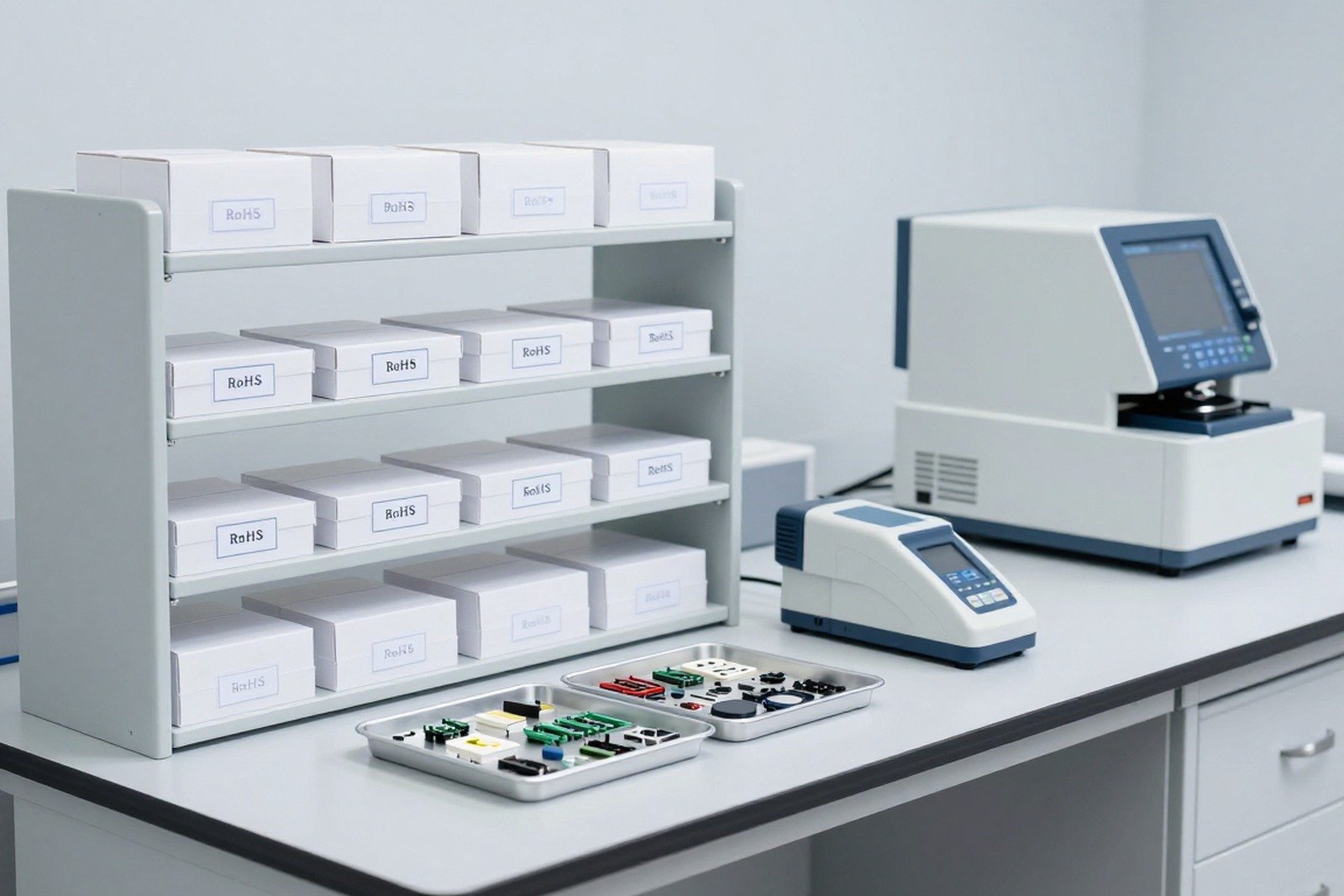
                    What is “homogeneous material”? Misunderstanding this concept is the entire result of RoHS being wrong

                    0
                    Cover image of the article «What is "homogeneous material"? Misunderstanding this concept is the entire result of RoHS being wrong»

                    If you can only remember one concept in the entire RoHS, remember this one: homogeneous material (homogeneous material). The 0.1 % limit does not apply to products, it does not apply to assembled parts — it applies to each material is homogeneous constitutes the product.

                    The standard definition used in the European Commission guidelines: homogeneous material is a unit of material that cannot be separated into different materials by mechanical means. “Mechanical disassembly” means unscrewing, cutting, crushing, crushing, grinding or similar mechanical processes.

                    Misunderstanding this concept doesn’t just lead to wrong results — it defeats the entire enterprise protection logic.

                    1. Why is this concept so important?

                    Let’s look at a numerical example. A heavy aluminum part 100 g covered with a heavy layer of paint 1 g. The paint contains lead at levels 40 % — that is 0.4 g of lead. All remaining details are almost lead-free.

                    How to calculate Results Conclusion
                    Average in all details 0.4 g / 101 g ≈ 0.4 % There is a slight excess, but the number looks “small”.
                    On each material uniformly Paint layer: 40 % lead Exceeded the limit 400 times

                    The second number is the correct number. With that coating, the part does not pass RoHS — unless an exemption applies.

                    Actual meaning: Volume does not protect you. A plating layer of a few micrometers, a small bead of solder, a 1-g rubber gasket — each is evaluated independently, and each can cause the product to fail.

                    The painted aluminum part is placed next to the peeled paint sample on the test table
                    The coating is its own homogeneous material — even though it weighs only a few percent of the part’s mass, it is still evaluated independently.

                    2. Example of disassembling a cable

                    An electric cable is often understood as “a detail”. But it consists of many homogeneous materials, each of which must be tested separately:

                    Homogeneous materials Typical RoHS risks
                    Outer shell made of PVC Phthalates (plasticizer), lead (stabilizer), cadmium (color)
                    Metal braided mesh cover Usually fine; Worth noting if there is a plating or polishing layer
                    Aluminum foil anti-interference layer Low risk; Check if it is alloy
                    Copper conductor Low risk, but need to pay attention to cadmium/lead impurities in some alloy grades
                    Covering each core (if any) Phthalates, colorants
                    Connector / pin Cadmium in the plating layer, lead in the alloy, Cr(VI) in the passivation layer

                    One such cable can produce 6 sets of test samples. If you just send the “cable” to the testing room and receive a “pass” line, you do not have a basis to protect the product against the question: Have you tried the PVC cover alone?

                    3. How to define boundaries: three principles

                    1. Mechanical separation, not chemical separation. Allowed: removing screws, prying, cutting, crushing, grinding, ultrasonic separation of adhesive layers. Do not: use a solvent to dissolve the paint layer to “get the bottom part” — because the solvent changes the nature of the material and is not a “mechanical measure”.
                    2. Stopping at the smallest level also has material implications. The plating, the paint, the hot-dip zinc coating, the welds, every plastic — it’s all a homogeneous material. Do not further separate the “shiny part” and “scratched part” of the same plating layer.
                    3. If a part is made from a single material, it is a homogeneous material. For example, a pure steel screw: the screw body is a homogeneous material; but if the screw has a plating, the plating is the second most homogeneous material.

                    4. Actual breakdown table for some familiar products

                    Products Number of homogeneous materials (estimated) The riskiest place
                    The circuit board has components glued 20–50+ (weld joints, component pins, each type of plastic body, protective coating, glue) Solder joints, protective coatings, ceramic capacitors (PBDE in recycled plastic)
                    Power cable 4–8 PVC shell (phthalate, lead, cadmium)
                    Device plastic case 1–4 (main resin, paint or coating, stamp, adhesive) Recycled plastic (PBDE), paint (Cr(VI), lead)
                    Screws and tightening accessories 1–3 (steel, plating, passivation) Zinc coating with chromium passivation: Cr(VI)
                    Shaped aluminum bar 1–2 (aluminum, anodized or painted) Aluminum alloy contains lead (0.4 %), paint layer

                    The number “20–50+” on the circuit board is the reason why testing laboratories cannot test every material of a complex product. The actual way to do it is Test with representative groups of materials combines risk assessment and material declaration from the supply chain. This is where a good technical file differs from a simple “test report” file.

                    The electronic circuit board has components bonded with a variety of solder joints, plastics, and coatings placed on a test bench
                    A circuit board can consist of dozens of identical materials — so it is always practical to test in a representative group with a risk assessment.

                    5. Four ways businesses do wrong

                    1. Declare all details as “one material”. For example, declare “USB connection port” in one line. This declaration eliminates the ability to detect plating or contact pins that exceed the limit.
                    2. Grind the whole cluster together. Results are diluted by mass. Offending material may disappear from the figure.
                    3. Consider “black materials” as a group. Different types of black plastic (black ABS, black PC/ABS, black PBT) are distinct homogeneous materials, with different origins and risks.
                    4. Skip the coating. This is the most serious error, because the plating and repainting layers are where cadmium, Cr(VI) and lead are concentrated.

                    6. Declaration to the supply chain also follows this logic

                    When asking suppliers to declare materials, the question should not be “Is this component RoHS compliant?” which is “Declare for me each homogeneous material in this component, along with the content of restricted substances”. Material declaration standards such as IEC 62474 or IPC-1752A are designed to follow that structure — declare by material, not declare by claim.

                    Metal parts with different plating and coating layers are arranged on the work table
                    The plating and coating are independent homogeneous materials — to ignore them is to miss the correct concentrations of cadmium, Cr(VI) and lead.

                    7. Frequently asked questions

                    If a wire is braided with many copper strands, then each strand is a homogeneous material?

                    No need to go that far. Copper fibers of the same composition, which cannot be separated into different materials by meaningful mechanical means, are considered a homogeneous material (copper conductor).

                    Is the coating a few micrometers thick a homogeneous material?

                    Yes. The plating layer is a separate homogeneous material, different from the underlying metal substrate. For galvanized parts with chromium passivation, even the passivation layer is considered separately.

                    Is it permissible to “dilute” violative material by mixing?

                    No. Dilution changes the numbers but does not change the nature of the material, and RoHS evaluates the material, not the average result. Legally, this is a dangerous misunderstanding.

                    Is it okay to try the whole product once quickly?

                    Does not meet RoHS logic. The pooling test can be used for this purpose internal screening When the material structure is clearly known, documents proving conformity must be based on results for each homogeneous material (or group of materials with a basis for risk assessment).

                    Are glue, labels, and ink considered homogeneous materials?

                    Yes. Glue, stamps, and ink are all separate materials and all have risks — ink in particular may contain phthalates. This is a group that is often overlooked when creating a dissection list.

                    8. Conclusion

                    “Homogeneous material” is the sole unit of assessment for RoHS. Three sentences to remember: one, the limit is calculated per material, not per product; two, the volume of materials does not protect the business; three, plating and coating are independent materials and where the risk is highest.

                    The step of removing to a homogeneous material is the step that determines the correctness of all subsequent results. If you make a mistake here, no matter how good the testing room is, the file will still not stand up.

                    References

                    • Directive 2011/65/EU, Article 3 and Annex II — definition and list of restricted substances
                    • European Commission guidance on the RoHS Directive — “homogeneous material” and “mechanically disjointed” concepts section
                    • IEC 62321-2 — mechanical sample removal, disassembly and preparation

                    Related articles


                    Discuss further


                      Disclaimer

                      This article is an interpretive content compiled by us; not legal advice. The interpretation of the concept of “homogeneous material” is presented in accordance with European Commission guidance and test practice; Enterprises should compare the original text of Article 3 of Directive 2011/65/EU.

                      See more: Copyright Policy & Disclaimer by ticforall.com.