Home Blog Page 7

“RoHS 3” does not exist: read the correct amendment sequence 2011/65/EU → 2015/863 → 2025/2456

0
Cover image of the article «"RoHS 3" does not exist: read the correct amendment sequence 2011/65/EU → 2015/863 → 2025/2456»

“Your side requires a RoHS 3 report” — this statement appears very often in emails buying and selling electronic components, but if you look up on the European legal information portal, you will not find any document named “RoHS 3”. This is an unofficial name set by the market, and that informality causes very costly misunderstandings: some businesses test exactly 10 substances but cite the wrong basis, some businesses think they only need to meet 6 substances.

This article decodes the actual RoHS text chain — from the original Directive to the applicable amendments — so that businesses know exactly what they are complying with, and know how to answer when customers ask about “RoHS 3”, “RoHS 2.0” or “RoHS 10 substances”.

1. Why is “RoHS 3” an unofficial designation?

In the EU legal system, documents are identified by number and year, not by “version 1, 2, 3” like software. A Directive can be modified by the Authorization Directive or Amendment Directive, but after amendment, the document still carries the old number (with the caption “amended”).

“RoHS 3” is therefore not a document name, is not a newly issued version, and has no legal effect of its own. This is an industry shorthand for expansion of the list of restricted substances — specifically the addition of the phthalate group to the list.

2. True RoHS text string

Text Role Point to remember
Directive 2002/95/EC First RoHS document Initial list of 6 restricted substances; Applicable since mid-2006 for most electrical and electronic equipment
Directive 2011/65/EU Recast, replacing text 2002/95/EC Expanding product groups and exemption mechanisms according to Annex III/IV, associated with the obligation to affix CE marking and declaration of conformity
Authorization Directive (EU) 2017/2102 Modify the definition and scope definition Associated with expanding the scope of application to previous device groups beyond the list
Authorization Directive (EU) 2015/863 Add 4 phthalates to the list of restricted substances This is “RoHS 3” as the market calls it; The list of substances is limited to 10 substances
Directive (EU) 2025/2456 Modifications to the technical review mechanism for waivers Transferring exemption technical assessment activities to the European Chemicals Agency (ECHA); Signed at the end of November 2025, published in the EU Official Gazette on December 12, 2025

This table shows something important: Directive 2011/65/EU is still the original document that applies. Other documents are revised. Therefore, in the technical dossier and declaration of conformity, the correct basis is always “Directive 2011/65/EU, as amended” — with a list of amendments related to that product.
Stack of legal documents and technical standards layered on the desk to compare the chain of RoHS amendments
The RoHS document chain includes an original Directive and many amended documents that overlap over time.

3. Phthalate supplementation: what really changes?

The revision known to the market as “RoHS 3” added four phthalates to the restricted substances list: DEHP, BBP, DBP and DIBP. This is a common group of plasticizers in soft PVC plastics — cable covers, gaskets, handles, insulating covers.

Three points businesses often ask:

  • Applicable limit: These phthalates are subject to a limit of 0.1% by mass of homogeneous material, as are lead, mercury, hexavalent chromium, PBB and PBDE. Cadmium alone has a stricter limit.
  • When to apply: Does not apply on the same day for all product groups. Common equipment, medical equipment and monitoring and control tools have their own landmarks; In vitro diagnostic equipment and industrial monitoring instruments have the latest milestones.
  • Scope of application of materials: The limit is based on homogeneous materials, so a cable can be reached in the PVC sheath but exceeded in the inner adhesive layer. This is why the sample dissection step is more important than the testing equipment.

4. “RoHS 2”, “RoHS 6 substances”, “RoHS 10 substances” — what should we call it correctly?

How to call in the market In essence How to write correctly in resume
RoHS 1 Directive 2002/95/EC Directive 2002/95/EC (expired, only has historical value and handles old inventory)
RoHS 2 Directive 2011/65/EU, rewritten Directive 2011/65/EU
RoHS 3 Informal term, usually referring to phthalate supplementation Directive 2011/65/EU as amended by Delegation Directive (EU) 2015/863
RoHS 6 substances List of restricted substances before the phthalate addition It is necessary to clearly state: list of substances applied by time and product group
RoHS 10 substances Current restricted substances list Directive 2011/65/EU has been amended, including 10 restricted substances
RoHS 4 Does not exist in current reality No citation; Based on actual documents only

For documents sent to European customers, the safest way is Avoid using the words “RoHS 3” and clearly write the legal basis. A line like “complies with Directive 2011/65/EU as amended, including Delegate Directive (EU) 2015/863” is both short enough and unlikely to be misinterpreted.
Two sets of regulatory documents are placed side by side to compare how to cite legal bases
Citing the correct document number helps the document’s compliance not be questioned when the customer reviews it.

5. Why does this naming pose a real risk?

There are three specific risks when businesses use informal names in technical communication:

  1. Requires range trial error. The customer requests “test according to RoHS 3” — if the tester understands that only 4 phthalates need to be tested and ignores the remaining 6 substances, the report will not reflect the correct compliance requirements.
  2. Misquoted in declaration of conformity. A declaration of conformity stating “RoHS 3 compliant” has no legal value because it does not state the Directive and specific amendments.
  3. Misunderstanding the application roadmap. For the same product, the application limit of phthalates may be different depending on the product group; If the document only says “RoHS 3”, it is impossible to determine which mold the product belongs to.

6. Correct writing in contracts, quotes and technical documents

Situation Recommended writing style Avoid
Request a test sent to the lab Name the substance, limit, homogeneous material and applicable method standards Says “RoHS 3 tested” without substance list
Declaration of conformity sent to customers State “Directive 2011/65/EU, as amended” and list the applicable amendments Write “meets RoHS 10 substances” as a legal basis
Terms of sales contract Clearly state the obligation to comply with “RoHS according to EU regulations applicable at the time of delivery” Hard-record a way to call the version, easily outdated when there are new modifications
Declare materials to customers Include the effective date of the data and commit to notify when there are structural changes List only the substance name without the update date
The working desk with the supply contract and the RoHS legal basis comparison table are being reviewed
Contract terms should reference the “applicable” provision, rather than an informally named version.

7. For Vietnamese businesses, what does this chain mean?

Most Vietnamese businesses are not the party responsible for final compliance, but are the party that must provide evidence. Four things should be standardized:

  1. Finalize the list of 10 substances in every material declaration form, with limits for each substance.
  2. Record applicable milestones for phthalates according to customer product groups — especially for customers making medical devices and measuring instruments.
  3. Cite the text, not the nickname in all reports, statements and contracts.
  4. Track new edits — for example changes to the exemption review mechanism noted in the late 2025 document — to update records before customers ask.

8. Frequently asked questions

What should I do if a customer requests “RoHS 3 report”?

You should ask for a list of substances and specific limits. In practice, most require “RoHS 3” to mean “full 10 restricted substances”. The report should clearly state the list of substances tested and standard methods of application, with an answer explaining why there is no document named “RoHS 3”.

Is the old report stating “RoHS 2” still available?

There are two things to check: whether the report includes four phthalates, and whether the phthalate application milestone for your product group has been reached. If the report only has 6 substances and products in the group where phthalates were applied, the report is no longer sufficient.

Is there any document named “RoHS 4”?

There are currently no documents issued under that name. The latest changes come in the form of an amendment to Directive 2011/65/EU, not a “new version” that replaces it.

What if we only export to China, Japan or Korea?

Each market has its own substance restriction program with different substance lists and schedules. Test reports using international standard methods can often be used for many markets, but the legal citation and application date must be written for each market.

Why are revisions often associated with the July milestone?

Many RoHS milestones are tied to application by product group, not by date of issuance. Therefore, carefully reading the scope of application is more important than remembering the date of publication of the document.

9. Conclusion

“RoHS 3” is a convenient nickname but has no legal value. When working with European customers, what needs to be accurate is not the version name but the Document number, substance list, applicable limits and benchmarks.

Three things should be done immediately: standardize the form for citing legal bases in all documents; Review old reports to confirm the inclusion of phthalates according to the correct product group milestone; and keep track of new revisions so you’re not surprised when customers update their requirements.

References

  • Directive 2011/65/EU on restriction of the use of certain hazardous substances in electrical and electronic equipment (consolidated version).
  • Directive 2002/95/EC (original RoHS text, expired).
  • Delegation Directive (EU) 2015/863 adds four phthalates to Annex II.
  • Delegation Directive (EU) 2017/2102 amends the definition and scope of application.
  • Directive (EU) 2025/2456 amending the technical assessment mechanism for exemptions (published in the EU Official Gazette December 2025).

Related articles


Discuss further


    Disclaimer

    This article is an interpretive content compiled by us; not legal advice. Enterprises need to compare relevant documents/standards verbatim before applying them to specific products.

    See more: Copyright Policy & Disclaimer by ticforall.com.

    RoHS comparison table for 6 markets: EU, China, Korea, Japan, EAEU, California

    0
    Cover image of the article «RoHS comparison table for 6 markets: EU, China, Korea, Japan, EAEU, California»

    Customers ask: “My product has passed European RoHS, so if I sell it to China, Korea, Japan, Russia or California, do I need to do it again?” The honest answer is: depending on the market — because each place has its own “RoHS code”, which differs in the substance list, enforcement method and type of label required.

    What makes this confusing is the general rules look similar: same few heavy metals, same 0.1% limit, same talk about “homogeneous material”. But just one detail difference – for example, where there are 6 substances limited, where there are 10 substances – the document proving conformity can no longer be used together.

    This article builds a table comparing six markets at the principle level: EU, China, Korea, Japan, EAEU and California. The goal is not to replace the original document, but to let businesses know which documents they need to compare correctly before printing labels and signing declarations of conformity.

    1. Six regulatory “roofs” — an overview first

    The common point of all six places: they all limit a number of toxic substances in electrical and electronic products, and they all take common standards from four familiar heavy metals – lead, mercury, cadmium, hexavalent chromium. The difference lies in three questions:

    1. Limitations how much substance? And what substances?
    2. How to execute — prohibited from being placed on the market, mandatory labeling, nice conformity declaration?
    3. Who checks and any mark/label is the evidence?
    Market Background text Number of substances restricted (principle) Main mechanism
    EU Directive 2011/65/EU (RoHS 2, amended by (EU) 2015/863) 10 substances Ban on market + CE mark + technical documents
    China GB 26572-2025 (mandatory, effective August 1, 2027), replaces GB/T 26572-2011 10 substances Mandatory limit + label according to SJ/T 11364
    Korea Regulations on recycling of electrical and electronic equipment and vehicles (K-RoHS) 10 substances (gradually harmonized with the EU) Limit + conformity declaration
    Japan J-Moss (marking system according to JIS C 0950) 6 substances Required label according to the specified product group
    EAEU Technical regulations of the Eurasian Economic Union on substance restrictions in electrical and electronic products 6 substances Limit + EAC conformity mark
    California (United States) Electronic Toxins Act (EWRA) 4 heavy metals Restricted to groups of devices with specified screens

    Important note: The table above is the picture principle. The number of substances, product ranges and potency dates for each market change over time, so any specific details need to be met. Compare the current text verbatim before using it for a real batch.

    2. First axis: substance list — 4, 6 or 10?

    The most practical way of classifying is to count from the “core” out:

    • Heavy metal 4 core: lead (Pb), mercury (Hg), cadmium (Cd), hexavalent chromium (Cr(VI)). Almost every market limits these four substances.
    • Up to 6 substances: Add two groups of brominated flame retardants: PBB and PBDE. This is the popularity of “6 elements” type programs — common in Japan (J-Moss) and EAEU.
    • Up to 10 substances: add four phthalates (DEHP, BBP, DBP, DIBP). This is the EU level after 2015, and is also the direction that China and South Korea have followed.

    The practical consequences are clear: one product REACHing 6 substances is not necessarily achieving 10 substances — because there are four phthalates left. On the contrary, products with 10 substances usually cover the requirement of 6 substances (because 6 substances are a subset of 10), unless That market has its own qualities beyond the EU list. Therefore, the strongest set of documents to go to many markets is the set that proves all 10 substances, plus separate comparisons for each place.

    Material sample trays on the inspection table: metal parts, plastic pieces, cables and small circuit boards
    From a core of 4 heavy metals to 6 substances and then 10 substances – each additional level is a new group of substances that must be proven.

    3. Second axis: limit and calculation — almost identical

    Here’s the good news: most markets use the same limits and the same calculation logic.

    Factor Popularity level
    General limit 0.1% by mass (equivalent to 1,000 ppm)
    Particularly cadmium 0.01 % (equivalent to 100 ppm) — 10 times tighter
    How to calculate Theo homogeneous material, not the whole product

    Because of the same limit and the same calculation method, Test results and test methods are reproducible between markets. What has to be redone is only part conformity conclusion: compare the results with the correct substance list and the correct exemption list of that market.

    4. Third axis: enforcement mechanism — ban, label or declare?

    This is where markets differ the most, and is also where businesses often misunderstand.

    Mechanism What does it mean? Typical market
    Prohibited from being placed on the market Exceeding the limit without an exemption cannot be sold; Must demonstrate compliance EU
    Mandatory limit with label Must meet the limit and print the board/label according to regulations China
    Declaration of conformity Enterprises self-assess and declare and are responsible for the information Korea
    Labeling required The focus is information disclosure substance content for buyers to know Japan (J-Moss)

    Points to remember: “labeled” is not the same as “allowed to exceed the limit”. In some systems, the labeling is to declare the substance status, not the license. Confusion between “must be labeled” and “exempt” is a common reason why goods are detained at the border.

    Desk with three types of blank documents: manifest, declaration sheet and an unprinted label
    Three mechanisms, three types of documents: prohibition of technical documents, declaration of conformity, and labeling to disclose substance information.

    5. Fourth axis: labels and conformity marks

    Market Typical markings/labels Note the principle
    EU CE mark CE covers RoHS; accompanied by declaration of conformity and technical documents
    China Label according to SJ/T 11364 (label style EFUP/substance table) The label is covered by national mandatory regulations
    Korea Label/mark of the K-RoHS compliance declaration system Associated with the declaration obligations of the manufacturer/importer
    Japan J-Moss mark (blue/orange according to substance state) The mark shows whether the product is in excess or not
    EAEU EAC mark A common mark for the entire block
    California There is no separate CE mark of conformity Enforcement through regulatory agency requirements and procurement conditions

    A note about label language: absolutely do not label yourself “certified” or “certified” if there is actually only a test report. Each market has its own regulatory wording, and misstatements can be considered misleading.

    6. Detailed comparison table of six markets

    Criteria EU China Korea Japan EAEU California
    Number of substances (principle) 10 10 10 6 6 4
    Specific cadmium 0.01 % Yes Yes Yes Yes Yes Yes
    How to calculate Homogeneous materials Homogeneous materials Homogeneous materials Homogeneous materials Homogeneous materials Homogeneous materials
    Mechanism Ban + CE Required + label Limit + declaration Label Limit + EAC Restrictions by device group
    Scope Open scope for EEE Product grouping According to EEE category Designated product group By product category Devices with screens (regulated group)
    Primary evidence Technical documents + declaration of conformity Test report + label Declaration of conformity + report Label + internal data Profile + EAC marking Documents according to agency requirements

    How to read the table: the first four lines are almost identical, the “mechanism” and “scope” lines are where the difference is. In other words, Test results can be used everywhere, but the proof and type of labels must be made according to each place.

    7. Why do some markets only stop at 6 substances?

    Japan (J-Moss) and EAEU keep the level of 6 substances while the EU has increased to 10. There are two common reasons:

    • Management philosophy: Some places choose to “announce so the market can self-regulate” (label) instead of completely banning it. J-Moss is a prime example — the focus is on substance information transparency.
    • Update cadence: Trade blocs update substance lists according to their own schedules. When the EU added phthalates in 2015, other markets took more time to harmonize.

    So don’t assume “the moves that follow will always keep 6 suits”. China is the latest example of how a market can go from six to 10 substances and make it mandatory — so the safe strategy is Designed according to 10 substances and track changes in each location.

    8. 5-step process when selling to many markets

    1. List target markets for each product code, with sales channel (direct, import, e-commerce platform).
    2. Determine the highest “quality level”. must meet (4, 6 or 10) and take that as the design goal.
    3. Establish a common material data set at the homogeneous material level, enough to answer for all 10 group substances.
    4. Compare individual exemptions for each market — exemptions are not shared.
    5. Prepare labels and separate statements For each market, clearly state the compared legal basis.
    Export warehouse with plain cartons on pallets and forklifts in the background, no text or logo
    One common set of material data, multiple sets of individual labels and claims — how to go to multiple markets without having to start over.

    9. Five common misconceptions

    1. “If you meet EU RoHS, you can sell everywhere.” Not really — the 10-substance market is convenient, but places that require private labels (China, Japan) still have to comply with the label part.
    2. “6 substances are enough for everyone because that is the international standard.” Wrong — EU, China, Korea are already at level 10 substances.
    3. “Mandatory labeling means being allowed to exceed the limit.” False — the label is a disclosure, not a license.
    4. “Shared exemption across markets.” False — each has its own exemption category and its own update schedule.
    5. “The number of substances and potency markers remain unchanged.” Incorrect — these are frequently edited documents; Must check each batch.

    10. Frequently asked questions

    If we have reached 10 substances according to the EU, do we have to retest for China?

    There is usually no need for technical retesting, because the substance list is similar and the methods are shared. But the limit, product range and label requirements must be reconciled according to current Chinese regulations.

    Is J-Moss a mandatory substance limiter like RoHS?

    Not in the same way. J-Moss is the system label by designated product group: the focus is on disclosing information on substance content, different from the EU-style market ban mechanism.

    How is California different from other US states?

    California has its own laws on toxics in electronic devices, focusing on the regulated group of devices with screens, rather than a federal RoHS set. The scope and list of equipment need to be compared with current state documents.

    Does this table replace reading the original text?

    No. This is a framework for orientation. All substance numbers, validity dates and label requirements must be compared verbatim to the current effective text in each market before application.

    At what level should the product be designed?

    As high as the target market requires — typically 10 substances — and keep the material data set at a consistent material level. This method helps reuse data when opening new markets.

    11. Conclusion

    Six markets, six sets of regulations, but same technical core: four heavy metals, limit 0.1 % (Cd 0.01 %), calculated on homogeneous material. The difference focuses on number of substances (4, 6 or 10), enforcement mechanism (ban, label, declare) and label type.

    Pragmatic strategy: design and collect data for 10 substances at a uniform material level, then separate labels and claims for each market. So businesses only have to do the technical part once, instead of trying again for each location.

    And the principle cannot be abandoned: all legal details must be compared verbatim to the current document. The reference table helps you know what to read — it doesn’t read it for you.

    References

    • Directive 2011/65/EU (RoHS 2) and Directive (EU) 2015/863 — EU
    • GB 26572-2025 and label set SJ/T 11364 — China
    • Regulations on recycling of electrical, electronic and vehicle equipment (K-RoHS) — Korea
    • J-Moss (JIS C 0950) — Japan
    • Technical regulations of the Eurasian Economic Union on substance restrictions in electrical and electronic products (EAC mark)
    • Electronic Toxins Act (EWRA) — California, United States

    Related articles


    Discuss further


      Disclaimer

      This article is an interpretive content compiled by us; not legal advice. The number of substances, limits, scope and validity milestones for each market are stated at the principle level and It is necessary to compare the current text verbatim before applying to specific products.

      See more: Copyright Policy & Disclaimer by ticforall.com.
      EFUP label and Chinese RoHS mark: read the correct table SJ/T 11364-2024

      0
      Cover image of the article «EFUP label and Chinese RoHS mark: read the correct table SJ/T 11364-2024»

      China’s RoHS label is the part most often falsified — and also the part that is seen the fastest when goods cross the border or hit retail shelves. Unlike the EU (where the CE mark is the result of a conformity assessment process), the Chinese market requires businesses announced Hazardous substance status right on the product and in accompanying documents, according to standards SJ/T 11364.

      If you have read about GB 26572-2025, you know China’s new mandatory standard brings these label requirements to the mandatory national standard level. This article delves into exactly that part: what ingredients the label contains, how to read the substance declaration table, what the EFUP label says, and why the pre-printed label molds of many Vietnamese businesses need updating.

      A note before reading: this is an interpretation for understanding principle. When printing labels for a specific product, businesses need to compare the text of SJ/T 11364-2024, the current guidance of Chinese regulatory agencies and the importer’s specific requirements.

      1. The Chinese RoHS label consists of two components, not one

      Many people call it the “Chinese RoHS label”, but in fact this is a declaration system consisting of two separate components, often appearing in two different places:

      Ingredients Location Content
      EFUP label (symbol “environmentally friendly use cycle”) On the product/packaging The symbol represents the number of years that the product has been considered safe from hazardous substances under normal conditions of use
      Table announcing toxic substances In the documentation/instructions included with the product The table lists each substance and its content status (under or over limit) at a uniform material level

      These two components complement each other: one answers the question “how long is it safe to use”, the other answers the question “which substance exceeds the limit”. If one of the two is missing, the label record is considered incomplete.

      The back of the electronic device is small with an unprinted white label area and a blank round white label
      The EFUP label is located on the product or packaging; The substance declaration table is in the attached document – two positions, two contents, not interchangeable.

      2. Substance declaration table: read symbols O and X correctly

      The disclosure table is the most important technical part, because it is based on homogeneous material — same approach as European RoHS. The table lists each substance and uses two familiar symbols:

      Symbol Meaning Correct understanding
      O The substance content in the material is uniform do not exceed required limit “Pass” for that quality
      X The substance content in the material is uniform pass required limit “Exceed” for that substance — does not mean the product is banned, but must be declared

      Three points to remember about this table:

      • The table is presented in Simplified Chinese in product documentation, not arbitrarily translated into other languages.
      • Symbol “X” is not a violation — it is published. Violation only arises when the product belongs to the group required to comply with the limit but still exceeds the limit.
      • The letters “O” and “X” here are marker symbol, is not a capital letter of the alphabet, so it is not translated and cannot be replaced with a check mark/square.
      The product manual is open with a blank slate and pen next to it
      The substance declaration table is in the documents accompanying the product: one line for each substance, marked O (pass) or X (exceed) at a uniform material level.

      3. EFUP label: circle with two arrows and number in the middle

      EFUP (Environment-Friendly Use Period) is an “environmentally friendly use cycle”. In essence, this is the amount of time that toxic substances stay in the product not yet capable of leaking out under normal conditions of use.

      EFUP label conventions that businesses need to understand:

      • Products pass limit of any substance: use the orange symbol consisting of two arrows forming a circle, number in the middle is the number of EFUP years (for example, a circle marked 10 means a period of 10 years from the date of manufacture).
      • Products do not exceed which substance limit: a special EFUP label bearing the letter “e” can be used to indicate that all substances in the restricted group are below the limit.
      • The way to calculate EFUP is specified in a separate guidance standard (SJ/Z group); Businesses need to compare the current version when building a calculation basis for their products.

      Easy to confuse: EFUP label no is a food-style “use by” date, and is also not a warranty period. It is a statement about the level of chemical safety over time. Mistyping numbers — or copying another product’s EFUP label — is the type of mistake that is discovered the fastest.

      4. When must the date of manufacture be added?

      Because EFUP counts from the date of manufacture, so in some cases the product must have an additional manufacturing date on the label — specifically when the EFUP cycle is shorter than the product’s design life. The date is recorded in the form day/month/year, with a four-digit year.

      This is a detail that is rarely noticed but is important when goods are stored for a long time: if there is only an EFUP circle without a date stamp, the inspector cannot determine how many years the product has “run” in the safety cycle. Businesses should agree with the printer and importer on their specific case, and compare the current label regulations.

      5. SJ/T 11364-2024: current version and what needs to be checked

      Previously, China’s label requirements were contained in SJ/T 11364-2014 — the version in common use for nearly a decade. When GB 26572-2025 was introduced, the label content was integrated and updated, tied to the original version. SJ/T 11364-2024.

      Because this is an electronics industry standard (“SJ/T”), businesses need to understand its true nature: SJ/T 11364 itself is a standard. recommended, but when invoked by GB 26572-2025, compliance with the label becomes part of the mandatory obligation. In other words: the legal path goes through GB, while the technical details for printing labels lie in SJ/T.

      When switching from the 2014 version to the 2024 version, businesses should review at least four points: the list of substances on the declaration sheet, the specifications and size of the EFUP symbol, the way of recording the date of manufacture, and the language/format requirements of accompanying documents. The specific details of the 2024 version need to be compared to the standard verbatim — this article does not replace the original.

      6. Six substances or ten substances on the board?

      This is the biggest transition point and also the most common printing error.

      Phase Number of substances on the announcement table Category
      According to GB/T 26572-2011 (formerly) 6 substances Pb, Hg, Cd, Cr(VI), PBB, PBDE
      According to GB 26572-2025 (from August 1, 2027) 10 substances 6 substances above + 4 phthalates (DBP, DIBP, BBP, DEHP)

      Many pre-printed label molds and templates in Vietnam still follow the 6-substance table of GB/T 26572-2011. When GB 26572-2025 comes into force, the declaration needs to be expanded to 10 lines of substance. This is a small technical matter but lies in the printing stage — so it’s easy to miss until reminded by the importer.

      A row of small electronic products stands next to white instruction manuals on the table
      The substance declaration table must be expanded from 6 to 10 lines when applying GB 26572-2025 — at the same time the EFUP label must be reviewed.

      7. Which products must be labeled?

      It is necessary to separate two concepts that are often combined into one:

      Label obligations Obligation to limit substance
      Product is inside regulatory management list (compulsory group) Yes Yes — must meet the 10 substance limit
      Other electrical and electronic products circulating in China Yes Not required (voluntary encouraged)

      In other words: eye pressure for most electrical and electronic products circulating on the Chinese market, while the obligation to meet the substance limit is only mandatory for product groups that are in the list of regulated management (list announced by the management agency, including familiar groups such as computers, display devices, phones, refrigerators, washing machines, air conditioners, printers… — The complete list needs to be compared to the current version).

      Practical consequence: don’t infer “my product doesn’t belong to the category so it doesn’t need a label”. Not being on the list only exempts you from the obligation to meet the substance limit, but does not eliminate the obligation to label.

      8. Five common errors when printing labels

      1. Use the table of 6 substances while the new template requires 10 substances.
      2. Entered wrong EFUP number — copied from other products, or has no basis in calculating according to guiding standards.
      3. Missing publication table in the document — just put the label on the machine and forgot the table in the instructions.
      4. Translate the table into another language or restate it with homemade symbols, while the request is a simplified Chinese table with O/X symbols.
      5. The EFUP symbol is incorrect — wrong circle ratio, wrong color (orange/black), or printing too small to read.

      9. Frequently asked questions

      Is the Chinese RoHS label the same as the CE mark?

      No. The CE mark is the result of a conformity assessment process and demonstrates that the product meets applicable directives. The Chinese RoHS label (EFUP + declaration sheet) is the tool information disclosure, indicates the status of hazardous substances and the safety cycle — but does not by itself certify that the product meets or fails a directive.

      Is just putting the EFUP label on the product enough?

      Not yet. Label obligations include the substance declaration table in the accompanying documents. In fact, many batches were cited because there was a label on the machine but a missing label in the instructions.

      Do products that meet EU standards have to have their labels re-labeled?

      Yes. Having met EU RoHS, the “substance” part can almost be reused (provided that all four phthalates have been tested), but the EFUP label and declaration table are China’s own requirements, not available in the EU.

      Does the announcement sign “X” mean the product is banned from sale?

      No. “X” is simply a statement that the substance exceeds the limit at the homogeneous material level. The product only violates when it belongs to the group required to comply with the limit but still exceeds the limit, or when it lacks a label/declaration according to regulations.

      Does the label need to be updated before August 1, 2027?

      Should be done early. Chinese importers often request new documents and labels 6–12 months before the effective date, which is right in 2026. Updating the label mold should start from the packaging design stage.

      10. Conclusion

      The Chinese RoHS label is not a single symbol, but a system of claims EFUP label on the product and substance declaration table in documents. Correct understanding of this mechanism helps businesses avoid the most common mistake: treating Chinese labels as European CE marks.

      Three things to do immediately: one, review the current label to see if it follows the 6 or 10 substance list; two, check the EFUP label and the year basis; three, ensure documents accompanying the product have the correct format announcement. All should be checked against the current SJ/T 11364-2024 and confirmed with the Chinese importer.

      References

      • SJ/T 11364 — Marking for the Restriction of the Use of Hazardous Substances in Electrical and Electronic Products (Chinese electronics industry standard; 2014 version and 2024 version)
      • GB/T 26572-2011 and GB 26572-2025 — substance limit requirements in electrical and electronic products
      • Guidance standards for calculating environmentally friendly use cycles (group SJ/Z) — need to compare with the current version
      • Documents introducing the EFUP label and substance declaration tables of international certification organizations

      Related articles


      Discuss further


        Disclaimer

        This article is an interpretive content compiled by us; not legal advice. Descriptions of the EFUP label and substance declaration table are summarized to help understand the principles, and can be shortened from the standard text.

        Before applying to a specific product, businesses need to compare the original standard SJ/T 11364-2024 and current related documents/standards, and confirm with the importer or accredited testing unit in China.

        See more: Copyright Policy & Disclaimer by ticforall.com.
        What does a RoHS test report need to be valid? 9 items cannot be missing

        0
        Cover image of the article «What does a RoHS test report need to be valid? 9 items cannot be missing»

        A RoHS test report can be several dozen pages long, red-stamped, signed — but still cannot be used when asked by customers or market surveillance agencies. The reason is almost always the same: the report is missing some minor item such as method reference, lot code, or statement of the scope of application of the results.

        It is important to distinguish at the outset: The test report is a data record, not a conformity decision. Its value lies in the fact that it tells the reader exactly what has been tried, how, On which model?, and To what extent are the results meaningful?. Missing any eye in that chain, the report loses value.

        Listed articles Nine items must not be missing in a valid RoHS test report, with a quick check when receiving the report from the test room.

        1. Where does the test report stand in the file?

        In the RoHS compliance file, the test report is technical proof — located next to the supplier’s material declaration, risk assessment and declaration of conformity. It does not replace a declaration of conformity, nor does it constitute a “certificate” for the entire product line. These three types of documents are different in nature; If you are not clear, you should read the article Is there “RoHS certification”?.

        Requirements for report content are not set by RoHS itself, but come from two sources: group of requirements for reporting results in ISO/IEC 17025 (testing laboratory capacity standards) and technical documentation requirements according to EN IEC 63000. A report that complies with ISO/IEC 17025 will automatically satisfy the majority of documentation requirements.

        Thick printed technical report open with blank results tables and a pen placed across the page
        The report attempts to convert measurement data into text — but only if it clearly states the sample, method, and scope of application.

        2. Nine items must not be missing

        # Section Minimal content
        1 Report identification Unique reporting number/code; Page numbers are in the form “x over y” to avoid lost pages
        2 Test room identification Name and address of the testing room and location of the test; Accreditation status (if any)
        3 Customer/requesting party Name and address of the ordering party; contact person if needed
        4 Sample identification and description Laboratory sample code, description, customer batch code/number, condition upon receipt, sample photo
        5 Date Date of receipt of sample and date (or date range) of test performed
        6 Test method Standard name, part number, version/year; applied techniques; Specify if it is a non-standard internal method
        7 Detailed measurement results Results for each homogeneous material and each substance; unit; limit of detection/quantitation; compared to the reference limit
        8 Conclusion and scope of application Pass/fail conclusion (with decision rules if any); measurement uncertainty when relevant
        9 Approval and accompanying declaration Name, title, and signature of the approver; declare the results to apply only to the sample tested; Report copying conditions

        These nine items are not a decoration list. Each section answers a question that readers of the report will ask. Here’s why each item is important in practice.

        3. Items 1–3: know which report you are holding and whose

        • Unique report number Allows searching, comparing originals and detecting fake or altered reports. “x over y” page numbers prevent situations where someone submits missing results pages.
        • Test room identification helps verify the test room is real, capable, and at what location the test is performed. If the report cites accreditation, the accreditation status must be clearly stated — do not imply that the entire report is accredited when only a portion is within the scope of accreditation.
        • Customer name Establish the chain of responsibility: for whom the report is prepared, on the basis of which requirements.

        4. Sections 4–5: which model and when to test

        This is the part that is most often poorly presented, and is also the part that determines whether the report is “representative” or not.

        Information Why is it necessary?
        Test room sample code Allows you to trace back saved samples when you need to retry
        Customer code/lot number Tie the results to the specific lot — without them, the results are meaningless for the lot being sold
        Sample description and condition upon receipt Confirm sample integrity and correct product; Eliminate future controversy
        Date of receipt and date of testing Put results into the correct timeline, compare with material change history

        One point that gets little attention: if reported no Regardless of who collects the sample, it should be understood that the testing laboratory is not usually responsible for the representativeness of the sample. The responsibility for choosing a sample belongs to the business sending the sample. This is directly related to the article about number of samples needed for one test set.

        5. Sections 6–7: What to test and how to get numbers

        The test method must be recorded sufficiently for the reader to reproduce the spirit of the test, including at least:

        1. Standard name and part number — for example which part of IEC 62321. It is not enough to write “IEC 62321”, because this standard includes many parts for different substances.
        2. Version/year of issue — because the standard is updated in parts.
        3. Specific techniques — for example, solvent extraction followed by GC-MS, or XRF screening.
        4. In case of using internal method — must clearly state that it does not comply with the standard, with evidence that the method has been validated.

        The results section (section 7) is the core, and needs to be presented according to each homogeneous material not just a gross number. For each substance, a good report shows: the measured value, the unit (usually mass %), limit of detection and limit of quantification, and reference limit (0.1% or 0.01% for cadmium).

        Printed report pages are stacked with blank data sheets and a blank signature area next to a pen and paper clip
        Results should be separated by homogeneous material and substance — a combined number for the entire product is not enough to conclude compliance.

        6. Sections 8–9: conclusions, approvals and declarations

        The last two items are where a “valid” report is distinguished from a data printout:

        • Conclusion pass/fail should only appear when requested and must be included decision rule — that is, how the test laboratory handles results when results are close to the limit compared to the measurement uncertainty. Without stating the decision rule, a “pass” can be controversial.
        • Measurement uncertainty especially important for near-limit results; Many reports omit this item.
        • Approver Must write name, title and signature; A report without a responsible person is a report without anyone guaranteeing it.
        • Scope statement — “results apply only to the sample tested” and replication conditions — protect both the laboratory and the reporting user from false generalizations.

        7. Quick read: six checkpoints when receiving reports

        1. Are all 9 items above included? If any item is missing, there is a lack of basis in that item.
        2. Does the method clearly state the part and year? If not, I don’t know what to try.
        3. Is the sample representative of the lot/model being sold? Compare batch codes and material descriptions.
        4. Have you tried all 10 substances yet? Missing sections for PBB/PBDE, Cr(VI) or phthalates means that group was not tested.
        5. Are there blank samples and recall tests? Needed for near-limit results.
        6. Is the report cut off or missing page numbers? Compare “x over y”.

        8. Common presentation errors

        Error Consequences
        Write “IEC 62321” in general, no part mentioned I don’t know which substance was tested
        One result number for the whole product Cannot compare according to homogeneous materials
        No batch number/manufacturing date recorded Do not tie results to specific batches
        No detection/quantification limits stated The result “not detected” cannot be evaluated.
        Write “pass” without stating the decision rule Controversy when the results are close to the limit
        Implies that the entire report is recognized when only a portion is within scope Misunderstanding the legal value of the report
        Archival folders with blank tabs and blank folders sit on shelves
        Test reports need to be saved with technical records and can be searched throughout the term of keeping conformity records.

        9. Frequently asked questions

        The report only records “pass/fail” results, no measurements — is that okay?

        Should not be accepted for record purposes. The report needs measurements with units and comparison limits, for readers to evaluate for themselves. A word “pass” separate from the data is not enough to argue when questioned.

        Is it necessary to record measurement uncertainty?

        With results far away from the limit, the uncertainty has little effect on the conclusion. With results near the limit, this is required information for a well-founded conclusion. A good report will clearly state when uncertainties are considered.

        Are reports from foreign testing laboratories valid in Vietnam?

        Usually accepted if the laboratory is accredited (e.g. to ISO/IEC 17025 in an accreditation scheme with a mutual recognition agreement). The thing to check is scope of recognition whether the correct substances and methods used were included.

        Is a report with overlapping stamps and red signatures trustworthy enough?

        Form cannot replace content. A report with a nice stamp but missing batch numbers, lacking standard part numbers or only testing half of the substances still cannot be used for regulatory compliance documents.

        Can a test report replace a declaration of conformity?

        No. The test report is the technical evidence for the tested sample; The declaration of conformity is the manufacturer’s legal commitment for the product to be marketed. The two documents have different roles and are in the same file.

        10. Conclusion

        A valid RoHS test report must answer four questions: try something (section 4), What to try? (section 6), How to get numbers? (section 7), and Who is responsible and to what extent? (sections 8–9). The nine items in the article are specific expressions of those four sentences.

        When receiving a report from a testing laboratory, the fastest way to check is to compare the restricted substances list with the referenced standard sections. If a section for PBB/PBDE, Cr(VI) or four phthalates is missing, request it be added before the report is on file.

        References

        • ISO/IEC 17025 — general requirements for the competence of testing and calibration laboratories (including reporting requirements)
        • EN IEC 63000 — technical document for evaluation of electrical and electronic products against quality restriction requirements
        • IEC 62321 (parts) — methods for determination of restricted substances
        • Directive 2011/65/EU — manufacturer’s obligations and technical documentation

        Related articles


        Discuss further


          Disclaimer

          This article is an interpretive content compiled by us; not legal advice. The items required in the report are presented in the spirit of ISO/IEC 17025; Enterprises need to compare the verbatim standards and applicable regulations.

          See more: Copyright Policy & Disclaimer by ticforall.com.

          Cr(VI) test: how are colorimetric and ion chromatography (IC) different?

          0
          Cover image of the article «Cr(VI) test: how are colorimetric and ion chromatography (IC) different?»

          Cr(VI) is a restricted substance but cannot be determined using an XRF machine — the device only reads “total chromium”. To answer the question “in the measured amount of chromium, how much is Cr(VI)”, we must use chemical methods. At that time, two names often appeared on the report: color measurement (colorimetric) and ion chromatography (ion chromatography – IC).

          Many people understand that these are two equal options and choose either one. This is not the case: they have different roles, and choosing the wrong one leads to either inconclusive results, or unnecessarily high costs.

          This article explains the principles of the two techniques, how they differ, and what role they play in the IEC 62321 standard.

          1. Recall Cr(VI) limit — two different assessments

          Before comparing methods, it is important to remember that Cr(VI) is present two ways to represent limits depending on subject:

          Object How to evaluate Threshold
          Bulk material (plastic, metal with chromium dispersed in the bulk) By mass percentage 0.1 mass %.
          Anti-corrosion coating on metal (plated layer, passivation layer) According to volume over area 0.1 µg/cm²

          These two numbers are not directly comparable. This is why the units on the Cr(VI) report vary between cases, and is also the first thing to check when reading results.

          2. Where does IEC 62321 place Cr(VI) in the standard?

          Cr(VI) is treated separately, separated from the total chromium group:

          Part Object Technical
          IEC 62321-7-1 Cr(VI) in anti-corrosion coatings on metals Color measurement (colorimetric) with diphenylcarbazide
          IEC 62321-7-2 Cr(VI) in polymers and electronic materials Color measurement (colorimetric) with diphenylcarbazide
          IEC 62321-5 Cd, Pb and total chromium in polymers, electronic materials; Cd and Pb in metals AAS, AFS, ICP-OES, ICP-MS

          Points many people misunderstand: Both 7-1 and 7-2 use the colorimetric method. They are different applicable object (coating on metal vs. polymer/electronic material), not in measurement technique. Ion chromatography is not the main content of 7-1 or 7-2, but is Additional techniques Used when the sample matrix is complex.

          Máy quang phổ UV-Vis với ngăn đựng cuvet chứa dung dịch màu hồng tím trên bàn thí nghiệm
          Color measurement is based on the pink-purple complex formed by Cr(VI) with diphenylcarbazide — the color intensity is proportional to the amount of Cr(VI).

          3. How does colorimetric work?

          The principle consists of three steps:

          1. Extract Cr(VI) from the sample using alkaline medium. This is the most important technical point. Cr(VI) is easily reduced to Cr(III) in acidic environments; The alkaline environment keeps Cr(VI) stable in the extraction solution. Therefore alkaline extraction (e.g. sodium hydroxide/sodium carbonate solution) is the standard way to “preserve” Cr(VI) before measurement.
          2. Create color complexes. In acidic environments, Cr(VI) reacts with diphenylcarbazide form a pink-purple complex. The color intensity is proportional to the amount of Cr(VI) present in the solution.
          3. Spectral measurement. Measure the light absorption of the color complex using a spectrophotometer, compare it with the standard curve to calculate the content.

          Advantages: fast, low cost, standardized in standards, very suitable for samples with simple substrates such as plating, passive layers, light-colored plastic samples.

          Limitations: method sensitive to color interference. If the extract is pre-colored (dark resin, pigment), that background color adds to the color of the complex and distorts the results — unless treated with an appropriate blank. This is exactly the situation where ion chromatography comes into play.

          4. How does ion chromatography (IC) work?

          Ion chromatography separates Cr(VI) as anion chromat on an anion exchange column, with alkaline mobile phase. After separation, Cr(VI) is detected spectroscopically (usually with post-column color complexation with diphenylcarbazide, or measured directly in the ultraviolet region).

          Because nature is cup first then new measure, IC has clear advantages in the following cases:

          • Colored extract — colored interferences are separated from Cr(VI) on the column.
          • Complex, metal-rich sample matrix — separates chromate from other anions/cations.
          • Cross-validation is needed when the results are close to the limit, or when there is a dispute.
          • Want to pair with measurements total chromium (equal to ICP) for comparison: total chromium = Cr(III) + Cr(VI).

          Limitations: more complex equipment and techniques, higher cost, and longer analysis time. So IC is often used as Additional techniques, is not the default choice for all models.

          Hệ thống sắc ký ion trong phòng thí nghiệm với khay lọ mẫu, bơm và hệ thống đường ống
          Ion chromatography separates Cr(VI) as chromate on an anion exchange column and then measures — advantageous when the extract is colored or the sample matrix is complex.

          5. Direct comparison of the two techniques

          Colorimetric Ion chromatography (IC)
          Principle Cr(VI) forms a color complex with diphenylcarbazide, measuring the color intensity Separate Cr(VI) on anion exchange column, then detect by spectroscopy
          Role in IEC 62321 Main techniques of 7-1 and 7-2 Additional techniques when the sample matrix is complex
          Sample extraction Alkaline extraction to retain Cr(VI) Alkaline extraction, then separation on column
          Advantages Fast, cheap, simple background pattern Color noise type; good for complex backgrounds; cross validation
          Limitations Sensitive to background color and interference High cost, complex equipment/techniques, longer time
          Most suitable Plating layer, passivation layer, light colored plastic Dark color samples, metallic backgrounds, dispute cases

          Rules for quick selection: default to colorimetric; Switch to ion chromatography when the sample is colored, the background is complex, the result is close to the limit that needs confirmation, or when it is necessary to separate Cr(VI) from interfering substances.

          6. Why is the sample extraction step decisive?

          Both techniques start by extracting Cr(VI) from the material matrix — and here’s where it’s easiest to go wrong:

          • Do not use strong acidic environment to extract Cr(VI). — acid can reduce Cr(VI) to Cr(III), losing the substance being measured and giving falsely low results.
          • Alkaline extraction keeps Cr(VI) stable. This is why the standard specifies a specific alkaline extraction environment.
          • Extraction time and temperature standards need to be followed; Under extraction results in low recovery, over extraction can cause side reactions.
          • With coating, the amount of Cr(VI) depends on the area of the sampled surface — so the area must be measured and recorded, because the results are in µg/cm².

          If you can only remember one thing from this article, remember this: If Cr(VI) is to be measured, it must be kept intact throughout the extraction step. Any error that eliminates it will give a falsely low result — the most dangerous type of error because it leads to a false “pass” conclusion.

          Các bình định mức và cốc đựng dung dịch màu hồng nhạt cùng micropipette trên bàn thí nghiệm hoá ướt
          Alkaline extraction keeps Cr(VI) stable before measurement: using a strong acid environment can reduce Cr(VI) to Cr(III) and give falsely low results.

          7. Can colorimetry and ion chromatography replace XRF?

          No, and there’s no need. The three techniques lie in three different roles in a process:

          1. XRF (IEC 62321-3-1) — chromium screening total. If total chromium is clearly low, it can stop at the screening level.
          2. Colorimetric (7-1 / 7-2) — Cr(VI) determination for most cases, especially coatings and simple substrate samples.
          3. Ion chromatography — confirm or handle complex background patterns, dark patterns.

          With metal coating, the limit is 0.1 µg/cm²; a Total chromium result in percent from XRF no answer this question. The correct analytical sequence goes from screening to confirmation, not jumping straight from XRF to conclusion. Details about the limitations of XRF are in the article XRF reports “Cr” exceeds the limit: why is it not necessarily Cr(VI).

          8. Frequently asked questions

          Is the report stating “Cr(VI) according to IEC 62321-7-2 by ion chromatography” correct?

          Need to distinguish carefully: 7-2 is built on the colorimetric method; Ion chromatography is a complementary technique. If the laboratory uses ICs, the report should clearly state the specific internal method/standard reference. When in doubt, ask the laboratory to explain the method used.

          Why is my Cr(VI) result in µg/cm² and not %?

          Because the sample is an anti-corrosion coating on metal. The coating is very thin so the appropriate assessment is mass per area; The corresponding limit is 0.1 µg/cm².

          Can dark colored plastic samples be used using the colorimetric method?

          Yes, but color interference must be carefully treated with a suitable blank sample, and confirmation by ion chromatography is recommended if results are close to the limit. With dark background colors, IC is a safer choice.

          Can Cr(VI) be determined by ICP?

          ICP for chromium total, regardless of chemotherapy. ICP is useful to compare the total amount of chromium, but to confirm Cr(VI) still requires colorimetry or ion chromatography (usually after alkaline extraction).

          Is Cr(VI) regulated in markets other than the EU?

          Yes. For example, in China, GB 26572-2025 applies the same 0.1% limit for Cr(VI) in the list of 10 restricted substances. See more articles about GB 26572-2025.

          9. Conclusion

          Color measurement is the main technique used by IEC 62321-7-1 and 7-2 to determine Cr(VI); ion chromatography is an additional technique that is effective when the sample matrix is complex or the extract is colored. Three points to remember: one, choose techniques according to the sample background, not according to habit; two, keep Cr(VI) intact during the extraction step with alkaline environment; three, compared to the correct limit type — 0.1 µg/cm² for coating, 0.1 % for bulk material.

          And don’t forget the previous step: XRF only reads total chromium, so without a chemical Cr(VI) result, the profile still doesn’t answer the most important question.

          References

          • IEC 62321-7-1 — colorimetric determination of Cr(VI) in anti-corrosion coatings on metals
          • IEC 62321-7-2 — colorimetric determination of Cr(VI) in polymers and electronic materials
          • IEC 62321-5 — determination of Cd, Pb and total chromium in polymers, electronic materials; Cd, Pb in metals
          • Directive 2011/65/EU, Annex II — 0.1 % limit for Cr(VI) and coating assessment (0.1 µg/cm²)

          Related articles


          Discuss further


            Disclaimer

            This article is an interpretive content compiled by us; not legal advice. Specific extraction steps and measurement conditions are specified in the standard; Enterprises need to compare the original text of IEC 62321-7-1, 7-2 and Directive 2011/65/EU.

            See more: Copyright Policy & Disclaimer by ticforall.com.
            RoHS scope of application: which products must comply, which products are excluded?

            0
            Cover image of the article «RoHS scope of application: which products must comply, which products are excluded?»

            RoHS only applies to a certain group of products: electrical and electronic equipment (EEE). But the boundaries of that phrase are wider than many businesses think, and there are also acceptable categories explicitly excluded. Misdefining scope leads to two costly mistakes: testing products that are not covered, or ignoring obligations to products that are actually subject to compliance.

            This article goes over the “open scope” principle of Directive 2011/65/EU, the table of 11 product groups, the exclusion lists, and examples of common misclassifications — in both directions.

            1. “Open scope” — the underlying principle of RoHS 2

            Original directive 2002/95/EC (RoHS 1) lists the product groups that must comply and clearly excluded Medical equipment and monitoring and control equipment. That approach changed completely from the Directive 2011/65/EU (RoHS 2): switched to open scope — every EEE are all within the scope, unless fall into a specific exclusion category.

            In other words: the exclusion category is closed list. If the product is not in that list, default it belong RoHS scope. This is where many businesses misunderstand: they look for “is my product in the category”, while the correct question is “is my product in the exception”.

            2. What is “electrical and electronic equipment” (EEE)?

            EEE is defined as equipment depends on electric current or electromagnetic field to function properly at least one intended function, and the equipment used for generation, transmission and measurement current or electromagnetic field, designed for a rated voltage not exceeding 1,000 V AC or 1,500 V DC.

            Three pieces to remember: (1) yes function depends on electricity/electromagnetic field; (2) can be equipment generate/transmit/measure electricity; (3) is within the voltage range mentioned above. One detail no Electrical functionality — e.g., plastic housing, screws, cartridges without electrical components — is not, by itself, EEE.

            Many small household appliances and electronic devices are stacked next to each other on a neutral table
            Open scope means that any device with electrical or electronic functions is covered, unless it is in the exclusion list.

            3. Table of 11 product groups (Appendix I)

            Annex I of Directive 2011/65/EU divides EEE into 11 groups. This is the framework to look up timelines and exemptions, no a range limit:

            # Product group
            1 Large household appliances
            2 Small household appliances
            3 Information technology and telecommunications equipment
            4 Consumer equipment (civil electronics)
            5 Lighting equipment
            6 Electrical and electronic tools
            7 Toys, entertainment and sports equipment
            8 Medical equipment
            9 Monitoring and control instruments (including industrial)
            10 Vending machine
            11 Other EEE does not belong to the above groups

            Groups 8, 9 and 11 — which were excluded in RoHS 1 — were gradually brought into scope and fully applied from July 22, 2019.

            4. Exclusion list according to Article 2(4)

            This is the “closed” list that decides which product no fall within:

            Section Excluded
            a Equipment necessary for the essential security interests of a Member State, including arms, ammunition and supplies for specialized military purposes
            b Equipment designed to be sent into space
            c Equipment that is individually designed and installed as part of a unit of equipment already are excluded or out of scope, can only operate within that device and can only be replaced by the same type of specific design
            d Large-scale stationary industrial tools
            e Large-scale fixed installations
            f Transport vehicles — except electric two-wheeled vehicles that have not yet received type approval
            g Non-road mobile machinery for professional purposes
            h Active implantable medical devices
            i Photovoltaic panels (solar cells) used in large-scale fixed installation systems
            j Equipment designed specifically for research and development, sold only business-to-business (B2B)

            Notes on how to read this table: Each item has strict definitions in the Directive (e.g. what is “large-scale”, “fixed”, “tailored”). Exceptions should not be inferred based on feeling — the consolidated exclusion list and the Commission’s guidance are the basis for comparison.

            Coiled cables, connectors, and circuit board on a lab table next to a measuring device
            Cables and replacement parts sold separately may also be EEE covered — it is not just the “finished product” that is subject to compliance.

            5. Three self-check questions to determine scope

            1. Does the product function dependent on electric current/electromagnetic field? If not, the product is most likely not EEE. If yes, continue to question 2.
            2. Is the product excluded by any section in Article 2(4)? If it doesn’t fall into that closed list, the default is in range.
            3. In what form is the product brought to the EU market? Finished products, or sold separately in the form of cables, components, replacement parts — each form has its own approach to obligations.

            6. Things that fall within the scope but are often mistakenly placed out

            • Cables and wire bundles sold separately. RoHS 2 expands the scope to include cables and spare parts that are EEE. This is why cables are phthalate and lead “hotspots”.
            • Toys with electrical functions, entertainment and sports equipment (group 7).
            • RFID tags — both passive and active are in scope; When permanently attached to a device, it follows the group of the parent device.
            • Medical equipment and monitoring and control tools (groups 8, 9) from July 22, 2019.
            • Print cartridges have electrical components (if there is an electrical part that needs current to operate); the box only has ink and the cover does not.

            7. Things that are outside the scope of RoHS but still have other regulations

            • Batteries and accumulators. Battery cells are not covered by RoHS EU; they bear it Regulation (EU) 2023/1542 on batteries. But equipment contain batteries that are still EEE and must be RoHS compliant.
            • Photovoltaic panels (according to item i in Article 2(4)).
            • Means of transport — subject to ELV Directive 2000/53/EC for automobiles, not RoHS.
            • Military, aerospace equipment, large-scale fixed industrial tools, fixed installation systems, and B2B R&D equipment.
            • The product has no electrical function (textiles, non-electric toys, food, chemicals) — out of scope, but may be subject to REACH or separate regulation.

            China is a notable exception: in its domestic RoHS program, the battery is in the managed group, which differs from the EU’s approach. Details are presented in our cross-market comparison.

            Large solar panels and industrial electrical cabinets in the factory
            Photovoltaic panels, large-scale stationary industrial equipment, and transportation vehicles are examples that fall outside the scope of RoHS — but have their own regulations.

            8. Boundaries of responsibility: who is responsible for regulatory compliance?

            Responsibility for compliance belongs to the manufacturer or importer brings the product to market — not individual component suppliers. But because the limit is calculated above homogeneous material, substance concentration data must be transmitted along the supply chain up to the final manufacturer. This explains why material declarations from suppliers are an integral part of any RoHS filing.

            When a component is sold separately for a covered device, the component itself may also be considered EEE and subject to separate requirements. Businesses that both import and sell separately should check the scope at both levels: end products and spare parts.

            9. Conclusion

            RoHS scope is determined by a single question: Is the product an electrical or electronic device, and is it on the closed exclusion list of Article 2(4)? Answering incorrectly in either direction has a price: testing too much will cost money, testing too little will risk the goods being held at the border or confiscated. Safety rule: when in doubt, treat the product belong scope until an exception can be proven by documentary evidence.

            References

            • Directive 2011/65/EU — Article 2 (scope and exclusions), Article 3 (definitions), Annex I (product groups)
            • Directive 2002/95/EC (RoHS 1) — a category approach before open scope
            • Regulation (EU) 2023/1542 on batteries and waste batteries
            • Directive 2000/53/EC (ELV) on vehicles at the end of their useful life

            Related articles


            Discuss further


              Disclaimer

              This article is an interpretive content compiled by us; not legal advice. The list of product groups and exclusions is provided for reference and should be compared with the text of Directive 2011/65/EU (consolidated version) and the instructions of the European Commission.

              See more: Copyright Policy & Disclaimer by ticforall.com.
              Testing 4 phthalates (DEHP, BBP, DBP, DIBP): GC-MS principles and 6 common traps

              0
              Cover image of the article «Testing 4 phthalates (DEHP, BBP, DBP, DIBP): GC-MS principles and 6 common traps»

              Four phthalates DEHP, BBP, DBP and DIBP were added to the RoHS restricted substances list later than the previous six, and they are “difficult” in a different way. Heavy metals can be screened by XRF right at the factory; Cr(VI) has a rapid colorimetric method. What about four phthalates? There is no other way than analysis by gas chromatography-mass spectrometry (GC-MS). After a sample extraction step, it is easy to make mistakes.

              The irony is that phthalates are everywhere in the lab — in gloves, pipes, septum caps, plastic bags, even in air dust. This means that without good control, the testing laboratory can both measure phthalate in the sample and measure phthalate from its own equipment.

              This article presents the principle of the test and six traps causing phthalate results to be misleading in both directions: falsely reporting exceeding the limit, or missing samples that actually exceeded the limit.

              1. What are these four substances and how do the limits apply?

              These are the four esters of phthalic acid, commonly used as plasticiser for soft PVC plastic. Full names and where they usually appear:

              Abbreviation Full name Frequent meeting place
              DEHP Bis(2-ethylhexyl) phthalate Cable covers, soft plastic pipes, gaskets, wrapping films, glue
              BBP Benzyl butyl phthalate Soft PVC plastic, plastic flooring, printing ink, glue
              DBP Dibutyl phthalate Glue, ink, coating, some types of soft rubber
              DIBP Diisobutyl phthalate Plasticizer to replace DBP, soft plastic, glue

              The applicable limit is the same as the six old substances: 0.1% by mass in homogeneous material (cadmium alone is 0.01%). These four substances are supplemented by Directive (EU) 2015/863; Applicable milestones are valid for each product group need to compare the original text according to your product group.

              2. Principle: from plastic piece to GC-MS signal

              A phthalate test consists of four consecutive steps; if one step is wrong, the result is wrong:

              1. Get homogeneous material. The exact layer of phthalate-containing plastic (e.g., the cable’s PVC sheath) must be tested, not the entire cable — because the results are based on the mass of the material itself.
              2. Extract phthalates from the polymer matrix. Use organic solvents, possibly combined with ultrasound, heating or reflux extraction. With PVC, phthalates are “held” in the polymer network, so sometimes the plastic must be dissolved and then precipitated again to completely release it.
              3. Separation on gas chromatography column. The mixture is evaporated and separated into each substance according to different retention times.
              4. Detection and quantification by mass spectrometry. Mass spectrometry identifies substances based on characteristic ion spectra; Concentration calculated from standard curve, usually calibrated with internal standard.

              This entire technical process is contained within IEC 62321-8 (phthalates in polymers by GC-MS and by Py/TD-GC-MS). The map of the standards set is presented in the article What is IEC 62321?.

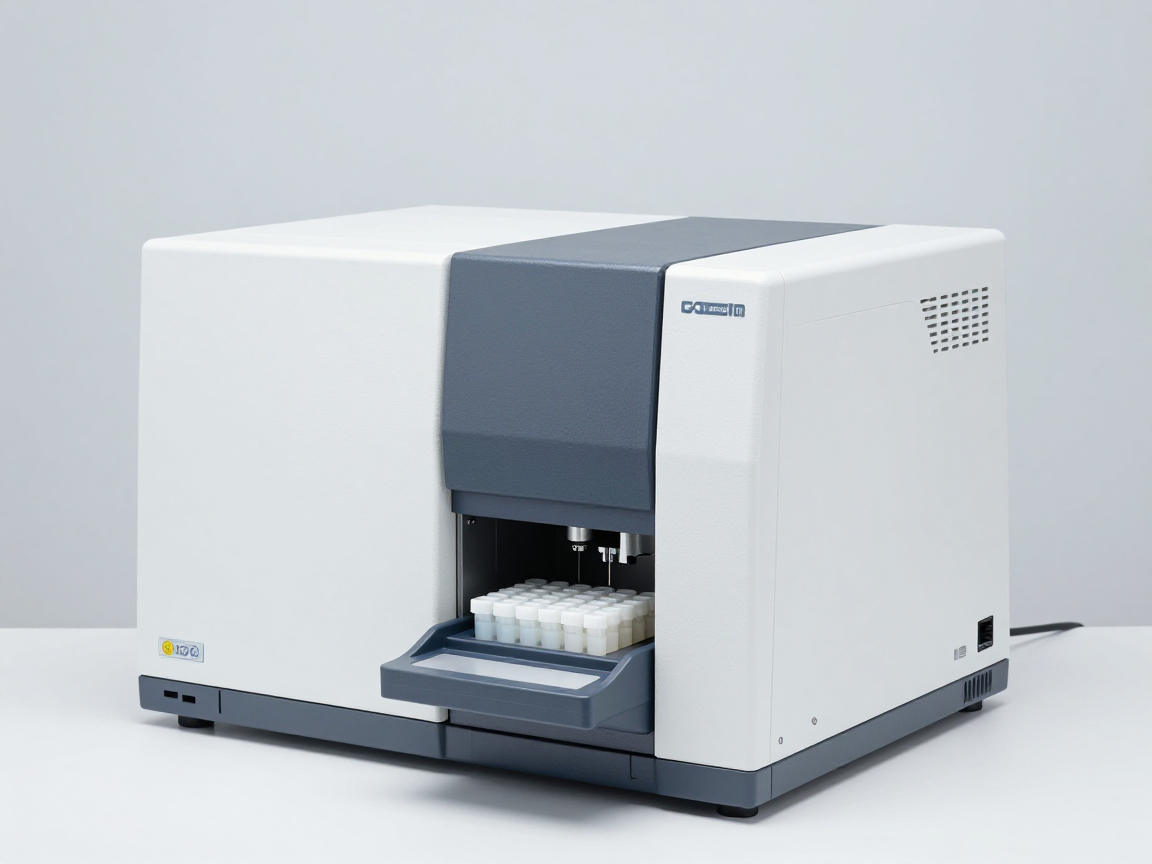
              Laboratory tabletop gas chromatograph-mass spectrometer with automatic sample vial tray in front
              GC-MS separates phthalates by retention time and then identifies them using mass spectrometry — the only technique that quantifies this group of substances in RoHS.

              3. Why must we start from homogeneous materials?

              As with all RoHS substances, phthalates are rated accordingly homogeneous material — smallest unit of material that cannot be further separated by mechanical means. A cable consists of at least three materials: soft PVC shell, reinforcement layer, copper conductor. Phthalates are located mainly in PVC shells; If you grind the entire cable and calculate the percentage, the number will be diluted by the amount of copper and completely misinterpreted.

              Three practical consequences:

              • Each type of plastic is a separate sample. PVC cover, hard plastic button, rubber gasket, protective film — not combined.
              • Colors and additives are also variables. The same type of plastic but different colors may be from different raw material sources; You should try it separately when you have no evidence of the source.
              • Glue, ink, labels: small but often contains phthalates and is often omitted from the removal list.

              4. Sample preparation: the step that determines accuracy

              Most of the error in phthalate testing occurs in the sample preparation step, not in the equipment. Principles of practice:

              Principle Why?
              Cut the sample into small pieces using clean tools, avoiding soft plastic Knives, cutting boards, and PVC bags can release phthalates into the sample
              Use internal standard added before extraction Compensates for losses during extraction and evaporation
              Do not dry until the sample is dry DBP and DIBP are volatile, loss of sample is loss of signal
              Run blank samples in parallel Detect contamination from chemicals, tools, and the environment
              Add a spike to test for recall Confirm that the extraction process actually releases phthalates from the matrix

              5. Six common traps

              Here are six situations where phthalate results are often wrong — in both “overreporting” and “missing” ways.

              1. Background contamination from the test room itself. Phthalates are everywhere: gloves, air hoses, septum caps, plastic bags, dust. Expression is The blank sample also contained phthalates. Prevention: use glassware, limit soft plastic materials in the procedureing area, run blanks in every batch.
              2. Loss due to evaporation and adsorption. DBP and DIBP evaporate at low temperatures and easily stick to tool walls. Expression is artificially low results compared to reality. Prevention: add internal standard, close the jar, avoid excessive heating.
              3. Cross-contamination between samples. Keep the same bag or use the same tools between the PVC sample and the hard plastic sample. Expression is Clean samples also “stick” DEHP. Prevention: pack each material separately, especially the sample; Clean instruments between samples.
              4. Insufficient extraction with difficult background. Phthalates in PVC are more tightly held than in polyolefins; Recovery in PVC can be low with simple ultrasonic soaking. Expression is Low results, not repeatable. How to prevent: check for recovery according to each type of substrate using a standard spiking sample.
              5. Wrong technique or wrong scope. Typically, XRF is thought to test for phthalates (XRF Absolutely not phthalate), or use pyrolysis screening technique and conclude as quantitative. How to prevent: clearly distinguish screening and quantification; The method cited must be extraction + GC-MS.
              6. Misrecognition of isomers. DBP and DIBP are two structural isomerism, the mass spectra are almost the same, easy to confuse if the column separates poorly. Expression is misassigning the name of a substance or adding two substances together. How to prevent: separate the chromatogram well enough and compare with the standard.
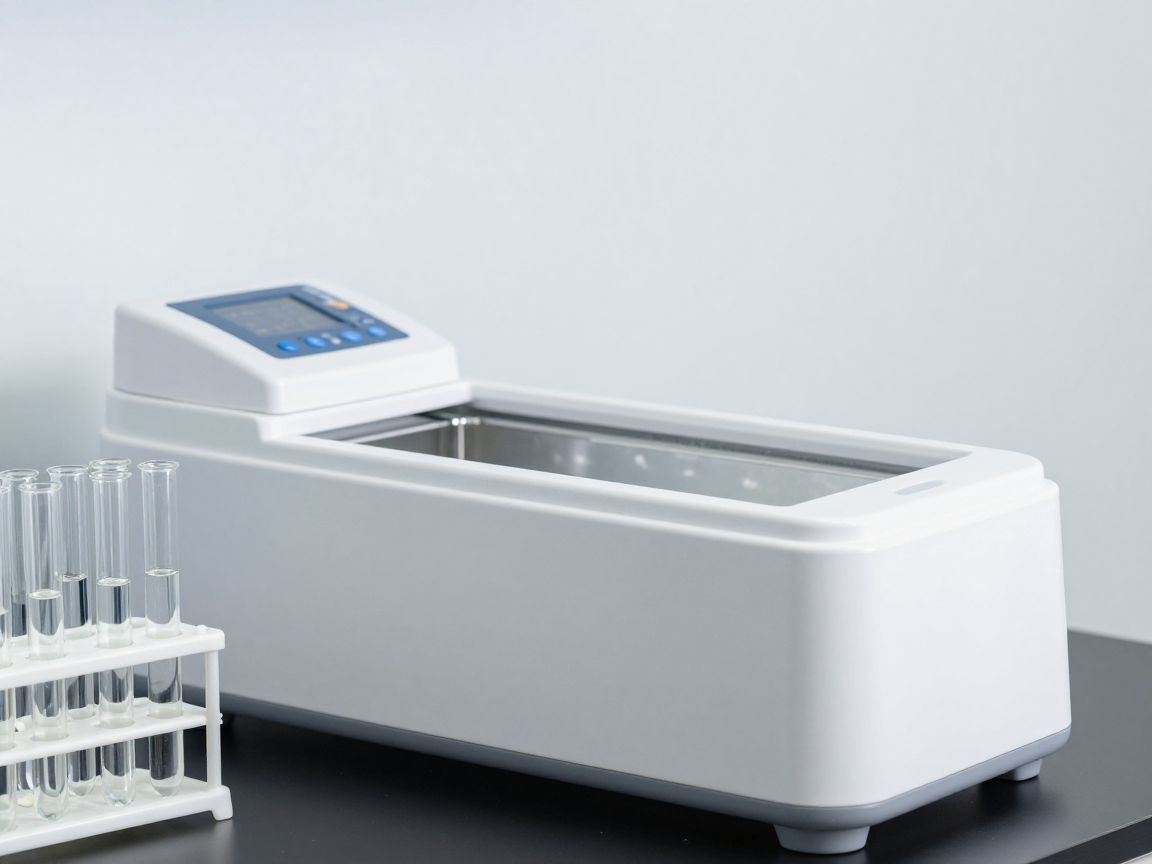
              Sample extraction ultrasonic tank and test tube rack containing transparent solvent and small polymer pieces on the laboratory table
              Extraction is the most error-prone step: the polymer matrix, solvent and heating method determine phthalate recovery.

              6. Solvent extraction or Py/TD-GC-MS?

              Technical Nature When to use?
              Solvent extraction + GC-MS Dissolve/extract phthalates from the matrix and analyze Standard quantitative method — used to conclude compliance
              Py/TD-GC-MS Pyrolysis/direct thermal adsorption of samples Quick screening, internal inspection; The results should be confirmed by extraction when used to make conclusions

              Point to remember: these two techniques Do not replace each other arbitrarily. When the dossier needs a certain conclusion of conformity, the method cited should be the standard quantitative extraction method.

              7. Read the phthalate results on the report

              Four questions to ask when receiving results:

              1. What is the method? Is the standard (e.g. IEC 62321-8) and technical (extraction + GC-MS) clearly stated?
              2. Which material does the sample correspond to? The report must identify each homogeneous material (e.g. “power cable PVC sheath”) and not just “plastic”.
              3. Units and basis of calculation? Results are calculated as % mass of homogeneous material; need to know whether the sample is dry or intact.
              4. Are there blank samples and recall tests? Without these two things, it is difficult to evaluate the reliability of near-limit results.
              Glassware, volumetric flask, pipette and amber vial tray containing clear solution on clean table
              Glassware and sealed vials help limit contamination and loss — the two biggest sources of error in phthalate testing.

              8. Frequently asked questions

              Does my XRF machine test for 4 phthalates?

              No. XRF analyzes elements, but phthalates are organic compounds containing C, H, O — XRF does not recognize them. To test for phthalates, it is required to use the extraction technique + gas chromatography mass spectrometry.

              Why do two tests of the same PVC sample give different results?

              Usually due to unstable extraction or loss/contamination between times. Three factors commonly cause variation: differential extraction recovery, DBP/DIBP evaporation, and instrument contamination. Testing the spike sample and accompanying blank sample will help determine the cause.

              Are DINP, DIDP covered by RoHS?

              The four substances restricted under RoHS are DEHP, BBP, DBP and DIBP. Some other phthalates (such as DINP, DIDP) are not included in this list of four substances, but may appear in the same sample and interfere with the analysis. It is necessary to compare the list of substances with the applicable documents for your market.

              How to understand the report stating “not detected” (ND)?

              “Not detected” means the signal is below the detection limit of the method — not synonymous with “zero.” This value is only meaningful when the detection limit and quantitation limit of the testing laboratory are known. Please ask to clearly state those two numbers.

              Can many plastic parts be combined together to make it cheaper?

              For the purpose of concluding conformity, it is not recommended: pooling will dilute the signal and lose the ability to trace which material exceeds the limit. Aggregation is only suitable for internal screening once the material structure is clearly understood.

              9. Conclusion

              The four phthalates are groups of substances cannot be screened by XRF and can only be determined by sample extraction and then GC-MS analysis. The value of the test depends almost entirely on sample preparation and contamination control.

              If there are only three things left to do to get this test right, do them: one, get the correct phthalate-containing homogenous material (usually soft PVC); two, always run blanks and recovery tests; three, pack samples separately to avoid cross-contamination. These three things are much cheaper than having to retest a batch because the results are unreliable.

              References

              • IEC 62321-8 — determination of phthalates in polymers by GC-MS and by Py/TD-GC-MS
              • Directive 2011/65/EU and Directive (EU) 2015/863 — addition of the four phthalates DEHP, BBP, DBP, DIBP
              • IEC 62321-2 — mechanical sampling and sample preparation (dissection to homogeneous material)
              • EN IEC 63000 — technical document for evaluation of electrical and electronic products against quality restriction requirements

              Related articles


              Discuss further


                Disclaimer

                This article is an interpretive content compiled by us; not legal advice. Method principles and traps stated according to common testing practices; Businesses need to compare the verbatim standards and regulations applicable to specific products.

                See more: Copyright Policy & Disclaimer by ticforall.com.

                RoHS and ELV: two different sets of substance limits for electronics and automobiles

                0
                Cover image of the article «RoHS and ELV: two different sets of substance limits for electronics and automobiles»

                A business that produces circuit boards for both consumer electronics and automotive products often asks the question: “We have passed RoHS, so can we use it for car parts?” Short answer: not by default. Automotive goods are subject to a different set of substance limits — commonly called ELV — with a substance list and approach unlike RoHS.

                Correct understanding of these two sets of regulations helps businesses avoid two costly mistakes: sending RoHS documents to auto customers (not up to the standards they need), or defaulting to “car parts are exempt from RoHS” and then selling those same parts to the consumer electronics market.

                This article compares RoHS and ELV at the principle level: applicable subjects, substance lists, limits, exemptions and accompanying obligations. The goal is for businesses to know for sure which regulatory “roof” they are under before signing a declaration of conformity.

                1. Two regulations, two different goals

                Both were released around 2000–2003 and both have limited heavy metals, so it’s easy to be lumped into one. But the root goal is different:

                RoHS ELV
                Object Electrical and electronic equipment (EEE) launched on the EU market Road vehicles and their materials/components
                Original goal Limiting hazardous substances in EEE, taking into account the procedureing of electronic waste End-of-life vehicle management: substance limitation and recovery, recycling, reuse
                Focus Cleaner electronic product design Manufacturer’s responsibility throughout the vehicle’s life cycle

                Here is the core difference: RoHS is simply a substance restriction regulation, also ELV both limits substances and imposes recovery obligations and recycling rates. In other words, ELV is broader than RoHS in terms of scope of obligations, but narrower in terms of restricted substance categories.

                2. Four substances (ELV) versus ten substances (RoHS)

                This is the most important practical difference. RoHS restrictions 10 substances. ELV is only limited 4 heavy metals:

                Quality RoHS ELV
                Lead (Pb) Yes (0.1 %) Yes (0.1 %)
                Mercury (Hg) Yes (0.1 %) Yes (0.1 %)
                Cadmium (Cd) Yes (0.01 %) Yes (0.01 %)
                Hexavalent chromium — Cr(VI) Yes (0.1 %) Yes (0.1 %)
                PBB, PBDE (brominated flame retardant) Yes (0.1 %) No restricted under this category
                DEHP, BBP, DBP, DIBP (phthalate) Yes (0.1 %) No restricted under this category

                The consequence is very specific: a plastic part can exceed the limit phthalates and is excluded by RoHS, but is not included in the ELV restricted list. On the contrary, it does not mean that automobile products are free to use up — substances not restricted by ELV can still be restricted by other regulations, for example REACH.

                Two trays of materials sit side by side on the inspection table: one tray of small metal parts, one tray of plastic pieces and cables
                The same material may be excluded by RoHS for phthalates but falls outside the ELV category — four substances versus ten.

                3. Threshold: same 0.1 % (and 0.01 % for cadmium), same calculated on homogeneous material

                This point is re-defined by two sets of regulations same. Both RoHS and ELV impose weight-based limits in each homogeneous material, not calculated on the whole product or details:

                How to calculate RoHS ELV
                Measurement unit % mass according to homogeneous material % mass according to homogeneous material
                Cadmium 0.01 % 0.01 %
                Remaining substances 0.1 % 0.1 %

                Because of the same “homogeneous material” logic, the analytical techniques used for RoHS — XRF screening, then confirmatory chemical methods — also work for ELV. The difference lies in List of substances to be tested, not located how to test.

                4. Exemption: each regulation has its own appendix

                Both have a list of exemptions, but are two independent documents, updated on separate schedules:

                RoHS ELV
                Where exemptions are listed Annex III (and Annex IV for medical and monitoring devices) Annex II of the ELV Directive
                Typical exemption group example Lead in high temperature solder joints, lead in brass alloys,… Lead in some aluminum/steel alloys and batteries, lead in solder joints of some electronic components mounted on vehicles,…
                Who edits the list? Modify through the Authorization Directive, the procedure associated with ECHA Edit through authorization, but according to ELV’s own schedule and process

                Points to note: a RoHS exemption does not “flow” to ELV and vice versa. A weld that is exempt under RoHS for reason A may still not be exempt under ELV if the ELV does not have a corresponding entry. This is a very common error when businesses reuse records between two product lines.

                Also, when automotive customers request proof, refer directly to Annex II of the current ELV Directive — do not infer from Annex III of RoHS. Details of each item and application deadline of both It is necessary to compare the exact text of the currently effective document.

                5. Scope: when does a part “fall” into RoHS, when does it fall into ELV?

                General principles: regulations follow the way products are brought to market, does not go by the name within the factory.

                • Belongs to ELV: materials and components used to assemble into vehicles and put on the market as part of the vehicle.
                • Under RoHS: Electrical and electronic equipment is marketed as an independent product.
                • The car itself (vehicle for transporting people or goods) located outside RoHS scope — this is the connection that makes many people think “automotive goods are exempt from both”. In fact, the vehicle does not belong to RoHS, but still belongs to ELV.

                The actual boundary lies at the intersection. A control module (ECU), a set of wires, a sensor: if sold to the vehicle manufacturer to install in the vehicle, attached to the ELV; If it is itself sold as a standalone electronic accessory to consumers, it may fall within the scope of RoHS. Businesses should clearly define channel to market of each product code instead of applying a general conclusion to the whole factory.

                The car's wiring harness and electronic module sit on the test table along with a small handheld electronic device
                The same part may be subject to ELV when installed in a vehicle, but subject to RoHS when sold as a standalone electronic device.

                6. One detail, two modes: real-life situations

                Situation Conclusion of principle
                Circuit boards sold to car manufacturers to install in cars Attach to ELV; RoHS records cannot be replaced
                That exact board, packaged and sold as electronic components for common users May fall in RoHS if it is EEE to market independently
                Electrical cables used in vehicles ELV (4 substances); Phthalates are not included in the ELV category, but may still be covered by REACH
                Portable charging device sold with car accessories Usually Independent EEE → RoHS (10 substances)
                Details are both vehicle materials and contain EEE Must look both limiter; This is the most error-prone area

                7. ELV is more than just substance restrictions: collection and recycling obligations

                Most businesses ignore: ELV poses Manufacturer’s responsibility End-of-life vehicles — recovery of old vehicles, systematic treatment, and targets for reuse, recycling, and energy recovery according to the average volume per vehicle. In the EU, these goals are associated with the stage of vehicle type approval for reuse – recycling – recovery.

                For component suppliers, this obligation is expressed indirectly: car manufacturers need material data and the ability to disassemble parts, so material declaration requirements are often stricter than for consumer electronics. If you’re used to “just a RoHS test report”, be prepared for a more extensive set of documentation requirements at the car end.

                Desk with wordless materials declaration file, disassembled car parts and a technical scale
                Automotive goods often require a broader set of records: material data, disassembleability and volume for ELV’s recycling goals.

                8. RoHS – ELV quick comparison table

                Criteria RoHS ELV
                Product type Electrical and electronic equipment Road vehicles and vehicle components/materials
                Limited number of substances 10 4 (Pb, Hg, Cd, Cr(VI))
                Threshold 0.1 % (Cd 0.01 %) 0.1 % (Cd 0.01 %)
                How to calculate According to homogeneous material According to homogeneous material
                List of exemptions Annex III/IV of the RoHS Directive Annex II of the ELV Directive
                Obligations attached CE mark, technical documents, declaration of conformity Manufacturer responsibility, end-of-life vehicle recovery, recycling goals
                Can test results be shared? The test method is general, but The list of substances and exemptions must be checked separately for each regulation

                9. Five common misconceptions

                1. “REACHing RoHS means meeting ELV.” Wrong — two different categories of substances and two different categories of exemptions. Achieving RoHS does not automatically satisfy ELV.
                2. “Automotive products don’t have to do anything about chemicals.” Wrong — vehicle belongs to ELV with 4 restricted substances, plus collection and recycling obligations.
                3. “ELV is stricter because of recalls, so it has to test for more substances than RoHS.” False — limited ELV less substance (4 vs. 10); it is broad in obligation, not broad in substance category.
                4. “RoHS exemption works for ELV.” Wrong — exemption belongs to each document; must compare with the corresponding appendix.
                5. “Just guess based on the sales channel.” Unsafe — it is necessary to clearly identify whether the product is marketed as a stand-alone EEE or as a vehicle component, and document that basis in the records.

                10. Frequently asked questions

                What if a part is used for both a car and an electronic device?

                Determine the channel to market for each product code. If sold to a car manufacturer to install in the car, apply ELV; If sold as a standalone electronic device/accessory, RoHS compliant. In the case of indecision, the safe bet is to satisfy both sets of limits.

                Does ELV limit phthalates?

                According to ELV’s restricted substances list, four restricted substances are lead, mercury, cadmium and Cr(VI). Phthalates are not included in that list, but may still be governed by other regulations such as REACH — the current text needs to be compared.

                Can RoHS test reports be used to demonstrate ELV?

                In terms of methods, it can be utilized, but in terms of conclusions, it is not automatic. The report must include all four ELV substances and must be reconciled with Annex II of the ELV Directive, including exemptions.

                Are electric vehicles part of ELV?

                Electric vehicles are still road vehicles, so they fall within the scope of ELV; The battery may be subject to additional battery regulations. It is necessary to compare current documents for each component.

                Are ELV limits different from RoHS?

                In principle, it is the same: 0.1% according to homogeneous materials, except cadmium 0.01%. The difference lies in the substance list and exemption list, not in the limit.

                11. Conclusion

                RoHS and ELV are two different substance limits, not interchangeable. RoHS restricts 10 substances for electrical and electronic equipment; ELV limits 4 heavy metals for road vehicles, with collection and recycling obligations. The limits and calculations on homogeneous materials are the same, but the exemption lists are two separate appendices.

                Three things need to be done immediately: clearly identify the channel to market for each product code; Compare the correct exemption appendix of each regulation; and don’t use the RoHS conclusion to answer the ELV question or vice versa.

                If your business has both product lines, separate the records right from the sample receipt stage — much cheaper than discovering non-standards after sending the declaration of conformity to customers.

                References

                • Directive 2011/65/EU (RoHS 2) — scope, limits and Annex III
                • Directive (EU) 2015/863 — addition of four phthalates
                • Directive 2000/53/EC on end-of-life vehicles (ELVs) — Article 4 and Annex II
                • IEC 62321 series of standards — method for determination of restricted substances

                Related articles


                Discuss further


                  Disclaimer

                  This article is an interpretive content compiled by us; not legal advice. The number of substances, limits and exemptions of RoHS and ELV are stated at the principle level and it is necessary to compare the verbatim of Directive 2011/65/EU (consolidated version) and Directive 2000/53/EC (consolidated version, with effective Appendices) before applying to specific products.

                  See more: Copyright Policy & Disclaimer by ticforall.com.
                  Dissection of the sample according to IEC 62321-2: if this step is done incorrectly, all subsequent results will be meaningless

                  0
                  Cover image of the article «Dissection of the sample according to IEC 62321-2: if this step is done incorrectly, all subsequent results will be meaningless»

                  In the whole set of IEC 62321 standards, the part that is least mentioned is part 2 — talks about sampling and mechanical sample preparation. But this is the part that determines the correctness of all the following results. A single-digit ICP analysis is meaningless if the sample included in the analysis is not the material you intend to test.

                  Dissection is not “taking things apart to make them smaller”. It is a technical process that has tools, is orderly, has a separate treatment for each type of coating, and has an output of materials list enough to read and protect the results later.

                  This article delves into the removal technique in the spirit of IEC 62321-2: tools, removal order, treatment of plating – paint – glue – ink, how to make a list of materials and how to save samples. The concept of “homogeneous material” has been presented separately in this article What is “homogeneous material”?

                  1. What IEC 62321-2 says — and what it doesn’t

                  IEC 62321-2 is the part the standard is about sampling strategy and mechanical sample preparation (mechanical sample preparation) for electrical and electronic products. “Mechanics” is the key word: this section is about disassembling, cutting, crushing, grinding, grinding — no Talk about chemicals.

                  Work Nature Output
                  Dissection (disassembly) Disassemble/cut to separate parts and materials from each other The material parts have been separated, retaining their characteristics
                  Grind (commitment) Reduce a material into granules/powder The sample has a uniform particle size suitable for analysis
                  Sample processing (digestion) Chemistry — only performed at the analytical step Solution or extract for measurement on the device

                  IEC 62321-2 is the guideline for mechanical dissection and sample preparation; Chemical steps are in other parts (parts 4, 5, 6, 7, 8). Core point: all analysis results are based on the input generated by step 2 — If you peel off the right object, the number behind will have meaning.

                  Laboratory sample dissection table with disassembled electronics, labeled sample tray, cutting pliers, screwdriver and magnifying glass
                  The output of the disassembly step is not a pile of scrap, but separate pieces of material with a map of their location in the product.

                  2. Dissection instruments — three principles for selecting instruments

                  1. Do not contaminate the sample. Instruments must be clean and not transfer metals/chemicals to the sample. Steel knives can leave behind chromium or nickel shavings; Pliers used on samples containing lead may carry over to the next sample.
                  2. Does not change the material. Don’t use heat to soften the glue, don’t use solvents to separate the paint layer — both change the very object you’re trying to measure.
                  3. Clean between samples. Clean tools (alcohol, soft brushes, or separate tools) before moving on to another sample, especially between high-risk material groups.

                  Minimum tools, arranged by stage:

                  Stage Commonly used tools Note sample contamination/transformation
                  Remove the link Screwdriver, wrench, needle-nose pliers, pry knife Do not apply grease to the release joint
                  Cut, divide into small pieces Cutting pliers, scissors, knife, hand saw Avoid blades with peeling chrome plating; Cut slowly to avoid generating heat
                  Separate the coating Razor, abrasive paper, small grinder Collect all coating material, do not mix with the substrate
                  Sample grinding Rotary/knife mill, mortar Do not use the same bowl between plastic and metal
                  Observe and locate Magnifying glass, searchlight, analytical balance, measuring clamp Take photos before, during, and after — especially thin coatings

                  Points often overlooked: Weighing and photographing the sample is part of the dissection. The volume (or area) is used to calculate the limit, and the image is the proof of which class was correctly separated.

                  3. Disassembly order — from outside to inside, from function to material

                  Incorrect removal order often has two consequences: missing the coating (because it disappears when removed), or no longer being able to determine the location of the material in the product – a condition for consideration of exemption later.

                  1. Take overall photos Product in its original form, serial/lot number, appearance condition.
                  2. Remove the housing and connections (screws, clamps, joints) using hand tools.
                  3. Separated by functional cluster: frame, power supply, motherboard, screen, mechanical structure, wires and cables, accessories.
                  4. Go into each cluster: continue removing details, connectors, contact pins.
                  5. Peel until uniform material: welds, plating, paint, coating, glue, stamp, ink, each type of plastic.
                  6. Soft/flexible material group (PVC, cable, soft shell) separated and packaged separately.

                  Each separated part must be placed Separate tray, label with sample code, record location. Location recording is a condition for reference to the exemption — for example, a solder joint that exceeds the lead limit may be valid if it is in the correct exempt application.

                  Disassembled electronic parts are classified into separate trays according to functional clusters, with model labels and notes
                  Disassemble the functional cluster first, then the material: this method maintains the relationship between the sample code and the actual location in the product.

                  4. Handling plating, paint, glue, ink — where the risk is concentrated

                  This is the most difficult part of removal: the coating is very thin, tightly adhered to the substrate, and is where most of the RoHS risks (Cr(VI), lead, cadmium in pigments) are concentrated. Principle: coating is one separate homogeneous material, must be separated by equals mechanical measures and retain its original nature.

                  Class type Evaluation object Separation method (mechanical) Don’t do it
                  Metal plating (zinc, chrome, nickel) Plating and passivation layer cover it Scrape/grind to collect the plating layer; Very thin passive layer is taken according to surface area Do not use acid to “peel” – it changes the oxidation state of chromium
                  Coating layer Paint film Scrape, mechanically peel, or lightly grind to collect the paint film Do not use solvents to dissolve the paint film
                  Glue, adhesive Glue layer Pry, cut, cool until the glue is crispy and then peel off Do not use heat to soften the glue
                  Printing ink, printing paint Ink layer Separate if possible; If not, evaluate the same base material and specify Do not separate with solvents
                  Labels, decals Ink, glue, film of stamps Mechanical peeling Don’t consider labels as “meaningless parts”

                  With chromium-containing metal coatings, Cr(VI) results are often expressed accordingly mass per area (µg/cm²) not in percentage — so when separating the passive layer, it is necessary Measure and record surface area sampled. How to determine Cr(VI) on coatings is presented in the article colorimetric and ion chromatographic methods for Cr(VI).

                  5. Prepare material list — required output of take-off

                  A dissection session is only considered complete when it is done materials list (material inventory) — table connecting disassembly and all subsequent steps. Minimum columns needed:

                  Column Why is it necessary?
                  Sample code (unique symbol) Access between sample tray and results
                  Material name (specific description) Read the results according to the correct material, not in general terms
                  Location in the product Conditions for exemption consideration
                  Function (shell, conductivity, insulation, adhesion…) Risk grouping, comparison of exemptions
                  Volume/area Calculate limit as a percentage or as µg/cm²
                  Risk groups (Pb, Cd, Cr(VI), bromine, phthalate…) Decide what to try next

                  This table is a bridge to the list of homogeneous materials in the technical documents, and is the basis for comparing the list of 10 restricted substances in the article. 0.1% and 0.01% limits.

                  6. Saved form – section for criticism when there is a dispute

                  Dissection consumes sample: the part that has been removed often cannot be recreated. So it must be considered from the beginning saved template (retained sample) and retrieval.

                  • Packed separately according to material. Don’t store multiple soft plastics in the same bag — phthalates can migrate between materials in the same bag and distort results.
                  • Store in dry, dark, stable temperature. For samples involving Cr(VI), avoid exposing the surface to moisture/oxidation; Send samples soon.
                  • Full labeling: sample code, date, harvester, original product/lot.
                  • Keep sample photos — evidence of proper separation and sample condition upon receipt.
                  • The amount of sample saved is sufficient for retesting, including trying a second room if there is a dispute.

                  Principles for selecting batches, number of sampless and control samples are presented separately in the article How many samples are enough for a RoHS test kit?

                  Sealed sample bags with empty labels are placed separately in sample storage trays on the laboratory shelf
                  Stored samples must be packaged separately for each material and stored stably — without a saved sample, the business will have no basis for criticism in case of dispute.

                  7. Six errors that cause dissection to fail

                  1. Grinding many materials together. Results are diluted by mass; Offending material may disappear from the average.
                  2. Missing coating, glue, ink, stamp. The highest risk group and most often overlooked when cataloging.
                  3. Use solvent or heat to separate the layer. Changing the nature – destroying the object to be measured.
                  4. Do not record location and sample code. The results are there but we don’t know which material or where it belongs to – cannot be considered for exemption.
                  5. Cross-contaminated instruments. Lead/chromium stains from the previous sample stick to the next sample, creating a false positive result.
                  6. Generic package save template. Phthalate contamination among soft plastic materials distorts both initial and retest results.

                  8. Frequently asked questions

                  Is it necessary to peel each material uniformly?

                  In principle, each homogeneous material is an object of evaluation. With complex products, it is practical to test representative groups of materials combined with material declaration and risk assessment — but all conclusions must still be about a specific material, not about the “whole product”.

                  Does the hand grinder used to remove coatings contaminate the sample with metal?

                  There is risk. Abrasive materials may carry their own constituents mixed into the resulting coating. It is recommended to use a type of known composition and an accompanying blank control to estimate contamination.

                  How can I confirm that the correct coating has been applied?

                  By verified observation: magnifying glass, before/after photos, and background control sample (where all the coating has been removed) for comparison. If the correct layer cannot be confirmed, the results are inconclusive.

                  After dissection, how long does it take for the sample to be sent?

                  The sooner the better, especially for samples that need to determine Cr(VI) on the coating because the surface can change over time. The specific storage time needs to be asked by the testing laboratory and compared to the corresponding part of the standard.

                  Is there any document regulating how to separate each type of product?

                  IEC 62321-2 sets out general strategies and principles; The specific implementation depends on the product and is determined by the testing laboratory’s internal procedures. Businesses should ask the testing laboratory to describe the analysis in the report.

                  9. Conclusion

                  Sample removal is the decisive step of the entire RoHS test procedure. Three things to do right: one, use clean mechanical tools, no heat, no solvents; two, disassemble by function and then by material, always record the position; three, ending with a full bill of materials and individual packaging samples.

                  The most overlooked point is the coatings — glue, ink, stamp, plating, paint. That is where most of the risks are concentrated and is also where it is often “accidentally” lost when removed. If you could only improve one thing about the RoHS process, start here: a disassembly process that is written down, has tools, is orderly, and has a list of outputs.

                  References

                  • IEC 62321-2 — mechanical sampling and sample preparation (extraction, disassembly procedures)
                  • IEC 62321 (other parts) — methods for determination of restricted substances in electrical and electronic products
                  • European Commission guidance on the RoHS Directive — concepts of “homogeneous material” and “mechanical separation”
                  • Directive 2011/65/EU — list of restricted substances and limits

                  Related articles


                  Discuss further


                    Disclaimer

                    This article is an interpretive content compiled by us; not legal advice and does not replace the internal procedures of an accredited testing laboratory.

                    The specific dissection method depends on each type of product; Enterprises need to compare the text of IEC 62321-2 and the testing laboratory’s procedures.

                    See more: Copyright Policy & Disclaimer by ticforall.com.

                    RoHS technical records according to EN IEC 63000: what must businesses save and submit?

                    0
                    Cover image of the article «RoHS technical records according to EN IEC 63000: what must businesses save and submit?»

                    Every electrical and electronic product sold into the EU must have one technical profile Proof that it has been evaluated according to substance restriction requirements. The harmonized standard used for this is EN IEC 63000 — and this is the document that market watchdogs actually ask about during inspections.

                    Many businesses have dozens of test reports but no technical records. That is the biggest gap in reality, and is the content of this article.

                    1. What is EN IEC 63000?

                    EN IEC 63000 is a harmonized regulatory standard Technical documentation to evaluate electrical and electronic products against substance restriction requirements. It answers a very specific question: If my product is inspected, what do I need to have on hand and how can I prove it?

                    The most important point: this standard No need to try everything by laboratory. It allows for the combination of many types of evidence — testing, material declarations from suppliers, reviews of technical documents, analysis of manufacturing processes — as long as it is authoritative and traceable.

                    In other words: testing is one way to prove it, not the only way. But the “other way” must be stricter, not more lenient.

                    Open ring binder with blank dividers and blank folder on desk
                    The technical file is a structured document — not a loose stack of test reports.

                    2. What is needed in the application?

                    Document group Specific content
                    1. Product description Product/model identification, photos, diagrams, parts list and key materials
                    2. Material risk assessment List of homogeneous materials, risk level of each group, reason for choosing test samples
                    3. Technical proof Test report; supplier’s material declaration; Analyze technical documents of components; Internal XRF results
                    4. Exemption assessment If there is material above the limit: applicable exemption section, applicable reason, duration of exemption
                    5. Production control Process to ensure materials remain unchanged: supplier control, change management, input inspection
                    6. Declaration of conformity DoC according to (EU) 2011/65/EU, signed and clearly stating the relevant directives
                    7. Identification and tracing documents Product code, batch number/related production date, supplier records, archived samples

                    In these seven groups, Vietnamese businesses often have group 3 (test report) but missing groups 2, 4 and 5. Those are the three groups that represent the “assessment process” — and what separates a qualified application from a pair of test report folders.

                    3. The bottom line: prove it by process, not just by a sample

                    Imagine a market surveillance agency inspecting a batch of goods. Three questions they will ask:

                    1. What materials does this product include? — without a bill of materials, the file stops here.
                    2. How do we know if those materials meet the limit? — need evidence by material group, not just a report for a nice sample.
                    3. How do you know that the next batches are still the same as the tested batch? — need supplier control and change management.

                    The third question is one that many applications cannot answer. The 2024 test report does not say anything about the plastic supplier changing the source of raw materials in March 2026 — unless the business has a change management process and records.

                    Sturdy document storage box with blank labels and folders next to it on the shelf
                    Records must be kept and maintained over time — typically 10 years from when the final product is placed on the market.

                    4. Four types of evidence and levels of confidence

                    Type of evidence Description Level
                    Test report from an accredited testing laboratory Direct measurement results on representative samples Highest — but only for tested samples
                    Supplier’s material declaration The supplier declares the content of restricted substances for each homogeneous material Average — depends on supplier reliability
                    Analyze component technical documents Review datasheets, documents, and testing history of components Moderate — good when combined with risk assessment
                    Internal XRF testing Screening at the factory, internal results Adjuvant — does not cover phthalates and Cr(VI)

                    The best practice in practice is combined according to risk level: high-risk materials (PVC, coating, recycled plastic) must have a test report; Low-risk materials (standard components from major manufacturers) can be based on material declarations and technical documents, with periodic XRF testing.

                    5. How long do records need to be kept and how?

                    • Deadline: the usual 10 years from when the final product is placed on the market. Records must remain accessible throughout that period — even after the product is discontinued.
                    • Form: Electronic copies are accepted if they are complete and can be printed upon request; There should be a naming and versioning convention.
                    • Language: Records should be in a language the inspection body can read — for the EU this is usually English, or the language of the member state where the goods are inspected.
                    • Who keeps: manufacturer or importer listed on the product; If you are a manufacturer, the responsibility for contractual documentation may lie with the ordering party, but the technical data must still be provided by you.

                    6. Change management: the hardest part of the application

                    The record is only strong if it accurately reflects today’s production reality. Four types of changes invalidate records:

                    Change Influence Things to do
                    Change material supplier Old test results are no longer representative Try again or get a new material declaration with XRF screening
                    Change coating/plating technology Direct effect of Cr(VI) Test Cr(VI) again using the overlay method
                    Change ink, glue, stamps Effects of phthalates and Cr(VI) Add these materials to the evaluation list
                    Switch plastic to one with recycled content PBDE and cadmium risks increase GC-MS test for organic bromine; Evaluate recycled sources
                    Laptop on desk showing blank document page next to supplier folder and pen
                    Records must be updated every time there is a change in materials, suppliers or technology — otherwise, it simply describes the past.

                    7. Frequently asked questions

                    Is EN IEC 63000 mandatory?

                    Is a harmonized standard: applying this standard creates conformity speculation with the corresponding requirements. Businesses can prove it another way, but it must be proven — in fact, following harmonized standards is the fastest and least controversial way.

                    I have a full test report, what is different about the technical records?

                    The test report answers “does this sample pass?” Technical documents answer “how do we know that the entire product is being sold successfully, including the parts that are not tested?” The second part of the response includes the bill of materials, risk assessment, exemptions and production controls.

                    Do technical documents need paper copies?

                    Not required. An organized, complete, and accessible electronic version is acceptable. It is important to be able to present it within the required time limit.

                    Do I need to translate documents into English?

                    Should. Market surveillance authorities in EU countries often request records in languages ​​they can read. Documents only in Vietnamese will cause difficulties and may be considered unpresentable.

                    If a supplier only sends a one-line “RoHS declaration”, what is considered evidence?

                    That’s weak evidence — a claim, without data. Value depends on the supplier’s reliability and history of cooperation. For high-risk materials, it is necessary to request declaration according to uniform material structure with content, or test report.

                    8. Conclusion

                    EN IEC 63000 states what the technical documentation should include, and allows for multiple types of evidence to be used rather than relying solely on testing. The three most important things in the application are often missing: homogeneous material list, exemption assessment and change management process.

                    And one thing to remember: technical documents are not a one-time procedure. It is a living document — updated every time materials, suppliers or processes change, and saved for 10 years from when the final product goes to market.

                    References

                    • EN IEC 63000 — technical document for evaluation of electrical and electronic products against quality restriction requirements
                    • Directive 2011/65/EU, Articles 7 and 8 — manufacturer obligations, technical documentation
                    • IEC 62321-2:2021 — mechanical sampling and sample preparation strategies
                    • IEC 62474 and IPC-1752A — material declaration and communication in the supply chain

                    Related articles


                    Discuss further


                      Disclaimer

                      This article is an interpretive content compiled by us; not legal advice. The content of the technical dossier is presented in the spirit of EN IEC 63000 and Directive 2011/65/EU; Enterprises need to compare standards and regulations verbatim.

                      See more: Copyright Policy & Disclaimer by ticforall.com.