Home Blog Page 6

Checklist of 20 RoHS control points for electronics factories (input – production – output)

0
Cover image of the article «Checklist of 20 RoHS control points for electronics factories (input - production - output)»

RoHS control in electronics factories often fails not because of a lack of measuring equipment, but because of a lack of control points in the right place. A shipment may have a good test report but still exceed the limit if the factory cannot control the replacement materials, the glue changes suppliers, or the soft plastic packaging is imported without declaration.

Below is a list of 20 control points, divided into three stages: input – production – output. This list is designed to be assigned to a specific person and reviewed periodically, not to be kept in a filing cabinet.

1. Why is it divided into three stages?

RoHS risks appear at three different times, and the handling measures at each time are also different:

  • Input: The risk lies in the materials purchased — alloys, coatings, glues, plastics, welds, packaging. Control by material declaration and screening test.
  • Production: Risk lies in non-design changes — changing suppliers, changing wire types, changing glue, mixing inventory, reusing packaging. Control by change process and material isolation area is not achieved.
  • Output: The risk lies in attaching the wrong label, keeping the wrong records, and delivering the wrong configuration to the customer. Control by checking before delivery and linking records with product codes.
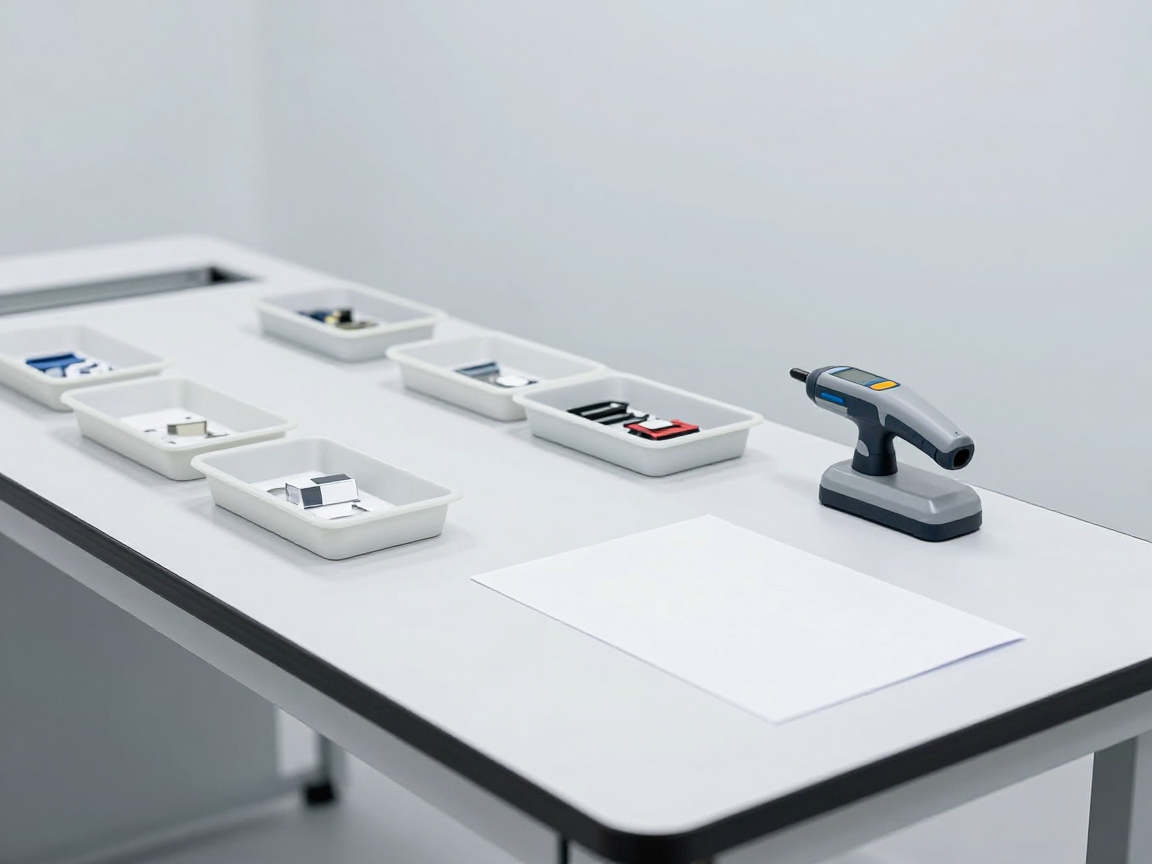
Incoming material receiving area in the factory with parts trays and inspection tables
The input step determines most of the risk: if the material has not been evaluated, all subsequent steps are late prevention.

2. Seven checkpoints on the entry stage

# Control point Evidence needed
1 Uniform material list for each approved product code Material takeoff table has version and approver
2 The supplier has signed a material declaration according to the restricted substances list The declaration form has the effective date and material code
3 High-risk materials have been tested for screening XRF results or test reports for welds, coatings, soft plastics
4 New suppliers are evaluated before going into production Supplier evaluation form with material samples
5 Imported materials are compared with product codes before being warehoused Minutes of input check
6 The material isolation area has not been met or has insufficient records Warehouse diagram with quarantine area marked
7 There is a process to handle when the supplier changes the material formulation Change notification commitment, notification form

3. Six control points in production

# Control point Something that’s easy to overlook
8 Any changes to materials, suppliers, or adhesives must go through the change process Changing adhesives is often considered a “minor change” but has a direct impact on phthalates and solvents
9 Replacement materials must be declared before use Try a small batch before applying for paperwork
10 The line uses the correct approved materials for the product code Mixing materials of two product codes in different markets
11 Tools, trays, and molds are controlled for cross-contamination Use the same tray between lead and non-lead materials
12 Packaging and auxiliary materials (glue, ink, stamps) are included in the evaluation list Soft plastic packaging is often excluded from the catalog because it is not a product detail
13 Have periodic testing of running product samples, not just initial samples Only try once when modeling, then don’t try again
Control panel at an electronics assembly line with material trays labeled with product codes
Production control focuses on change: materials change, suppliers change, structures change.

4. Seven control points on the output leg

# Control point Evidence needed
14 Regulation conformity documents are attached to the correct product code delivered Declaration of conformity and test report according to product code
15 The correct product label has been checked Photos of actual labels on goods, label inspection records
16 Full documentation and manufacturer information Instructions, manufacturer/importer information
17 There are samples stored in batches with clear retention periods Book to monitor stored samples and storage conditions
18 There is a re-checking process when customers request additional documents Feedback form, responsible contact
19 There is a handling process when it is discovered that delivered goods are not satisfactory Recall process, customer notification form
20 Records are periodically reviewed according to the supply chain’s changing cycle Review schedule and review minutes signed by someone

5. How to turn a checklist into a working system

A 20-point category is only valuable when tied to people and calendars. Three implementation principles:

  1. Each point has a responsible person. Do not write the name of the department, the name of the person and the title.
  2. Each point has specific evidence. If documents cannot be shown, that point has not really been controlled.
  3. Each point has a testing frequency. Input points are checked according to imported batches; production points checked by shift or by change; Output points are checked according to the output batch.

Output inspection table with packaged products and inspection records placed next to it
The outbound stage is where records and actual goods must match before leaving the factory.

6. Frequently asked questions

Does a small factory need 20 points?

Can be deployed in stages: starting with points 1, 2, 3 (list of materials, declaration, screening test) and points 14, 15, 17 (records, labels, stored samples). This is the group of points that block most of the risks.

Does this checklist replace the test report?

No. The checklist is a preventative system, and the test report is evidence for a moment. The two things complement each other: the test report proves that the sample has been tested, the checklist proves that the mass-produced product stays true to the sample.

What if the supplier refuses to sign the declaration?

This should be considered a supplier-level risk: switch to periodic testing for that material, or find an alternative source. For high-risk materials such as welds, coatings, and soft plastics, failure to declare is a gap that cannot be filled by reporting another batch.

How often should records be reviewed?

At least once a year, and as soon as there are changes in suppliers, materials, structures or when customers change requirements. Legal milestones in export markets are also a natural opportunity for review.

7. Conclusion

Effective RoHS control does not lie in an expensive test room, but in a system of control points with accountable people and evidence. The twenty points mentioned above are broken down to make it easy to deploy, easy to test, and easy to demonstrate to customers.

If you only choose to do three things in the next quarter, choose: finalize a uniform material list for key product codes; Require all suppliers of high-risk materials to sign declarations; and establishing a quarantine area for materials with insufficient records. These three things prevent more risk than any single test.

References

  • Directive 2011/65/EU and its amendments (limits based on homogeneous materials, compliance obligations).
  • Standard on conformity assessment documents for electrical and electronic equipment (EN IEC 63000).
  • IEC 62321 test method series and corresponding method standards.
  • European Commission guidance on manufacturers’ and importers’ obligations under RoHS.

Related articles


Discuss further


    Disclaimer

    This article is an interpretive content compiled by us; not legal advice. Enterprises need to compare relevant documents/standards verbatim before applying them to specific products.

    See more: Copyright Policy & Disclaimer by ticforall.com.
    Declaration of conformity (DoC) and CE marking for RoHS: who signs, for which products, what if it’s wrong?

    0
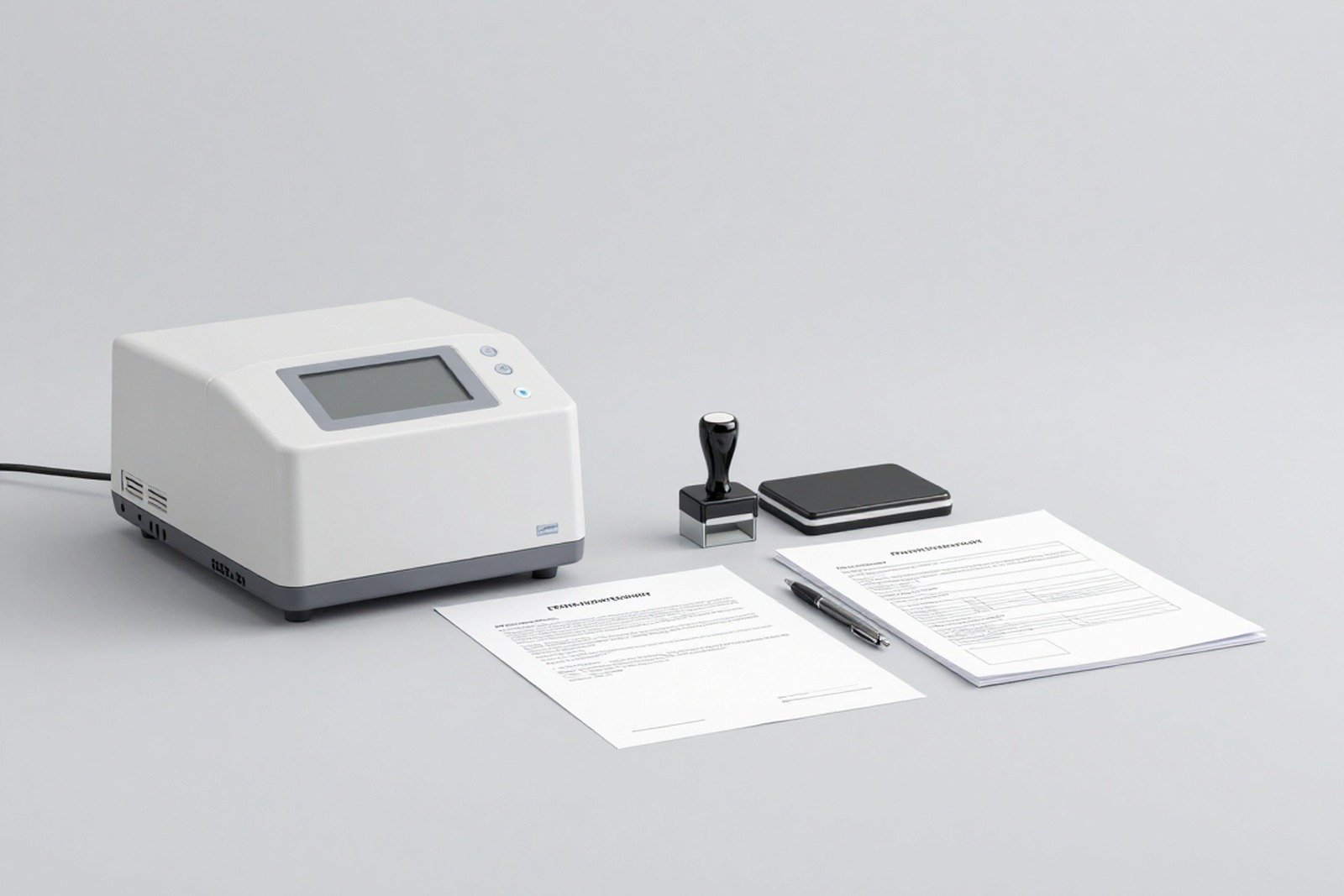
    Cover image of the article «Declaration of conformity (DoC) and CE marking for RoHS: who signs, for which products, what if it's wrong?»

    In RoHS, the most important piece of paper is not the test report — it is declaration of conformity (DoC) signed by the manufacturer. Test reports are proof; declaration of conformity is legal commitment. And sign CE posted only on the basis of that commitment.

    The three most confusing questions businesses ask are: Who can sign?, sign for any product, and What happens if you sign incorrectly?. This article answers those three questions, with the minimum content of a declaration of conformity and common errors.

    Before going into details, it is important to remember a fundamental point: RoHS 2 is a directive that belongs to the group of CE marking requirements. This means that if a product wants to be CE marked, it must meet the substance restriction requirements of RoHS — in addition to other applicable directives such as EMC or electrical safety.

    1. What is DoC and how is it different from a test report?

    Test report Declaration of Conformity (DoC)
    Established by whom? Test room (third party) Manufacturer/authorized representative
    Content Measurement results on specific samples according to specific methods Commitment that the product/product model meets the directive(s) listed
    Scope Indicates the sample tested and the time of testing For the type of product to be marketed, on the basis of records
    Value Technical proof Basis for CE marking
    Responsibility Test room, within range of results Manufacturer, for all products

    A declaration of conformity no replacement technical records, and a test report no replacement obtain a declaration of conformity. They both live in the same file. If you still confuse the three types of documents, you should read the article Is there “RoHS certification”?.

    2. Who signs the declaration of conformity?

    The responsible signer is manufacturer, or authorized representative of the manufacturer. There are three practical situations:

    Role Responsibility to DoC
    Manufacturer Prepare technical documents, prepare and sign a declaration of conformity, affix the CE mark, and be responsible for the content
    Authorized representative Sign instead to the extent authorized in writing by the manufacturer
    Importer Must ensure that the manufacturer has fulfilled its obligations; When putting products on the market under your name, you may have to bear the same obligations as the manufacturer

    Point to remember: the signer must have authority to represent legal entities. An employee signing without authorization, or a processing party signing when not the person responsible for bringing the product to market, are both weaknesses in the records. With processed goods (OEM/ODM), it should be clear from the contract: who is responsible for signing the declaration of conformity under which brand name.

    A small electronic device sits on the workbench with a blank scratched metal nameplate on the bottom of the machine
    Products put on the market must be associated with a responsible entity — the person who signs the declaration of conformity and affixes the CE mark.

    3. Sign for which product?

    A declaration of conformity is drawn up for product type (model/type), not for each piece. Some principles:

    1. The range must match the actual product model. Do not write a too broad range that covers many variations without having a basis for evaluating each variation.
    2. Prepare before bringing the product to market. The declaration of conformity must be in place before the sale, not as an “afterthought”.
    3. A product may require multiple directives. It is allowed to use a single declaration of conformity for multiple directives, as long as it is fully listed and accompanied by corresponding documents for each directive.
    4. Updated when products change. Changing materials, changing influential suppliers, or making significant changes may cause the old statement to no longer be valid.

    4. What does a declaration of conformity include?

    The Directive stipulates the minimum content format of the declaration of conformity (attached to the Directive – need to compare the verbatim when preparing). Ingredients usually include:

    • Product identification: make/model number, description sufficient to compare with actual product.
    • Manufacturer’s name and address (and authorized representative if any).
    • Single liability statement: This declaration is issued under the sole responsibility of the manufacturer.
    • Subject of statement and directive(s). with which the product complies.
    • Reference to harmonized standards used (if any) or other technical basis.
    • Additional information if needed (e.g. exemption applies).
    • Place, date of establishment, name, title and signature of an authorized representative.

    A small but common error: missing statement date and place of establishment, or the signature does not clearly state the person/title. These details are not formal — they determine the traceability and authority of the text.

    The printed declaration has a blank signature line and a pen next to it on the table
    The declaration of conformity is a legal commitment signed by the manufacturer itself — not a piece of paper issued by a third party.

    5. CE marking: what it is and what it is not

    CE marking is manufacturer’s statement that the product meets applicable requirements. General principles (according to the general framework of CE marking) and practice:

    The right thing Common misunderstandings
    Paste before bringing the product to market “It’s okay to stick it after you sell it”
    Paste clearly, easily read, do not erase; on the product or label; If not possible, then on the accompanying packaging/documents “Just print on the catalog”
    Only paste when the product is compliant (with technical documents) “Just paste it and figure it out later”
    CE is a manufacturer’s declaration, not an agency certification “CE issued by state agencies”
    CE is not a quality stamp or environmental label “Having CE means being certified for quality”

    A practical point: applying CE marking without technical documents is an act that can be considered misleading. The CE mark is only valid when attached to the document.

    6. What if it’s wrong?

    When in doubt, the market surveillance agency may require the enterprise to present technical documents and a declaration of conformity. If non-conformity is found, measures may include:

    • Repair request: Supplement documents, correct the declaration of conformity, and return the product to the correct conformity status.
    • Restrict, withdraw or recall products out of the market.
    • Penalties according to national regulations — the level and form are determined by the laws of each member state.
    • Commercial impact: Loss of reputation with importers, distribution systems, and even rejection at the border gate.

    It should be emphasized: responsibility cannot be “shifted” to the testing laboratory or to any third party. Mistakes in the declaration of conformity are the mistakes of the signer. So careful documentation is much cheaper than dealing with it post-audit.

    Product box with blank white label area next to a printed text and rubber stamp on the packaging table
    Marks and labels only have meaning when combined with technical documents and the corresponding declaration of conformity.

    7. Six common errors with DoC and CE marking

    1. Prepare a declaration of conformity without technical documents. The statement at that time was a baseless commitment.
    2. Signed without proper authority. The signer does not have authorization to represent the legal entity, or signs with the wrong role in the OEM chain.
    3. The range is too wide. A statement covers many variations but the record only evaluates a portion of the variations.
    4. Incorrect or outdated citation. Record the standard/version as not applicable, or the old statement has not been updated after material exchange.
    5. Apply the CE mark when the required pins are not enough. For example, only worrying about RoHS but ignoring EMC or electrical safety when those directives apply.
    6. Use “RoHS certificate” instead of declaration of conformity. No such certification replaces the manufacturer’s obligations.

    8. Frequently asked questions

    Is there a declaration of conformity for each product?

    No. Declaration of conformity established for product type. Many units of the same type use the same declaration of conformity, as long as it is the same version and the same records.

    Does the importer need to re-sign the declaration of conformity?

    It is not necessary to re-sign, but the importer is obliged to ensure that the product is compliant and that documents and declaration of conformity exist. If imported under its own name, the importer may be subject to the same obligations as the manufacturer.

    How long must the declaration of conformity be kept?

    As is customary in the EU legal framework, technical documents and declarations of conformity are kept 10 years from the time the final product is placed on the market. It is necessary to compare the exact text of the applicable regulations.

    Does the DoC need to be translated into the language of the country of sale?

    Maybe. Language requirements are specified by the member state; Normally, the declaration of conformity and documents need to be in the language that the inspection agency can read, or the language required by the importing country.

    Can I sell it without a declaration of conformity?

    Legally, products within the scope of the directive cannot be put on the market if they have not met the obligations, including a declaration of conformity associated with the obligation to affix the CE marking. On the commercial side, serious importers will not accept goods without documents — because the risk is on their side.

    9. Conclusion

    The declaration of conformity is legal commitment signed by the manufacturer (or authorized representative) for a product model, and the CE mark is only affixed on the basis of that commitment. Test reports are proof; Technical records are the basis; The declaration of conformity is a commitment; The CE mark is the external sign of the whole chain.

    Three things to do immediately: one, clearly identify who has signing authority for each product line; two, ensuring that the declaration of conformity is always accompanied by updated technical documents; three, review product model ranges and applicable directives before each shipping season.

    References

    • Directive 2011/65/EU — manufacturer obligations, declaration of conformity, CE marking; sample declaration of conformity attached to the Directive
    • Regulation (EC) 765/2008 — general framework for CE marking and conformity assessment
    • EN IEC 63000 — technical document for evaluation of electrical and electronic products against quality restriction requirements

    Related articles


    Discuss further


      Disclaimer

      This article is an interpretive content compiled by us; not legal advice. The content of the declaration of conformity and CE marking is presented according to general principles; Enterprises need to compare the original text of Directive 2011/65/EU, Regulation (EC) 765/2008 and the national law where the product is placed on the market.

      See more: Copyright Policy & Disclaimer by ticforall.com.

      What capabilities does a RoHS test room need? ISO/IEC 17025, VILAS and scope of accreditation

      0
      Cover image of the article «What capabilities does a RoHS test room need? ISO/IEC 17025, VILAS and scope of accreditation»

      Two testing laboratories receive the same sample, come up with the same number — but the value of the two results is completely different if one has recognized competence and the other does not. In the RoHS profile, Laboratory reliability is as important as the results: European customers, market surveillance agencies or importers all have the right to ask “is this testing laboratory accredited for that test?”.

      This article explains what RoHS testing capabilities are built on — standards ISO/IEC 17025, mechanism recognition, scope of recognition, and the role of VILAS is Vietnam’s recognition system. The goal is not for you to evaluate the test room yourself, but for you to know ask in the right place and Check the right thing.

      1. What does the testing room capacity include?

      The “capacity” of a RoHS testing laboratory is not just “having a GC-MS machine”. It is a combination of:

      • Human: Qualified personnel, trained and evaluated according to each test.
      • Equipment and environment: equipment is appropriate, calibrated and maintained; controlled laboratory conditions.
      • Method: Standard methods or methods that have been validated and have documents to prove.
      • Traceability: Results can be traced back to national/international measurement standards.
      • Quality management system: procedures, records, deviation control and complaints.

      An organization that only “has good equipment” but lacks the other three factors can still have systematically wrong results. Therefore, the world needs a common standard of competency — ISO/IEC 17025.

      2. What is ISO/IEC 17025?

      ISO/IEC 17025 is an international standard General requirements for the capacity of testing and calibration laboratories. It does not stipulate which equipment you must use to test, but requires that the testing room must demonstrate its capabilities in many aspects. Main requirement groups:

      Request group What’s included?
      Objectivity and confidentiality Ensure the testing room is not influenced by interests and keeps customer information confidential
      Organizational structure Structure, responsibilities, key personnel and authority of the testing laboratory
      Resources Personnel, facilities and environment, equipment, measurement links, external products and services
      Process Review requirements, select and validate methods, take samples, process samples, technical documents, measurement uncertainty, ensure result validity, report results, complain, handle non-conforming work
      Management system Management options (usually according to two options A or B)

      With RoHS, the most notable “process” groups: method appraisal, measurement uncertainty and ensure effective results (blank sample, reference sample, proficiency test). This is the foundation of what shoppers should ask.

      Accurate analytical balance with a set of stainless steel standard weights on a stone table in the laboratory
      The measurement link — from reference weights to analysis equipment — is the backbone of any reliable results.

      3. How is recognition different from self-declaration?

      Recognition is the activity due to one recognition organization implementation: this organization independently assesses and certifies that a testing laboratory (or conformity assessment organization) has the capacity to perform determination tests. This is a third-party assessment, based on common criteria — the foundation is a series of accreditation standards (of which ISO/IEC 17011 is for accreditation organizations).

      Self-declared capacity Recognized
      Who confirmed? The test room itself Independent accreditation organization
      Facility Public proof is not required Periodically evaluate according to published criteria
      Scope General, stated by the department itself List of specific accredited tests (scope of accreditation)
      Commercial value Depends on reputation Be recognized more widely, including across borders

      Point to remember: recognition no must “certify the product”. It confirms capacity of the testing room, not the compliance of the product you try.

      4. Scope of recognition: the most important thing that is often overlooked

      Each testing room is accredited for one scope of recognition (scope of accreditation) — list of tests, methods, and sample objects for which the testing laboratory has been assessed as competent. Three things are often confused:

      1. Recognition “on RoHS” does not mean approval for all substances. A laboratory may be accredited for XRF screening but not for phthalate analysis by GC-MS.
      2. Recognition for one method does not mean approval for another method. The two different methods are two different lines in scope.
      3. The report only carries the seal of approval when the test is within range. If the test is out of scope, the report may still be technically valid, but may not carry a stamp of approval for that part.

      This is why the correct question is not “is the testing room accredited?”, but rather “Is this particular test within the scope of validation?”.

      5. VILAS — Vietnam’s accreditation system

      VILAS is a testing laboratory accreditation system in Vietnam. For businesses, the practical implications are: when choosing a domestic testing laboratory for RoHS purposes, check that the testing laboratory is accredited and that the testing you need is within the scope of accreditation.

      At the international level, national accreditation systems are often involved mutual recognition agreements for reports from accredited testing laboratories abroad. However, the level of recognition and the specific list of tests need to be Compare with accreditation organization — don’t speculate. For EU customers, the safest way is still to provide the scope of validation related to the test used.

      Shelves display sealed standard vials and empty certificate folders in the laboratory
      Standard quality and capacity records are the basis for testing laboratories to prove that results are within quality control.

      6. Substantive technical capacity: five factors to ask about

      Factor Questions should be asked
      Human resources Who performs the test and is they trained and evaluated for the correct test?
      Equipment Is the instrument sensitive enough for the required limit (e.g. GC-MS for phthalates) and calibrated regularly?
      Measurement standard Is the measurement link traceable to a standard with a calibration value?
      Method validation Is the method validated for the correct matrix type (polymer, metal, coating)?
      Guaranteed effective results Do you participate in proficiency testing and use standard/spiked samples?

      These five elements correspond directly to the requirements groups of ISO/IEC 17025. If a laboratory clearly answers all five, that is a good sign of substantive competence — regardless of name.

      Laboratory table with bound process cover, quality control sample vial rack and an analytical device on the side
      Written procedures and accompanying quality control samples are how testing laboratories ensure today’s results are repeatable tomorrow.

      7. Seven questions to ask a RoHS testing laboratory

      1. Is the testing room accredited, and specific test Do I need to be within the scope of accreditation?
      2. The scope of recognition is clearly stated methods and standards section (e.g. which part of IEC 62321)?
      3. Processing testing room measurement uncertainty What about results near the limit?
      4. Yes run blank sample and recovery test no, and is it included in the report?
      5. Participating testing rooms Proficiency testing for this group of substances?
      6. For phthalates, test lab solvent extraction or pyrolysis, and what method is used to draw conclusions?
      7. The report clearly states: somewhat within the scope of recognition no?

      8. Frequently asked questions

      Is the report worthless if the test room is not accredited?

      Not really. The report can still be technical evidence if the methodology is correct and the data is reliable. However, in regulatory compliance documents and in commercial transactions, reports from accredited testing laboratories are often much easier to accept and reduce the risk of being challenged.

      Is ISO/IEC 17025 accreditation “RoHS certification”?

      No. Accreditation confirms the testing laboratory’s capabilities, but does not confirm that your product meets RoHS. Whether or not a product is compliant is the manufacturer’s conclusion based on records — no organization “RoHS certification” takes that responsibility.

      How to check if a testing room is truly accredited?

      Request the testing laboratory to provide the certificate/ scope of accreditation and compare with the corresponding accreditation organization; Check whether the test you need is within the correct range. Don’t just rely on the “accredited” line printed on the cover of the report.

      Are foreign testing laboratories accepted in Vietnam and vice versa?

      Usually yes, if the testing laboratory is accredited and the two accreditation systems have a mutual recognition agreement. What needs to be checked is still the scope of accreditation for the right quality and correct method. Recognition details for each case need to be compared with the accreditation organization.

      Does the testing room’s capacity “expire”?

      Yes. Accreditation is maintained through periodic reviews and may be narrowed or suspended. With long-term records, accreditation status should be checked at the time the test is performed, not just at the time of purchase.

      9. Conclusion

      RoHS test room capabilities are built on ISO/IEC 17025, validated recognition, and has exactly the same value as scope of recognition its. These three concepts are different: standard (requirement), validation (third-party confirmation), and scope (specific limits).

      The simplest practice: don’t ask “is the testing room accredited”, ask “Is this test within the scope of accreditation, and what method is listed on the accreditation certificate?“. A well-placed question saves a lot of risk later.

      References

      • ISO/IEC 17025 — general requirements for the competence of testing and calibration laboratories
      • ISO/IEC 17011 — requirements for accreditation bodies
      • VILAS — Vietnam’s testing laboratory accreditation system (look up the scope of accreditation with the accreditation organization)
      • IEC 62321 (parts) — methods for determination of restricted substances
      • Directive 2011/65/EU — obligations of manufacturers, technical documentation

      Related articles


      Discuss further


        Disclaimer

        This article is an interpretive content compiled by us; not legal advice. The content of recognition is presented according to general principles; The list of tests and specific scope of accreditation need to be compared with the accreditation organization.

        See more: Copyright Policy & Disclaimer by ticforall.com.

        PBB/PBDE testing by GC-MS: why recycled plastics are organic bromine hot spots

        0
        Cover image of the article «PBB/PBDE testing by GC-MS: why recycled plastics are organic bromine hot spots»

        In RoHS’s list of 10 restricted substances, PBB (polybrominated biphenyls) and PBDE (polybrominated diphenyl ethers) are two groups of organic brominated flame retardants. What makes these two groups special in reality: they often appear in recycled plastic, and XRF — the familiar screening device — cannot distinguish them from other brominated flame retardants that are not banned.

        To conclude about PBB/PBDE, it is necessary to use chemical methods: Gas chromatography-mass spectrometry (GC-MS). This article explains the principles, why recycled plastic is a hot spot, and the analytical traps you need to know.

        1. What are PBB and PBDE, why are they limited?

        PBB and PBDE are the organic brominated flame retardants (brominated flame retardants – BFR), once commonly used in plastics of electronic devices to reduce the risk of fire. They are persistent, bioaccumulative and toxic, so they are limited by RoHS 0.1 mass %. in homogeneous material.

        Group Nature Analytical notes
        PBB Biphenyl with bromine attached Less common in practice today
        PBDE Diphenyl ether with bromine attached Consists of many “clusters” (congeners) differing in number and position of bromine atoms

        Since each group consists of many congeners, the result is usually calculated as total by group (total PBB, total PBDE) and compared to the limit of 0.1 %. This is why the report does not just record one number, but records each congener and then adds up.

        2. Why cannot be concluded by XRF

        XRF measurement total bromine — it “sees” the bromine atom, but doesn’t know which compound the bromine is in. Meanwhile, bromine is present in many substances not restricted by RoHS, for example:

        • TBBPA (tetrabromobisphenol A) and other brominated flame retardants — not in the PBB/PBDE category.
        • Some other additives and bromine compounds in plastics.

        Very important consequences: “High Br” on XRF is not synonymous with a PBB/PBDE violation. That’s just a signal that needs to be tested further by GC-MS. On the contrary, some low Br cases still need to be evaluated according to the risk material group. Testing for total bromine at screening level can be performed by sample combustion – ion chromatography (IEC 62321-3-2), but the conclusion of PBB/PBDE must still be by GC-MS (IEC 62321-6).

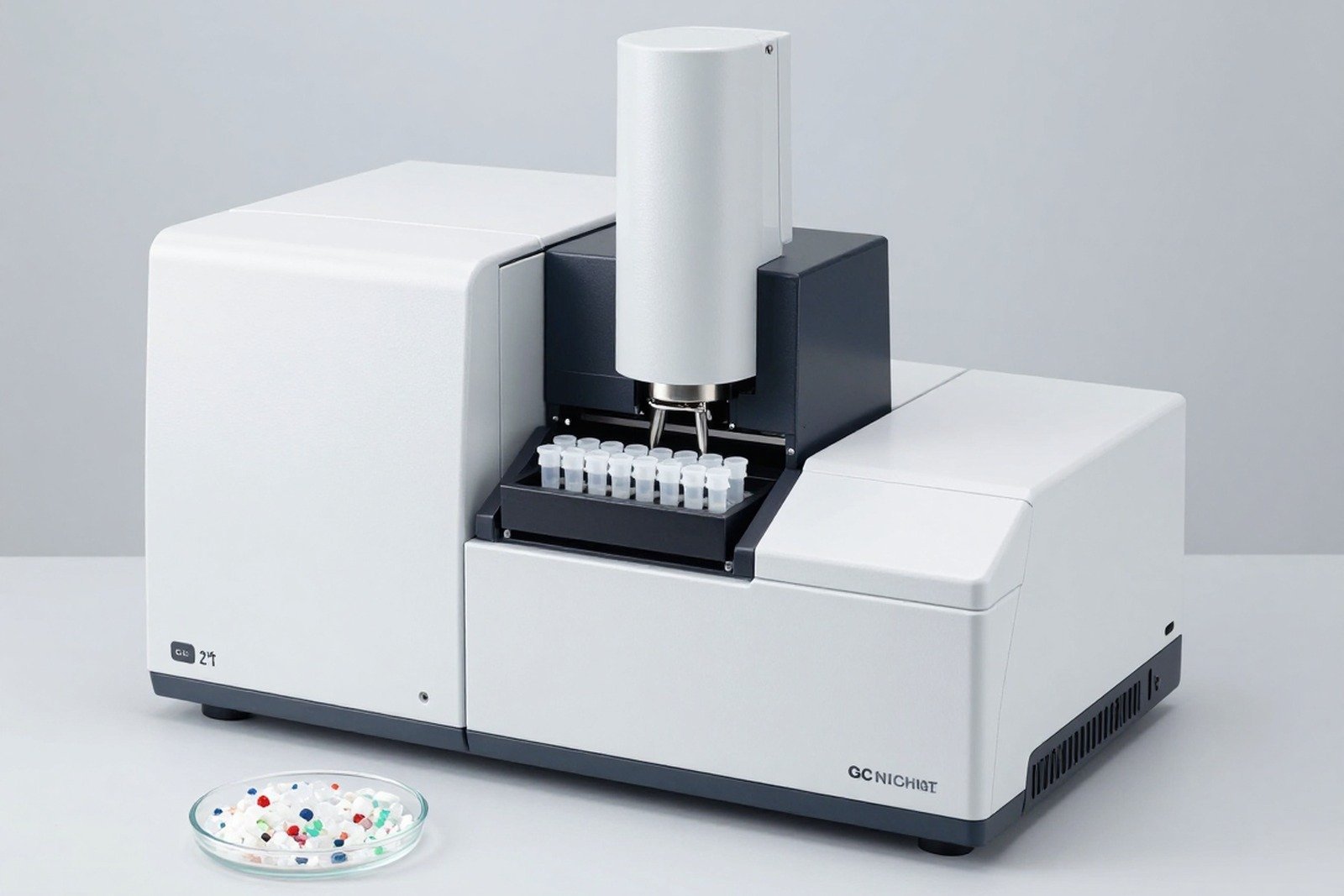
        Gas chromatography-mass spectrometry (GC-MS) system with automatic sample vial tray in the laboratory
        GC-MS separates each congener and identifies it by mass spectrometry — this is the only way to tell whether the measured bromine is PBB/PBDE or not.

        3. How does GC-MS analyze PBB/PBDE?

        The process includes four stages:

        1. Sample extraction. Extract PBB/PBDE from the resin matrix using an organic solvent, which can be done using ultrasound, shaking, or reflux/microwave extraction system. Extraction efficiency depends strongly on the method and the polymer matrix.
        2. Clean the extract. Remove impurities (oils, waxes, additives) to protect the column and reduce interference — this is a key step with recycled plastics that are “dirty” with many components.
        3. Separation on gas chromatography column. The congeners were separated according to different retention times.
        4. Detection by mass spectrometry. Identification and quantification according to the characteristic ions of each congener, usually in SIM mode to increase sensitivity.

        The final result is the content of each congener, added up to total PBB and total PBDE to compare with the limit of 0.1%.

        4. Why is recycled plastic an organic bromine hot spot?

        Recycled plastics are the material group with the highest risk for PBB/PBDE, for several reasons combined:

        Reason Interpretation
        Originated from old equipment Recycled plastic often comes from waste electrical and electronic equipment (WEEE) — which is where a lot of brominated flame retardants used to be used.
        Accumulation of flame retardants Brominated flame retardants do not decompose when recycled; they follow the resin into new raw materials
        Uncontrolled source mixing Recycled plastic is often mixed from many sources, making it difficult to trace back to each original batch
        Black plastic/mixed plastic Old, dark-colored plastic cases often contain flame retardants and are less carefully sorted

        Industry reality: recycled plastic is not only a PBB/PBDE hot spot, but can also carry cadmium (from pigments and impurities), lead, and other substances. So when evaluating recycled plastic materials, this should be considered high-risk group and controlled by both supplier declaration and testing.

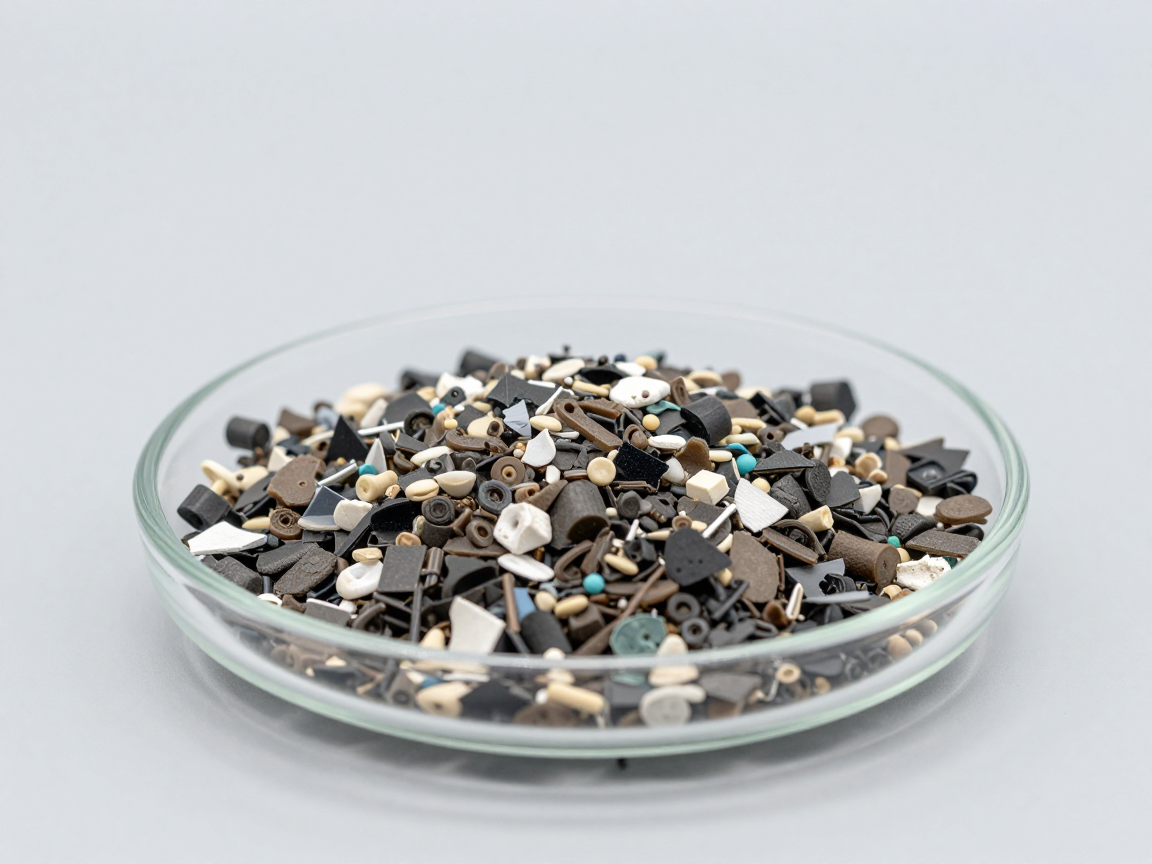
        Glass dishes containing dark and light colored recycled plastic beads and pieces on a laboratory table
        Recycled plastic from old electronics is the most common source of exceeding PBB/PBDE limits — brominated flame retardants that do not degrade with the plastic into new materials.

        5. Five analytical traps when testing PBB/PBDE

        1. Deca-BDE is degradable in a GC system. The most bromine congeners can be “debrominated” in the hot pump/system chamber, creating less bromine congeners and causing false positive for light congeners. Therefore, the pump chamber and column temperature conditions need to be controlled; This is an important technical point of part 6.
        2. Background noise from recycled plastic. Samples containing many flame retardants and other additives can overlap retention times or interfere with the mass spectrum — a cleanup step that cannot be skipped.
        3. Low extraction efficiency. PBDE adheres firmly to the polymer matrix; Incomplete extraction gives falsely low results.
        4. Cross-contamination in the laboratory. Brominated flame retardants are present in many ambient materials (plastics, electrical wiring, equipment) — tools, solvents, and room air are all sources of contamination that need to be controlled.
        5. How to calculate results. It must be clear whether the total is by group or by each congener; Incorrectly adding or omitting congeners will skew the conclusion relative to the limit.

        6. From screening signals to conclusions

        Initial signal Meaning Things to do
        XRF/low total bromine clear, virgin resin Less likely PBB/PBDE You can stop at the screening level and record it in your records
        High bromine (recycled plastic, black plastic) Inconclusive — could be another flame retardant GC-MS required to determine PBB/PBDE
        Recycled plastic used in product packaging High risk group GC-MS testing in batches; supply chain control
        Need to report for regulatory compliance records Need quantitative results GC-MS according to IEC 62321-6, do not use XRF instead
        Solvent extraction unit on laboratory table: flask with reflux condenser and small sample vial rack
        Extraction and cleaning are the steps that determine the accuracy of PBB/PBDE measurement — recycled plastic has many impurities, so it needs more thorough cleaning.

        7. Practical recommendations for businesses

        • Consider recycled plastics as a high-risk group. Require suppliers to declare plastic origin and PBB/PBDE results by batch, not just once.
        • Don’t draw conclusions from XRF. High bromine is just a signal; Conclusions must be based on GC-MS.
        • Ask the lab about deca-BDE treatment. This is the technical point that distinguishes a well-done testing room from a mediocre one.
        • Paired with other indicators of recycled plastic. Cadmium and lead also often exceed limits in recycled plastic; Should test according to a set of criteria instead of just one substance.

        8. Frequently asked questions

        If XRF reports high bromine, is it a violation of PBB/PBDE?

        No. XRF only measures total bromine; Many brominated flame retardants are not restricted by RoHS. GC-MS must be tested to know if the bromine belongs to PBB/PBDE.

        Why are the results calculated according to the total group and not according to each substance?

        Because each group includes many congeners and RoHS limits the PBB group and PBDE group to 0.1%. The report usually lists each congener and then adds up the total for each group.

        Are recycled plastics required to be tested for PBB/PBDE per batch?

        Depending on risk strategy and customer requirements. Because this is a high-risk group and varies by plastic source, batch control is a safe bet — especially when recycled plastic is used in product packaging.

        Can GC-MS also detect TBBPA?

        Detection of each specific compound depends on the method and equipment. Important thing to remember: TBBPA no belongs to the RoHS restricted PBB/PBDE category, so test results according to IEC 62321-6 focus on PBB and PBDE.

        Are PBB/PBDE regulated in other markets outside the EU?

        Yes. For example, China’s GB 26572-2025 still keeps PBB and PBDE in the list of restricted substances, with the same limit of 0.1%. See more articles about GB 26572-2025.

        9. Conclusion

        PBB and PBDE must be determined by GC-MS (IEC 62321-6); XRF only gives total bromine and is not conclusive. Three points to remember: one, high bromine is not necessarily a violation — many brominated flame retardants are not banned; two, recycled plastic is a hot spot because brominated flame retardants from old equipment follow the plastic into new raw materials; three, deca-BDE can degrade in the GC system and should be handled properly to avoid false positives.

        With recycled plastic materials, the safest way to manage is to combine PBB/PBDE assessment with cadmium and lead, and batch control with supplier declaration — rather than relying on a single test.

        References

        • IEC 62321-6 — determination of PBB and PBDE in polymers by GC-MS
        • IEC 62321-3-2 — Screening for total fluorine, chlorine and bromine in polymers and electronic materials by sample combustion – ion chromatography
        • IEC 62321-2 — mechanical sampling and sample preparation
        • Directive 2011/65/EU, Annex II — 0.1 % limit for PBB and PBDE

        Related articles


        Discuss further


          Disclaimer

          This article is an interpretive content compiled by us; not legal advice. Specific analytical conditions (temperature, column, cleaning method) are specified in the standard; Enterprises need to compare the original text of IEC 62321-6 and Directive 2011/65/EU.

          See more: Copyright Policy & Disclaimer by ticforall.com.

          Circular 30/2011/TT-BCT and European RoHS: how do Vietnamese businesses comply with both?

          0
          Cover image of the article «Circular 30/2011/TT-BCT and European RoHS: how do Vietnamese businesses comply with both?»

          An enterprise manufacturing electrical and electronic equipment in Vietnam often faces two layers of obligations at the same time: domestic regulations on limits of toxic chemicals in electrical and electronic products (the background document is Circular 30/2011/TT-BCT of the Ministry of Industry and Trade), and European RoHS If the product is exported to the EU.

          These two classes have the same root — both approach “homogeneous materials” and both are based on the same familiar group of substances — but are not identical. Confusion between the two classes leads to two types of mistakes: making a domestic application and thinking it is enough for the EU, or running two separate sets of tests, causing unnecessary costs.

          This article compares the two frameworks, points out what can be shared and what must be done separately, and includes a streamlined process for businesses that both sell domestically and export.

          1. Two layers of obligations, one product

          Class When to apply Text/frame
          In the country Electrical and electronic products circulating in Vietnam Circular 30/2011/TT-BCT (Ministry of Industry and Trade)
          Export Products sold into the EU Directive 2011/65/EU (RoHS 2) and Directive (EU) 2015/863

          Bottom line: EU obligations no replacement domestic obligations, and vice versa. A product sold in both markets must satisfy both frames.

          2. Circular 30/2011/TT-BCT: domestic framework

          Circular 30/2011/TT-BCT is Vietnam’s basic regulatory document temporary on allowable content limits of some toxic chemicals in electrical and electronic products. Approach of this text Similar to RoHS EU: evaluated according to homogeneous material, that is, each constituent material is tested separately instead of testing the entire product.

          Three things to note about this text:

          • This is the rule temporary — meaning that the scope and details may be superseded, expanded, or replaced by new text over time.
          • Document stipulating limits for some hazardous chemicals, not all 10 substances of the current EU RoHS.
          • List of substances, specific limits and product ranges need to be compared verbatim to the current document — due to its “temporary” nature, businesses should periodically check it instead of considering it permanent.
          Small electronic products assembly line in factory with circuit boards and components on conveyor belt
          Electrical and electronic products manufactured in Vietnam are subject to the domestic legal framework (Circular 30/2011/TT-BCT); If exported to EU, RoHS must be added.

          3. RoHS EU: broader framework

          Current EU RoHS restrictions 10 substances — 6 familiar substances (Pb, Hg, Cd, Cr(VI), PBB, PBDE) plus four phthalates (DEHP, BBP, DBP, DIBP) added by Directive (EU) 2015/863. Pressure limit follows homogeneous material: 0.1% for most substances and 0.01% for cadmium.

          Two characteristics make the EU framework broader than the domestic framework:

          • Broader substance categories: contains four additional phthalates — plasticizers in the PVC of cables and flexible plastic covers.
          • Open range: The EU applies “open scope” — nearly all products with electrical/electronic components are covered, barring specific exclusion categories.

          Regarding certification, the EU attaches RoHS to it CE mark and technical dossier with declaration of conformity — a system of documents for which the domestic framework has no direct equivalent.

          4. Table comparing two frames

          Criteria Circular 30/2011/TT-BCT (domestic) RoHS EU
          Approach According to homogeneous material According to homogeneous material
          List of substances Some toxic chemicals (compare current documents) 10 substances (including 4 phthalates)
          Threshold According to current documents 0.1% (Cd 0.01%)
          Scope According to the scope of prescribed documents Open scope
          Certification/label There is no CE marking mechanism CE mark + declaration of conformity + technical documents

          5. Shared space: one test data set for two frames

          The good news is that the two frameworks share the same technical foundation. Since both evaluate according to identical materials, businesses can organize a single material data set then reuse for both purposes:

          1. Dissection according to homogeneous material — bill of materials created once, used for both.
          2. Test 6 basic substances (Pb, Hg, Cd, Cr(VI), PBB, PBDE) — serves both domestic and EU frameworks.
          3. Try adding 4 phthalates — mandatory for EU; If you are not sure if the domestic frame requires it, you should still try if the product has a PVC cable or soft plastic cover.
          4. Standard test method — uses IEC 62321 (multi-part series), which is the common reference for markets using RoHS EU.

          If this order is followed correctly, the data set will try to “cover” both frames — the only difference is the part of the output document.

          Two stacks of blank paper files sit side by side on the desk next to the pen
          One set of material test data, but two sets of documents: domestic records according to Circular 30/2011/TT-BCT and CE records according to RoHS EU.

          6. Three easy points to get stuck in

          • Wrong product range. There are products within the EU but outside the domestic framework, and vice versa. Don’t assume the two ranges are identical.
          • Omitting phthalates. The EU framework definitely has four phthalates; If the old dossier only had 6 substances, it would not be enough for the EU.
          • Missing CE certificate. EU RoHS attached to CE marking and technical records; Domestic frames do not have CE marking. Selling into the EU with only a domestic test card is not enough.
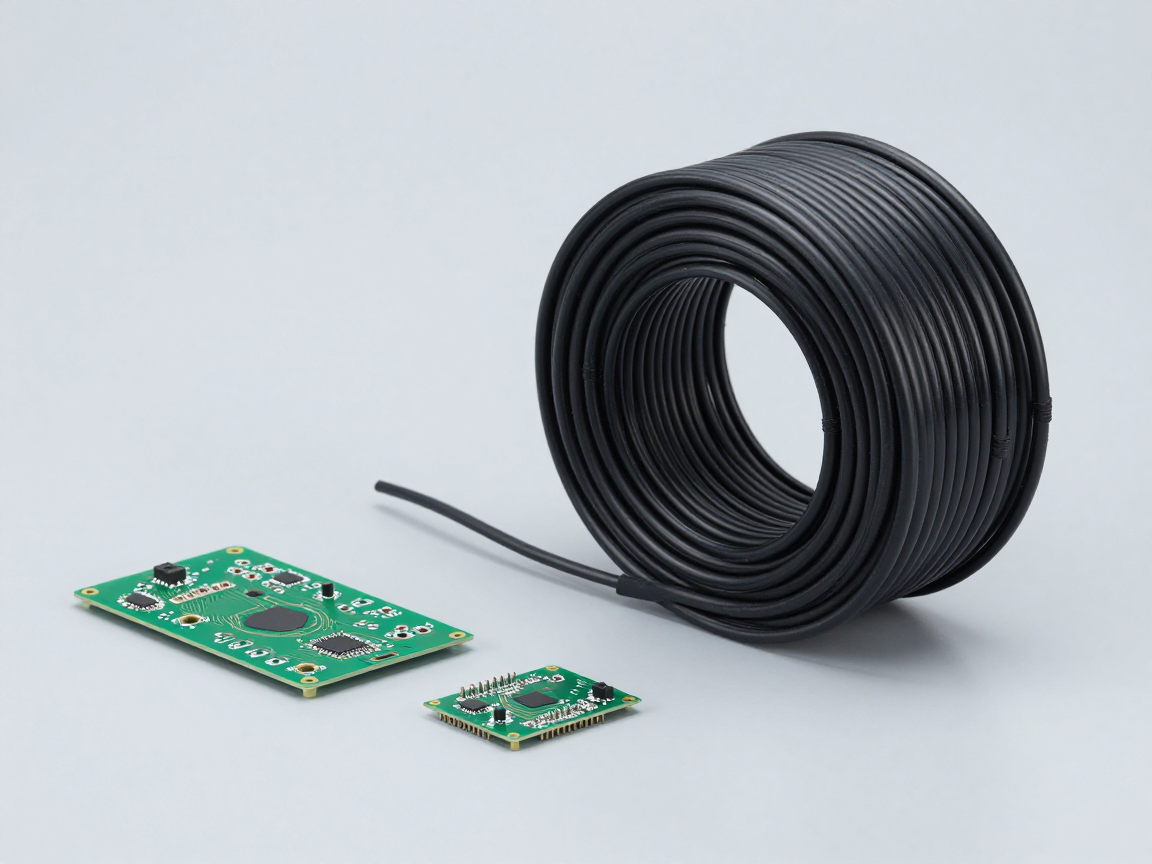
          Roll of black PVC cable, piece of green circuit board and a small circuit board on the lab table
          Materials such as PVC cables are where phthalate risks are concentrated — an EU framework requirement that older dossiers often lack.

          7. Compact process for both domestic and export businesses

          1. Step 1 — Identify the market: List where each product line is sold (Vietnam, EU, or both).
          2. Step 2 — Compare ranges: For each market, determine whether the product is within the scope of application or not (compare current documents).
          3. Step 3 — Create a homogeneous material list: common to all markets.
          4. Step 4 — Run the coverage test: 6 basic substances + 4 phthalates, according to IEC 62321, to avoid retesting.
          5. Step 5 — Export documents for each market: domestic records according to Circular 30/2011/TT-BCT; CE dossier (declaration of conformity + technical dossier) for the EU.

          8. Frequently asked questions

          Is Circular 30/2011/TT-BCT enough to sell into the EU?

          Not yet. The domestic framework sets limits for a number of chemicals, while EU RoHS currently requires 10 substances (including four phthalates) and is associated with CE marking and technical documentation. Achieving the domestic framework is a necessary but not sufficient condition for the EU.

          On the contrary, does achieving EU RoHS automatically achieve domestic framework?

          Regarding the technical foundation, it is almost certain to pass, because the domestic framework has a narrower approach. But businesses still need to compare the scope and documentary requirements of current domestic documents to ensure there is no lack of procedures.

          Why is Circular 30/2011/TT-BCT called “temporary”?

          Because the document was issued as a temporary regulation, waiting for a more complete legal framework. The practical consequence is that businesses should monitor updates instead of treating categories and limits as fixed.

          Do we have to make two separate test sets for domestic and EU?

          Not necessarily. Because both use the same materials approach, businesses can run a large coverage test set (6 substances + 4 phthalates) and use it for both purposes, the only difference is the output documents.

          Where are the obligations of a business that imports components and then assembles them?

          Obligations are often attached to products placed on the market. Assembly businesses still need material data from component suppliers to prove compliance, and should request documents for each target market.

          9. Conclusion

          Circular 30/2011/TT-BCT and RoHS EU are two layers of overlapping obligations for Vietnamese electrical and electronic enterprises. They share the same technical roots — a uniform materials approach — but are different in design substance list (EU has four additional phthalates), range and documents (EU attached with CE mark).

          Three key sentences: one, don’t consider the two frames as one; two, sharing a large test data set for savings; three, issue separate documents for each market. Because Circular 30/2011/TT-BCT is “temporary”, please compare the current text verbatim before applying to each product.

          References

          • Circular 30/2011/TT-BCT (Ministry of Industry and Trade) — temporary regulations on allowable content limits of some toxic chemicals in electrical and electronic products
          • Directive 2011/65/EU (RoHS 2) — restriction of substances in electrical and electronic products in the EU
          • Directive (EU) 2015/863 — adding four phthalates to the list of restricted substances
          • IEC 62321 — a common test method standard for RoHS-compliant markets

          Related articles


          Discuss further


            Disclaimer

            This article is an interpretive content compiled by us; not legal advice. Because Circular 30/2011/TT-BCT is “temporary”, the list of substances, limits and scope may have changed compared to the original.

            Before applying to a specific product, businesses need to compare the original text of Circular 30/2011/TT-BCT and current replacement/amended documents, along with Directive 2011/65/EU and amended EU directives.

            See more: Copyright Policy & Disclaimer by ticforall.com.

            Selling electronics on Amazon/eBay Europe: how must foreign sellers prove RoHS?

            0
            Cover image of the article «Selling electronics on Amazon/eBay Europe: how must foreign sellers prove RoHS?»

            Many Vietnamese businesses sell electronic goods to Europe through Amazon, eBay or other B2C platforms and believe that the platform is the legally responsible party. In fact, it’s the opposite: selling through the floor don’t lose it regulatory obligations, but only changes the way market surveillance agencies and business inspection floors are inspected.

            If the item does not have a valid CE mark, no declaration of conformity, and no responsible person in the EU, the outcome usually comes in three steps: the posting is removed, the item is held in the exchange’s warehouse, and the account is placed under control. This article outlines the RoHS obligations in the context of online sales and the minimum set of documents that should be in place for each product code.

            1. Why does “selling through the exchange” not replace the obligation to conform?

            RoHS obligations are associated with bringing electrical and electronic equipment to the EU market. The person who puts a product on the market under his or her brand name is responsible, regardless of whether the product is sold through a store, through a distributor, or through an online platform.

            E-commerce platforms have their own role, regulated in the EU’s market surveillance framework: when requested by authorities, the platform must coordinate and may have to remove posts. But the floor does not sign a declaration of conformity on behalf of the business nor does it take responsibility before the law on behalf of the business.

            2. When selling through an exchange, who is the “manufacturer” according to the law?

            Sales situation Legal role Main obligation
            Vietnamese businesses sell products under their own brands and deliver goods to EU customers Considered a manufacturer in the sense of bringing products to market Conformity assessment, declaration of conformity, CE marking, technical documents, responsible company information in the EU
            Vietnamese enterprises producing for EU brands (OEM/ODM) The contract manufacturer, not the party responsible for final compliance Provide material data, test reports, commit to not change the structure
            Vietnamese businesses resell products from other brands (resellers) Distributor; If you name your own brand, you will become a manufacturer Check goods with CE marking and conformity documents; Do not edit the label yourself
            Selling inventory and liquidation goods of unknown source The party that brings the product to market Must have conformity documents like new goods; “inventory” is not exempt

            3. Responsible person in the EU: a must-understand concept

            The EU legal framework requires products circulating on the market to have a responsible party located in the EU: the importer, authorized representative or order fulfillment service provider. For products sold online, this responsible party’s information must be published on the product post.

            For consumer goods, this requirement is also reinforced by the EU’s general product safety regulations, which apply to products sold online from abroad. In other words, sending goods directly from Vietnam to EU consumers does not create a “liability zone”.

            Packaged electronic goods waiting to be sent to Europe with white shipping stamps
            Sending goods directly from outside the EU to consumers does not remove conformity obligations.

            4. What does the floor require before listing for sale?

            In the electronic product group, large exchanges often require businesses to declare and upload regulatory documents before posts are fully displayed. Requirements may vary between exchanges and change over time, but usually include:

            • Regulatory documents For each product code: declaration of conformity, test report, related technical documents.
            • Information on the manufacturer and responsible person in the EU: name, contact address posted on the post.
            • Labels and instructions: product label images, instruction documents in market-appropriate language.
            • Classification declaration: to which group the product belongs, whether additional certification is required (e.g. radio equipment, medical equipment).

            Business points are often passive: the platform may request additional documents after the post has run, and the response time is usually very short. Preparing your profile in advance is the only way to avoid having your post removed.

            5. Minimum set of documents for each product code

            Documents Why is it necessary? Note the fact
            Material test report Prove the concentration of restricted substances for each homogeneous material Must be associated with the correct product code and structural version; The report of a representative sample should include an explanation of the scope of application
            Declaration of Conformity (DoC) Signed legal document clearly stating the applicable Directive Signed by an authorized person of the responsible party; Do not copy the test report
            Technical profile Prove the basis of the declaration of conformity when requested There should be a product description, bill of materials, and supplier documents
            Photo of label and CE mark Supervisory authority and visual inspection floor Clearly capture the location of the CE mark, manufacturer name, product code, and import information
            Responsible house information in the EU Requires disclosure on posts and products Need a clear contract or authorization with the signing party
            Complaint handling process Product safety framework requirements Clearly state the focal point, response deadline, and recall method if necessary
            Conformity documents for a product code include reports, declarations and label photos placed on the table
            The set of documents should be prepared by product code, not by transaction batch.

            6. Six steps to build a profile for a post

            1. Identify roles: Are you a manufacturer, importer or reseller for this product in the EU?
            2. Identify who is responsible in the EU: Select the importer or authorized representative and sign the authorization document.
            3. Create material data by product code: Disassemble uniform materials, collect declarations from suppliers.
            4. Test the risk part: Prioritize welds, plating, soft plastics, cable sheaths — places where excess risk is concentrated.
            5. Prepare declaration of conformity and technical documents: signed, dated, stating Directive 2011/65/EU and applicable amendments.
            6. Prepare document packages to upload to the platform: Name the file according to the product code, keep the original signed copy and PDF copy for quick sending when requested.

            7. Five common risks when selling through the exchange

            Risk Expression How to room
            The post was automatically removed Messages requesting regulatory documents within a short period of time Keep documentation packages available for each product code
            Use the same declaration of conformity for multiple product codes One document records many different product codes and configurations Declared according to each configuration brought to market
            There is no responsible house in the EU The post lacks information about the responsible party Sign authorization with the importer or representative
            The CE label is printed in the wrong position or has missing information Goods are detained during inspection at the warehouse floor Print labels according to the sample checked before production
            Inventory has no records Unable to prove compliance when required by the exchange Only post for sale when complete documents are available
            Order fulfillment warehouse area with packaged electronics boxes on shelves
            The order fulfillment warehouse is also where goods can be held if compliance records are incomplete.

            8. Frequently asked questions

            Do I need CE marking when selling goods through the exchange from Vietnam?

            Yes, if the product is covered by a Directive that requires CE marking, including RoHS. Selling through an exchange does not change this requirement.

            If the exchange itself takes care of the procedures, will the business be exempted?

            No. The floor is responsible for coordinating and can support the procedure, but the responsibility for compliance lies with the party bringing the product to market — that is, the enterprise or importer in whose name it is.

            Can supplier test reports be reused?

            Yes if the report is consistent with the current structure, has the right materials, and has all the necessary substances. There should be written confirmation from the supplier that the product has not changed in texture after the test date.

            Do I need documents for display products or samples to send to customers?

            Samples sent to customers are not normally considered to be placed on the market, but if the batch is subsequently sold to EU consumers, records are required. The safe way is to process the application right from the time the sample is finalized.

            The floor requires documents within 3 days, what should I do first?

            Prepare the document package in advance according to the product code and save it as a PDF that can be sent immediately. Most businesses lose weeks not because of lack of data, but because data is scattered across many departments.

            9. Conclusion

            Selling electronic goods to Europe through the exchange is a sales channel, not a legal shield. Businesses must still have material data, test reports, declarations of conformity and a responsible party in the EU.

            Three things to do before the peak season: prepare a package of documents for each product code; Sign authorization with the importer or representative in the EU; and review the labels, instructions, and contact information on the post. These three things are a lot cheaper than having your post removed mid-season.

            References

            • Directive 2011/65/EU and amending documents (conformity obligations, CE marking, declaration of conformity).
            • Regulation (EU) 2019/1020 on market surveillance and product conformity (responsibilities of parties in the sequence, role of online platforms).
            • The EU’s general product safety regulations apply to products placed on the market, including sold online.
            • Policies and instructions for sellers of e-commerce platforms on compliance documents for electronic goods.

            Related articles


            Discuss further


              Disclaimer

              This article is an interpretive content compiled by us; not legal advice. Enterprises need to compare relevant documents/standards verbatim before applying them to specific products.

              See more: Copyright Policy & Disclaimer by ticforall.com.
              Lead, cadmium, mercury testing: ICP-OES, ICP-MS or AAS — which method to choose?

              0
              Cover image of the article «Lead, cadmium, mercury testing: ICP-OES, ICP-MS or AAS — which method to choose?»

              RoHS’s first three restricted substances — lead (Pb), cadmium (Cd), mercury (Hg) — are all elements, so they can be determined by atomic spectroscopy. On the test report, you will encounter three device names: ICP-OES, ICP-MS and A.A.S (with CV-AAS variant for mercury).

              The question “which method to choose” does not have a universal answer, because these three substances have different limits and the three techniques have very different sensitivities, sample matrix tolerances and costs. If you choose correctly, the results will be sure and the cost will be reasonable; If you choose incorrectly, it will either be uselessly costly, or the results will not be reliable enough in the area close to the limit.

              The article explains the principles of each technique and how to choose it based on limit, sample background, and purpose.

              1. Three substances, three limits — the foundation for choosing a method

              Quality Threshold in homogeneous materials Analytical characteristics
              Lead (Pb) 0.1 mass %. Common element; rarely difficult to measure
              Mercury (Hg) 0.1 mass %. Volatile — risk of sample loss during processing; Need special technique
              Cadmium (Cd) 0.01 % volume The limit is 10 times tighter → requires higher sensitivity

              It is the cadmium limit (0.01 %) that is the most important practical reason: a method sensitive enough for lead can not sensitive enough for cadmium. This is the first point to ask the laboratory — is the limit of quantification (LOQ) for cadmium lower than 0.01 % by a large enough range.

              See more about how to apply limits according to homogeneous materials in the article 10 RoHS restricted substances: 0.1% and 0.01% limits.

              2. Common point: decompose the sample and then measure the atomic spectrum

              All three techniques follow the same logic: decompose the sample into solution, then measure the element concentration in that solution.

              1. Sample decomposition with acid (usually with microwave heating support, sealed vessel). Some substrates such as ceramic and glass need to add special acid.
              2. Dilute and filter into a homogeneous solution.
              3. Measure by ICP-OES, ICP-MS or AAS, compare with standard curve.

              Two important notes in this step:

              • Mercury is easily lost if open decomposition. Hg may evaporate during heating, giving falsely low results. Therefore, Hg measurement samples are often needed sealed jar, and the appropriate technique is cold vapor.
              • Cross contamination cadmium may be introduced into the sample from the environment or instruments; Cadmium has a very tight limit, so blank control is very important.

              The sample decomposition step belongs to sample preparation — following the dissection step in the article Sample dissection according to IEC 62321-2.

              3. AAS — atomic absorption spectrum

              AAS measures the amount of light absorbed by free atoms of the element to be analyzed. There are variations:

              Variation Principle Suitable
              AAS flame Atomize the sample with a flame High levels (such as lead in percentage levels)
              Graphite furnace AAS (GF-AAS) Atomization in graphite furnace, higher sensitivity Low content — for example cadmium close to 0.01 %
              CV-AAS (cold vapor) Reduce Hg to atomic Hg vapor and then measure Mercury — specific technique for Hg

              AAS advantages: simple equipment and operation, low cost, especially good for a target element. Limitations: often measured each element one by one; Analyzing multiple elements is more time consuming; and variable sensitivity (graphite furnace is much higher than flame).

              Máy quang phổ hấp thụ nguyên tử với giá đèn catot rỗng và mô-đun lò graphite trên bàn thí nghiệm
              AAS measures each element individually; CV-AAS (cold vapor) is a specific technique for mercury because it takes advantage of its volatility.

              4. ICP-OES — inductive plasma atomic emission spectroscopy

              The sample is exposed to argon plasma at very high temperatures; The atom is excited and emits light of a specific wavelength. The device measures emission intensity to infer concentration.

              • Advantages: measure many elements at the same time, wide working concentration range, relatively good sample tolerance, stable in daily operation.
              • Limitations: Sensitivity is typically lower than ICP-MS. With cadmium at a very tight limit (0.01 %), it is necessary to carefully check the LOQ of the system before concluding.

              ICP-OES is a popular choice for Pb, Cd at medium to high concentrations and when multiple elements need to be analyzed at the same time.

              5. ICP-MS — inductively coupled plasma mass spectrometry

              Also uses plasma for atomization/ionization, but instead of measuring emission, the device Count ions according to mass-to-charge ratio. Thanks to that, ICP-MS has highest sensitivity of the three techniques, especially suitable when very low measurements are needed.

              • Advantages: High sensitivity, measuring many elements at the same time, suitable for cadmium in near-limit areas and targets requiring low limits.
              • Limitations: sensitive to background effects (noise due to sample composition), easily affected by high salt so dilution is often required; Higher equipment and operating costs.
              Máy ICP-MS với khay xoay đựng các ống nghiệm mẫu nhỏ và bơm nhu động bên cạnh trong phòng thí nghiệm
              ICP-MS offers the highest sensitivity — the choice when measuring cadmium close to 0.01 % or when very low detection limits are required.

              6. Mercury: why do we use our own techniques (CV)

              Mercury is a volatile element, and this governs both sampling and measurement:

              • During sample processing: Use a closed container to avoid loss of Hg (if left open, Hg may evaporate and give falsely low results).
              • In measuring: technical a bit cold (CV-AAS, CV-AFS) reduces Hg in solution to atomic Hg vapor and measures it separately — taking full advantage of the volatile nature of Hg. ICP-OES and ICP-MS can also be used if sample handling is correct.

              Practical consequence: when you see Hg reported with a different method than Pb/Cd, it is usually normal — because Hg requires handling and measurement appropriate to its volatility.

              7. Method selection table according to situations

              Situation Reasonable direction Why?
              Need Pb, Cd, Cr at the same time, medium–high level ICP-OES Multi-element, good background resistance, reasonable cost
              Cadmium is close to the 0.01% limit, requiring high sensitivity ICP-MS or GF-AAS Higher sensitivity, suitable for low concentration areas
              Many samples, many elements, need throughput ICP-MS or ICP-OES Measure multiple elements in the same run
              Mercury CV-AAS/CV-AFS, or ICP with sealed tank Take advantage of/deal with the volatility of Hg
              Limited budget, a prime target A.A.S Equipment and operation are cheap and sufficient for many cases
              Complex sample matrix, many metals (brass alloy…) ICP-OES (rationally diluted) or AAS High salt background challenges ICP-MS

              Principle: Choose according to the limit and sample background, not according to “the best equipment”. For high Pb levels, flame AAS or ICP-OES are more than adequate; On the contrary, with cadmium close to the limit, sensitivity is the decisive factor.

              8. Five factors that determine choice

              1. Threshold to be reached. Cd 0.01 % is ten times tighter than Pb, Hg (0.1 %) — this is the first factor.
              2. Sample base type. Plastics, alloys, ceramics, and samples with high salt content require different treatments and dilution levels.
              3. Prime numbers and number of sampless. If multiple elements/samples are needed, ICP-OES/ICP-MS is more effective than AAS.
              4. Test room capacity. Measurement must be within the laboratory’s accreditation (ISO/IEC 17025) range — check before sending sample.
              5. Cost. ICP-MS is more expensive than AAS; Use only when sensitivity is truly necessary.

              Note on detection/quantitation limits: specific numbers Depends on device and sample platform, it is impossible to state a general number. When reading the report, find the LOQ for each element on each background and compare it with the corresponding limit.

              Máy ICP-OES với bơm nhu động, đường ống mẫu và khay ống nghiệm tự động trên bàn phòng thí nghiệm
              ICP-OES measures multiple elements over a wide concentration range — a popular choice for moderate to high levels of Pb and Cd, when multiple elements need to be analyzed simultaneously.

              9. Frequently asked questions

              What is the main difference between ICP-OES and ICP-MS?

              In detection method: ICP-OES measures emitted light, while ICP-MS counts ions by mass. Consequence: ICP-MS is much more sensitive but also more sensitive to matrix and salt effects; ICP-OES is “stronger” with complex sample matrices at medium–high concentrations.

              Why is cadmium harder than lead even though it is both a heavy metal?

              Because the limit for cadmium is 0.01 % — ten times tighter than for lead (0.1 %). With the same device, the limit of quantification may be sufficient for lead but not for cadmium in the near-limit region.

              The report records mercury with CV-AAS and Pb/Cd with ICP-OES — is that unusual?

              No. Very popular, because mercury is volatile, it is often handled and measured using the cold vapor technique, while other metals are measured using ICP.

              How to measure lead in brass alloy?

              Usually use ICP-OES or AAS after digestion; The lead content in brass can be in the percentage range so the concentration range is not a problem. What needs more attention is to compare exemptions (for example with lead-containing brass) — see article on RoHS Annex III Exemption.

              Can XRF be used instead of these methods?

              XRF is the tool screening, do not replace quantitative results with chemical methods. Results close to the limit and results needed for use in regulatory compliance documents still must be confirmed by AAS/ICP.

              10. Conclusion

              Three techniques, one logic of choice: according to the limit to be achieved and the sample background. ICP-OES for multi-element at wide range and good background tolerance; ICP-MS provides the highest sensitivity when measuring close to the limit; AAS is simple and cheap, well suited to a target element, where CV-AAS is specific to mercury.

              Two things businesses should check before submitting samples: one, is the laboratory achieving the appropriate LOQ for cadmium (0.01 %) on your correct sample matrix; two, whether the measurement is within the laboratory’s recognized range. Both affect whether the report is accepted or not.

              References

              • IEC 62321-5 — determination of cadmium, lead and chromium in polymers, electronic materials; cadmium and lead in metals, by AAS, AFS, ICP-OES and ICP-MS
              • IEC 62321-4 — determination of mercury in polymers, metals and electronic materials
              • IEC 62321-2 — mechanical sampling and sample preparation
              • Directive 2011/65/EU, Annex II — Pb, Cd, Hg limits

              Related articles


              Discuss further


                Disclaimer

                This article is an interpretive content compiled by us; not legal advice. Specific detection/quantitation limits depend on equipment and sample matrix; Enterprises need to compare the text of IEC 62321-4, 62321-5 and confirm the scope of accreditation of the testing laboratory.

                See more: Copyright Policy & Disclaimer by ticforall.com.

                What happens if the RoHS exemption expires? Rules for spare parts and inventory

                0
                Cover image of the article «What happens if the RoHS exemption expires? Rules for spare parts and inventory»

                Any RoHS exemption is available expiration date. The most practical question businesses ask is not “Is the exemption still valid”, but: After the expiration date, how will the goods that have been produced and are being sold be handled?

                This article explains the decision-moment principle — based on concepts “bring to market” — then apply it to the three most common situations: inventory, goods on distribution shelves, and replacement parts.

                1. What does an expired exemption mean?

                RoHS exemptions (exemptions) are located in Annexes III and IV of Directive 2011/65/EU. Each exemption item is associated with one expiration date specific — that is, the latest point at which that application is still allowed to exceed the limit. After that date, the exemption “died”, unless renewed by a new document before expiry.

                The important thing: an exemption expires does not retroactively make the product sold illegal. But it blocks reliance on that exemption for production and distribution new goods to the market. The boundary lies in the timing, not the product itself.

                2. Decision milestone: “marketing” date

                In EU harmonized law, the obligation of conformity is determined at the time of the product placed on the market — understood as the first time an individual product is offered on the EU market. It is necessary to distinguish between two concepts that are often combined:

                Concept Meaning What does it have to do with exemptions?
                Bring to market
                (placing on the market)
                For the first time a specific product is offered on the EU market This is the landmark determine which deadlines the product must comply with — including whether the exemption remains or has expired at that date
                Provided on the market
                (making available)
                Any act of supplying products for distribution, consumption or use on the EU market, after the first time Do not change the “locked” conformity status in the above step

                Practical consequences: a product placed on the market before the exemption expires may continue to be supplied (wholesale, retail) after that date. On the contrary, a product released to the market after the expiration date must comply with current regulations — cannot rely on dead exemptions.

                Note: The interpretation of “putting on the market” is set out in the European Commission guidance and can be interpreted in detail for each situation (internal warehouse, consignment, goods processed for foreign countries). Businesses should compare current guidance before finalizing how to record dates.

                Warehouse shelves hold many boxes and crates of electronic components stacked in a bright warehouse
                The fate of a shipment after the exemption expires depends on a single question: which lot it was brought to market before or after the expiration date.

                3. Three common situations

                Situation Already launched on the market? How to handle
                Imported goods, wholesale/retail for the first time before expiration date Yes Continue supply in the market; Keep documents proving the date of release to the market
                Finished production before Expiry date but still in stock, not yet brought to market Not yet (still in factory/private warehouse) High risk: if brought to market later Expiry date, must be treated as new — need to be offset by replacement exemption, replacement of materials, or not placed on the EU market
                Goods have been put on the market, but are still in stock at retailers Yes Still on sale; The responsibility for proving date on market rests with the supply chain

                Easy mistake point: “production finished” goods but not yet is brought to market no is considered to have “locked” its conformity status. Internal warehouse is not a market. This is the most common trap with goods produced in large batches for stockpiling.

                4. Inventory management past expiration date

                • Record the date put on market for each lot — the most valuable evidence is import documents, initial sales invoices, bills of lading, or warehouse release records for EU customers.
                • State the applicable exemption in the technical dossier and declaration of conformity — with a specific Appendix III/IV section, not just general “with exemption”.
                • Separate inventory by batch and by exemption milestone to avoid mixing “exempt” goods with “exempted” goods.
                • Create a roadmap to exit the exemption before expiration date: find replacement materials/components, retest, update records.
                • No new shipments based on an expired exemption — even if the goods were manufactured in advance.

                5. Spare parts — area of caution

                RoHS 2 expands the scope to include replacement cables and components is EEE. This puts replacement parts in a separate area: they are both “spare parts for repairing old goods” and can also be “standalone products” when sold separately.

                Principles to understand:

                • Replaceable components marketed as a stand-alone product must be compliant with the applicable regulations on that date — not exempted simply because it is used to repair an old device.
                • The Directive has separate provisions for reuse and replacement of components in certain cases (e.g. servicing devices placed on the market before certain milestones). Details need to be compared to Article 4 and relevant provisions of Directive 2011/65/EU consolidated version.
                • If the exemption you rely on for spare parts has expired, spare parts put on the market must then find other grounds: valid replacement exemption, material exchange, or redesign.

                6. Contact the upcoming exemption roadmap

                A series of exemptions about lead — in steel, aluminum and copper alloys (group 6), in high-melting welds (group 7a), and in glass/ceramics of components (group 7c) — recently extended by three Mandate Directives published on November 21, 2025, with many terms falling in 2026–2027. If businesses are relying on these exemptions, this is the group that needs to establish an exit route soonest.

                Details of each exemption group and new deadline are presented in our separate article on Annex III exemptions.

                Small replacement parts and connectors are placed separately in trays on the laboratory table
                Replacement parts sold separately are also EEE: if placed on the market after the exemption expires, they must comply with the applicable term.

                7. Checklist before a waiver expires

                1. Determine specific exemption section in use and its expiration date.
                2. Review shipments that are subject to that exemption (finished products, semi-finished products, components).
                3. Note date to market of each batch with documents.
                4. Check to see if any replacement/extension exemptions have been announced before the expiration date.
                5. Find replacement materials or components that do not require an exemption.
                6. Retest and update technical documents and declaration of conformity.
                7. Update purchasing process to not accept parts based on expired exemptions.
                White clipboard and pen placed on a box in the warehouse
                The inventory review checklist is the most important part when an exemption is about to expire — before the goods can reach the market.

                8. Conclusion

                Expired exemptions do not “recall” sold goods. What it blocks is work bring new products to market based on the dead exemption. The whole story revolves around two milestones: exemption expiration date and The date the product is introduced to the market. Businesses that manage these two days — with documentation and an exit route — will survive the expiration of the exemptions.

                References

                • Directive 2011/65/EU — Article 2(2) (transitional), Article 4 (obligations and immunities), Annexes III and IV
                • Three Directives authorizing updates to Annex III exemptions, published November 21, 2025
                • European Commission guidance on the concept of “putting on the market” (Blue Guide)

                Related articles


                Discuss further


                  Disclaimer

                  This article is an interpretive content compiled by us; not legal advice. The way to determine the time of “putting on the market” and the scope of exemption need to be compared with the original text of Directive 2011/65/EU (consolidated version) and the current guidance of the European Commission.

                  See more: Copyright Policy & Disclaimer by ticforall.com.

                  J-Moss (Japan) and K-RoHS (Korea): who needs it, how is it different from the EU?

                  0
                  Cover image of the article «J-Moss (Japan) and K-RoHS (Korea): who needs it, how is it different from the EU?»

                  There is no single “Asian RoHS”. Each Asian market builds its own tools, with a different philosophy: there is a place prohibited use substance, in some places it is just tied announced substance. The two markets that most often confuse electronics exporters are: Japan (J-MOSS) and Korea (K-RoHS).

                  The confusion often starts with the name: hearing “J-MOSS” or “K-RoHS” many people assume they are two copies of European RoHS, just in different markets. In fact, Japan and South Korea chose two very different paths — and different from the EU. Misunderstanding leads to two mistakes: preparing too many unnecessary documents, or missing the right things to be checked.

                  This article compares J-MOSS and K-RoHS with EU RoHS: who needs it, what it needs, and what’s the difference.

                  1. Asia does not have a common “Asian RoHS”.

                  Before going into each market, it is necessary to look at the overall picture. RoHS tools in Asia are different range confused nature of obligation:

                  Market Main tools Nature
                  Japan J-MOSS (JIS C 0950) Standardization publication method Substance content — not prohibited
                  Korea Law on resource recycling for electrical and electronic equipment and vehicles Gross RoHS + WEEE + ELV elements in one regulatory framework
                  China GB 26572-2025 (formerly GB/T 26572-2011) From recommended switch to required, with EFUP label

                  In other words: certification cannot be extrapolated from one market to another. Businesses need to know who they sell to to choose the right tools.

                  2. Japan: J-MOSS (JIS C 0950) — announced standard, not banned standard

                  J-MOSS is the common name of the Japanese industrial standard JIS C 0950, the official name roughly means “Method for labeling the content of certain chemical substances in electrical and electronic equipment“. Its core content is valid from July 1, 2006, issued through amendments and supplements to legal documents of Law to Promote Efficient Use of Resources (a Japanese recycling/3R law).

                  The point to keep in mind, and also the biggest difference with the EU:

                  EU RoHS Limit usage toxic substances. J-MOSS then standardize publication methods substance content status. Japan does not have direct EU RoHS-style legislation; J-MOSS is a labeling standard, linked to recycling legislation.

                  Corollary: J-MOSS does not say “you must not use lead”. It says “if you use a substance that exceeds the limit, you must put an orange label on it to let consumers know”. This is a transparency mechanism, pushing the responsibility of choice to the market, not a ban.

                  Một hàng thiết bị gia dụng cỡ lớn gồm tivi, tủ lạnh, máy giặt và lò vi sóng trong khu trưng bày
                  J-MOSS applies to a specific list of product groups — mainly home appliances and computers — and does not extend to all electronic products like the EU.

                  3. Who needs J-MOSS: seven product groups and two types of labels

                  J-MOSS applied for seven product groups specified:

                  1. Personal computer
                  2. Local air conditioning
                  3. Television receiver (television)
                  4. Electric refrigerator
                  5. Electric washing machine
                  6. Microwave
                  7. Clothes dryer

                  For these products, the label rule has two branches:

                  • Exceeding the limit of any substance: Pasting is required orange label to announce.
                  • Do not exceed any quality limit: allowed (voluntary) stickers blue label to present a more user-friendly product.

                  Easy to confuse point: “green label” is voluntarily, and “orange label” is required when the limit is exceeded. Therefore, the fact that a product does not have a green label no means the product is in violation.

                  Hai miếng dán tròn trống, một màu xanh và một màu cam, đặt cạnh nhau trên bàn trung tính
                  There are two branches of J-MOSS labels: the green label is voluntary when the product meets the limit, the orange label is mandatory when the product exceeds the limit.

                  4. Six substances and limits of J-MOSS

                  J-MOSS uses a familiar group of substances, similar to the EU’s RoHS 6 substances (not including the four phthalates that the EU added later):

                  Quality Abbreviation Threshold (% mass)
                  Lead Pb 0.1
                  Mercury Hg 0.1
                  Cadmium CD 0.01
                  Hexavalent chromium Cr(VI) 0.1
                  Polybrominated biphenyls PBB 0.1
                  Polybrominated diphenyl ethers PBDE 0.1

                  This category does not contain four phthalates which the EU has added since 2015. Therefore, a product meets J-MOSS not automatically Meets RoHS EU 10 substances — still must test for phthalates if sold into the EU.

                  5. Korea: K-RoHS — includes RoHS, WEEE and ELV

                  Korea chose a different path from Japan. Instead of one labeling standard, Korea issued one law — general name “Law on resource recycling for electrical and electronic equipment and vehicles“, promulgated April 2, 2007.

                  The difference in nature: this law Combine three groups of requirements separate capital in Europe:

                  • Factor RoHS — limit toxic substances in electrical and electronic equipment;
                  • Factor WEEE — responsibility for recovery and recycling of electrical and electronic equipment;
                  • Factor ELV — Handling expired vehicles.

                  So, when working with K-RoHS, don’t just think “restricted nature”. Business obligations also relate to recycling records and collection responsibilities. The name, scope and specific limits of the Korean legal framework need to be compared to the current consolidated document, because this field has been revised and merged many times since 2007.

                  6. Comparison table of EU – Japan – Korea

                  Criteria EU (RoHS 2) Japan (J-MOSS) Korea (K-RoHS)
                  Nature Limit substance use Standardize labeling substance content RoHS + WEEE + ELV Combination Act
                  Number of substances 10 (including 4 phthalates) 6 (phthalate-free) Heavy metal and bromine fire retardant groups (compare text)
                  Scope Open scope List of 7 product groups As defined by law
                  Label CE mark Orange (mandatory) / green (voluntary) label According to regulations on announcement/certification
                  Responsibility for recovery Separated (WEEE) Tied to recycling laws Included in the same law

                  7. Vietnamese businesses: who should care?

                  Four groups should proactively review:

                  • Enterprise Direct export to Japan or Korea — need the right tools for that market, do not use EU documents instead.
                  • Business is components supplier for Japanese/Korean brands — customers often request declaration according to internal standards based on J-MOSS or K-RoHS.
                  • Enterprise Import goods from Japan/Korea then sell again — need to check the label and accompanying documents.
                  • Enterprise multi-market (EU + Japan + Korea + China) — should use the same material data system, then “export” reports according to each standard.

                  8. Five things to do

                  1. Create target market comparison table ↔ applicable tools (J-MOSS, K-RoHS, GB 26572, EU RoHS).
                  2. Check substance list of each market, especially phthalates — only the EU (and China after 2027) includes four phthalates.
                  3. Review label obligations: J-MOSS has orange/green label, EU has CE mark, China has EFUP label and declaration sheet.
                  4. Use a common set of test data (based on identical materials) to serve multiple markets, instead of testing from scratch for each location.
                  5. For Korea, don’t skip the part Responsibility for collection/recycling because it falls under the same law as the substance restriction section.
                  Các thùng carton nâu nguyên bản xếp trên băng tải trong kho xuất khẩu
                  Selling to multiple Asian markets requires many different tools: a shared set of materials data, exporting a variety of reports according to local standards.

                  9. Frequently asked questions

                  Is J-MOSS “Japan RoHS”?

                  Inaccurate in nature. J-MOSS is a substance content labeling standard (JIS C 0950), linked to recycling laws — it does not restrict substance use like EU RoHS. Calling it “Japanese RoHS” for short can easily lead to misunderstandings that it is a ban.

                  Does a product that meets EU RoHS automatically pass J-MOSS?

                  Regarding the groups of 6 basic substances, they are close to each other, but J-MOSS only requires labeling according to a list of 7 product groups, while the EU requires CE marking and an expanded scope. Achieving EU does not automatically fulfill J-MOSS label obligations, and vice versa.

                  K-RoHS is just a restricted substance list, right?

                  No. The Korean legal framework also includes the responsibility for recovering and recycling electrical and electronic equipment and disposing of expired vehicles. Therefore, it is necessary to review the document obligations, not just the quality obligations.

                  Are four phthalates covered by J-MOSS or K-RoHS?

                  J-MOSS uses a group of 6 substances, not including phthalates. With K-RoHS, the list of substances needs to be compared with current documents. Certainly only the EU (and China under GB 26572-2025) require four phthalates at present.

                  Is it necessary to label J-MOSS for products sold to Japan that do not belong to the 7 groups?

                  J-MOSS applies to seven specified product groups. Products outside this list are not covered by J-MOSS, but may still be subject to other requirements (contractual, supply chain, or recycling regulations). Need to compare the correct scope with Japanese customers.

                  10. Conclusion

                  J-MOSS and K-RoHS are two very different Asian instruments, and also different from the EU. J-MOSS (JIS C 0950) is labeling standards for seven product groups, effective from July 1, 2006, with no restrictions on substance use. K-RoHS is one Compounding Act substance restrictions, responsibility for recall and disposal of expired vehicles, issued since 2007.

                  Three key questions for businesses: one, do not identify Asian standards with each other or with the EU; two, check the correct substance list of each market, especially phthalates; three, prepare a shared material data set instead of retrying multiple times. All specific details need to be compared with current documents and standards of each country.

                  References

                  • JIS C 0950 (J-MOSS) — method for labeling substance content in electrical and electronic equipment; effective from July 1, 2006
                  • Law on Promotion of Efficient Use of Natural Resources (Japan) — bylaws amended in 2006
                  • Law on resource recycling for electrical – electronic equipment and vehicles (Korea), issued April 2, 2007 (need to compare the current consolidated version)
                  • Directive 2011/65/EU (RoHS 2) and Directive (EU) 2015/863 — restriction of substances in electrical and electronic products in the EU

                  Related articles


                  Discuss further


                    Disclaimer

                    This article is an interpretive content compiled by us; not legal advice. Descriptions of J-MOSS and the Korean legal framework are summarized for principle comparison; may have been shortened compared to the original text of standards and legal documents.

                    Before applying to a specific product, businesses need to compare the current JIS C 0950 standard and the current consolidated legal documents of Japan and Korea.

                    See more: Copyright Policy & Disclaimer by ticforall.com.

                    What is GB/T 39560? Why does China uniquely specify this set of test methods?

                    0
                    Cover image of the article «What is GB/T 39560? Why does China uniquely specify this set of test methods?»

                    A RoHS test report made according to IEC 62321 at an accredited laboratory is still possible not accepted when businesses need to demonstrate compliance with new Chinese standards. The reason lies in a small line in GB 26572-2025: this standard sole indication series of test methods GB/T 39560.

                    Correct understanding of the GB/T 39560 series helps businesses avoid two costly mistakes: one, pay for a standard testing kit and then have to do it again; two, thinking that GB/T 39560 is a “different” standard in principle, when in fact it is the equivalent set of IEC 62321.

                    This article explains what the GB/T 39560 series is, how it maps to the IEC 62321 series in principle, why China chose to designate only one series, and what businesses need to confirm with the testing laboratory before signing a contract.

                    1. What is GB/T 39560?

                    GB/T 39560 is one Chinese national standard chain (multi-part series) with a general name “Determination of some substances in electrical and electronic products“. In purpose, this is a set of test methods for determining the content of restricted substances — exactly the role that IEC 62321 plays at the international level.

                    Three points to understand about the nature of this chain:

                    • This is the chain GB/T (with a “T”) — is a recommended standard per se. But as GB 26572-2025 invokes it, correct use of the set becomes a condition for demonstrating compliance with the required standard.
                    • It is built corresponds to IEC 62321 — same division logic, same group of substances, same device principle.
                    • It no replacement IEC 62321 in other markets; it is just the set designated by China for GB 26572-2025 compliance purposes.

                    2. Map the GB/T 39560 series to IEC 62321 according to the principles

                    The table below maps accordingly content and principles. The specific part number and year of issuance of each part in the GB/T 39560 series is required Compare current standards — businesses should not quote part numbers from a secondary source.

                    Method content Corresponds to IEC 62321 Used for
                    Overview and general instructions Part 1 Application framework, terminology, workflow
                    Dissection, disassembly and mechanical sample preparation Part 2 Divide products into uniform material levels
                    X-ray fluorescence (XRF) screening Part 3-1 Quick test, no sample destruction
                    Determine mercury Part 4 Hg in various materials
                    Determination of cadmium, lead, chromium in polymers and electronics Part 5 Cd, Pb, Cr (total) by wet method
                    Determination of PBB and PBDE Part 6 Bromine group is flame retardant by GC-MS
                    Determination of hexavalent chromium (Cr(VI)) by colorimetric method Parts 7-1 and 7-2 Two different sample objects, same color measurement principle
                    Determination of phthalates Part 8 Four phthalates DEHP, BBP, DBP, DIBP

                    Important point: here not two different sets of scientific standards. Same sample, same equipment, same quantitative principles — just different reference text system. Therefore, once a laboratory has IEC 62321 capability, the gap to implementing and reporting according to GB/T 39560 is often much smaller than initially perceived.


                    Handheld XRF machine placed on a blue electronic board in the laboratory
                    The XRF screening part of the GB/T 39560 series uses the same principle as IEC 62321-3-1: a quick total element check before deciding on a wet test.

                    3. Why does China designate only one ministry?

                    Specifying only one method chain is an intentional choice, not a formal one. Four main reasons:

                    1. Comparability: When all laboratories use the same set of methods, results between laboratories, batches and time points can be directly compared.
                    2. Coercion: Mandatory standards need a clear measure to monitor the market and handle disputes. “Use the equivalent method” is more difficult to enforce than “use this exact set”.
                    3. Reduce disputes: When the importer and supplier disagree, a pre-specified set of methods helps to finalize technical arbitration.
                    4. International harmonization: GB/T 39560 is built on IEC 62321, so it is still compatible with the global supply chain — the only difference is the text “door”.

                    4. Differences with the EU: The EU does not specify a single method

                    Criteria EU — Directive 2011/65/EU China — GB 26572-2025
                    Test method No single indication; IEC 62321 is the common reference Uniquely designate the GB/T 39560 series
                    “Equivalent” method Acceptable if equivalent reliability is demonstrated Do not make arbitrary substitutions; must follow the specified set
                    Reference method set IEC 62321 (multipart series) GB/T 39560 (corresponding to IEC 62321)

                    Practical consequences: a report citing IEC 62321 is sufficient for CE dossier in the EU, but not sure enough for GB 26572-2025 compliance records. The principles and equipment are almost the same, but the standard reference line on the report must be the same as the set specified by China.

                    5. Three classes of methods in the sequence: screening — identification — analysis

                    To properly read and order services, it is necessary to distinguish three classes of work in any RoHS method set, including GB/T 39560:

                    • Screening: Use XRF to quickly check the total element. No sample destruction, fast, cheap — but only indicates “at risk”, does not determine valence status (e.g. total Cr is different from Cr(VI)).
                    • Determination: Use wet methods (ICP-OES, ICP-MS, AAS…) or GC-MS to accurately quantify substance content in homogeneous materials.
                    • Specification: with chromium, separately determine Cr(VI) — the most technically demanding part of the whole set.

                    A common mistake when reading reports: considering XRF results as final. In the method chain structure, XRF belongs to the screening layer — it only opens the way to the identification step when there are signs of exceeding the limit.

                    6. Cr(VI): the most confusing point in the series

                    In the entire series, the determination of hexavalent chromium is where expertise focuses and is also the area where the method is most commonly misunderstood.

                    Things to remember clearly: Both branches of methods for Cr(VI) are based on the principle of COLOMETRY. They are different sample object and sample handling, not the nature of the reaction:

                    • Branch 7-1: applied to metal coatings — used to test hexavalent chromium in passivation/plating layers on metals.
                    • Branch 7-2: applied to polymers and electronic materials — after separating Cr(VI) from the sample matrix, quantified by colorimetry.

                    Ion chromatography (IC) is just a complementary technique In some versions of the document, it is not the main principle of the entire Cr(VI) branch. Therefore, if a document describes “7-2 is ion chromatography”, that is a misinterpretation that needs to be corrected. Technical details and specific part numbers of GB/T 39560 need to be compared with the standard version — but the colorimetric principle for Cr(VI) is the point throughout.

                    Glass sample vials containing pink-purple solution on shelves in the laboratory
                    Determination of Cr(VI) in GB/T 39560 series according to colorimetric principle: sample after treatment for color reaction, measured by spectrophotometer. Ion chromatography is only an additional technique in some documents.

                    7. Test report: what needs to be confirmed with the testing laboratory?

                    To avoid rework, businesses should clearly agree on four questions from the beginning:

                    1. Report yes Correctly refer to the GB/T 39560 series or not (not just IEC 62321)?
                    2. Testing room available scope of recognition cover the necessary parts of GB/T 39560?
                    3. With chromium, the report says yes separate Cr(VI) by colorimetric method, or total Cr indicator from XRF?
                    4. Report included all four phthalates (according to the corresponding part of the chain) if the product belongs to the group that must meet the limit of 10 substances?
                    Folder folder with blank pages and pen placed on lab table
                    The standard reference line on the report is as important as the results: the same sample, the same equipment, but citing the wrong set of methods can cause the application to be rejected.

                    8. Should businesses use IEC 62321 or GB/T 39560?

                    Target market Standard method should be used
                    EU / market uses IEC 62321 IEC 62321 (multipart series)
                    China (according to GB 26572-2025, from August 1, 2027) GB/T 39560
                    Products sold in both markets Ask if the testing room can provide it two reports same data, different references — often more economical than running two sample sets

                    For businesses exporting to many markets, the optimal way is often to choose a testing laboratory that has both IEC 62321 and GB/T 39560 within the scope of accreditation, to use the same set of samples for two purposes.

                    9. Frequently asked questions

                    Is GB/T 39560 a translation of IEC 62321?

                    Not a word-for-word translation, but built accordingly in structure and principle. Both are divided by parts, same group of substances, same type of equipment. So the results are usually compatible, but the text references are different.

                    Is the old IEC 62321 report still available for China?

                    Should not be used directly for profile GB 26572-2025. In principle, they are close, but the standard specifies the GB/T 39560 set, so the report needs to cite this set to avoid being rejected.

                    Why must Cr(VI) be separated but XRF cannot?

                    XRF measures the total element, so it cannot distinguish metallic chromium from hexavalent chromium. Determining Cr(VI) requires a chemical method (colorimetry) to capture the correct valence state — this is the “form analysis” layer in the series.

                    Are the four phthalates in the GB/T 39560 series?

                    Yes — corresponds to the section for phthalates in IEC 62321. This matches GB 26572-2025 expanding the substance list from 6 to 10, including the four phthalates DEHP, BBP, DBP, DIBP.

                    Is the cost of testing under GB/T 39560 much higher?

                    There should not be a big difference, because the principle and equipment are almost identical to IEC 62321. The real increase in cost lies in the sample volume removed and in the four phthalates, not in which method set is used.

                    10. Conclusion

                    GB/T 39560 is a set of Chinese RoHS test methods, built in accordance with IEC 62321 and approved by GB 26572-2025 sole indication for compliance purposes. Correctly understanding this nature helps businesses not to be confused by the “new standard”: in terms of science, this is a familiar set; Regarding the text, this is a new constraint that needs to be followed.

                    Three things to do in 2026: one, request the testing laboratory to confirm that GB/T 39560 is within the scope of accreditation; two, prefix the standard citation line on the report; three, ensuring the Cr(VI) and four phthalates fractions are tested properly, not just screening XRF results.

                    References

                    • GB/T 39560 — Chinese national series of standards for the determination of certain substances in electrical and electronic products (need to compare with current version)
                    • GB 26572-2025 — requirements to limit the use of hazardous substances in electrical and electronic products
                    • IEC 62321 — international standard for the determination of restricted substances in electrical and electronic products
                    • Directive 2011/65/EU (RoHS 2) — regulations on conformity assessment and test methods

                    Related articles


                    Discuss further


                      Disclaimer

                      This article is an interpretive content compiled by us; not legal advice. The mapping between GB/T 39560 and IEC 62321 is presented in principle; The specific part number and year of issuance need to be compared to the original standard.

                      Before applying to a specific product, businesses need to compare the verbatim of GB/T 39560 and the current GB 26572-2025, along with the accreditation scope of the designated testing laboratory.

                      See more: Copyright Policy & Disclaimer by ticforall.com.